












The statistical molecular fragmentation model compared to experimental plasma induced hydrocarbon decays
Literature Information
Publication Date
2020-03-20
DOI
10.1039/C9CP06958E
Impact Factor
3.676
Authors
Stéphane Pasquiers, Nicole Blin-Simiand, Lionel Magne, Nguyen-Thi Van-Oanh, Sébastien Thomas
View Original
Abstract
We compare the predictions of our recently developed statistical molecular fragmentation (SMF) model with experimental results from plasma induced hydrocarbon decay. The SMF model is an exactly solvable statistical model, able to calculate the probabilities for all possible fragmentation channels as a function of the deposited excitation energy. The weights of the channels are calculated from the corresponding volume of the accessible phase space of the system, taking into account all relevant degeneracies, symmetries and density functions. An experiment designed to study the abatement of propene in N2 using a photo-triggered discharge producing a homogeneous plasma at sub-atmospheric pressure was also performed. Using a 0D model that simulates the complex chemical kinetics in the plasma, it was possible to assess the percentages of the original parent hydrocarbon's fragmentation channels based on the detected species. These results were compared to those obtained from the SMF model. Previous plasma induced hydrocarbon fragmentation experiments for ethene, ethane and propane, were also compared to the predictions of the SMF model. For energies below that of metastable dinitrogen (i.e. below 6.17 eV and 8.4 eV), the SMF model and the experimental fragmentation channels coincide. This study allows one to draw conclusions both on the range of excitation energies transferred to the parent hydrocarbon molecules during plasma discharge and on the probability of the dynamical coupling of two H atoms from neighbouring carbon atoms to form H2 molecules.
Related Literature
Effects of crystal structure and composition on the photocatalytic performance of Ta–O–N functional materials
Qing-Lu Liu, Zong-Yan Zhao, Jian-Hong Yi
2018-03-27
Paper
DOI: 10.1039/C8CP00432C
Modifying bis(triflimide) ionic liquids by dissolving early transition metal carbamates
Cinzia Chiappe, Christian Silvio Pomelli
2018-01-18
Paper
DOI: 10.1039/C7CP07289A
Vibrational spectroscopy of hydrogens in diamond: a quantum mechanical treatment
Francesco Silvio Gentile, Simone Salustro, Anna Maria Ferrari, Philippe D'Arco, Roberto Dovesi
2018-04-04
Paper
DOI: 10.1039/C8CP00596F
Identifying the effective phosphorous species over modified P-ZSM-5 zeolite: a theoretical study
Yueying Chu, Xiuzhi Gao, Xin Zhang, Guangtong Xu
2018-04-04
Paper
DOI: 10.1039/C8CP00946E
Structure and dynamics of water at water–graphene and water–hexagonal boron-nitride sheet interfaces revealed by ab initio sum-frequency generation spectroscopy
Tatsuhiko Ohto, Hirokazu Tada, Yuki Nagata
2018-04-20
Paper
DOI: 10.1039/C8CP01351A
Kinetics of the a-C3H5 + O2 reaction, investigated by photoionization using synchrotron radiation
D. Schleier, P. Constantinidis, N. Faßheber, I. Fischer, G. Friedrichs, P. Hemberger, E. Reusch, B. Sztáray, K. Voronova
2018-01-11
Paper
DOI: 10.1039/C7CP07893E
Magnetization relaxation in the single-ion magnet DySc2N@C80: quantum tunneling, magnetic dilution, and unconventional temperature dependence
D. S. Krylov, F. Liu, A. Brandenburg, L. Spree, V. Bon, S. Kaskel, A. U. B. Wolter, B. Büchner, S. M. Avdoshenko, A. A. Popov
2018-04-10
Paper
DOI: 10.1039/C8CP01608A
Dynamical modes of two almost identical chemical oscillators connected via both pulsatile and diffusive coupling
2018-04-03
Paper
DOI: 10.1039/C7CP08032H
QM/MM studies on the excited-state relaxation mechanism of a semisynthetic dTPT3 base
Wei-Wei Guo, Teng-Shuo Zhang, Wei-Hai Fang, Ganglong Cui
2018-01-15
Paper
DOI: 10.1039/C7CP08696B
Defect evolution in ZnO and its effect on radiation tolerance
Jinpeng Lv, Xingji Li
2018-04-03
Paper
DOI: 10.1039/C8CP01855C
You might also like
Compound Q&A
What are the main uses of 1-(3-Aminophenyl)-3-[(3R)-1-(3,3-dimethyl-2-oxobutyl)-2-oxo-5-(2-pyridinyl)-2,3-dihydro-1H-1,4-benzodiazepin-3-yl]urea (CAS: 155412-88-7)?
This compound is mainly used as an intermediate in the synthesis of antipsychoti...
155412-88-71-(3-Aminophenyl)-3-...
Compound Q&A
How should waste containing 1-(D-Ribofuranosyl)-1,4-dihydro-3-pyridinecarboxamide (CAS: 19132-12-8) be handled?
Waste containing 1-(D-Ribofuranosyl)-1,4-dihydro-3-pyridinecarboxamide (CAS: 191...
19132-12-81-(D-Ribofuranosyl)-...
Compound Q&A
What regulatory guidelines apply to 2-Methyl-2-propanyl 3-bromo-3-(hydroxymethyl)-1-azetidinecarboxylate (CAS: 2007919-81-3)?
2-Methyl-2-propanyl 3-bromo-3-(hydroxymethyl)-1-azetidinecarboxylate (CAS: 20079...
2007919-81-32-Methyl-2-propanyl ...
Compound Q&A
What is N-(4-Chloro-2-pyridinyl)acetamide (CAS: 245056-66-0)?
N-(4-Chloro-2-pyridinyl)acetamide (CAS: 245056-66-0) is a chemical compound with...
245056-66-0N-(4-Chloro-2-pyridi...
Compound Q&A
What is 5-Chloro-2-hydroxybenzoic acid (CAS: 321-14-2)?
5-Chloro-2-hydroxybenzoic acid, also known as 5-chlorosalicylic acid, is an arom...
321-14-25-Chloro-2-hydroxybe...
Compound Q&A
What precautions should be taken when handling 1,1-Dichloro-1-fluoroethane (CAS: 1717-00-6)?
When handling 1,1-Dichloro-1-fluoroethane (CAS: 1717-00-6), it is important to u...
1717-00-61,1-Dichloro-1-fluor...
Compound Q&A
What are the physical and chemical properties of Fmoc-(2S,3R)-3-phenylpyrrolidine-2-carboxylic acid (CAS: 281655-32-1)?
Fmoc-(2S,3R)-3-phenylpyrrolidine-2-carboxylic acid is a white crystalline solid ...
281655-32-1Fmoc-(2S,3R)-3-pheny...
Compound Q&A
What are the main uses of 4-Amino-5-bromo-2-pyridinecarboxylic acid (CAS: 1363381-01-4)?
4-Amino-5-bromo-2-pyridinecarboxylic acid is primarily used as a precursor in th...
1363381-01-44-Amino-5-bromo-2-py...
Compound Q&A
What precautions should be taken when handling (S)-tert-butyl 2-((2-(4-bromophenyl)-2-oxoethyl)carbamoyl)pyrrolidine-1-carboxylate (CAS: 1007881-98-2)?
Handling this compound should be done with personal protective equipment (PPE) i...
1007881-98-2(S)-tert-butyl 2-((2...
Compound Q&A
What precautions should be taken when handling 8-bromo-2,2-dimethyl-3,4-dihydro-2H-1,4-benzoxazin-3-one (CAS: 688363-73-7)?
When handling 8-bromo-2,2-dimethyl-3,4-dihydro-2H-1,4-benzoxazin-3-one, use prop...
688363-73-78-bromo-2,2-dimethyl...
Source Journal
Physical Chemistry Chemical Physics

CiteScore:
5.5
Self-citation Rate:
10.3%
Articles per Year:
3036
Physical Chemistry Chemical Physics (PCCP) is an international journal co-owned by 19 physical chemistry and physics societies from around the world. This journal publishes original, cutting-edge research in physical chemistry, chemical physics and biophysical chemistry. To be suitable for publication in PCCP, articles must include significant innovation and/or insight into physical chemistry; this is the most important criterion that reviewers and Editors will judge against when evaluating submissions. The journal has a broad scope and welcomes contributions spanning experiment, theory, computation and data science. Topical coverage includes spectroscopy, dynamics, kinetics, statistical mechanics, thermodynamics, electrochemistry, catalysis, surface science, quantum mechanics, quantum computing and machine learning. Interdisciplinary research areas such as polymers and soft matter, materials, nanoscience, energy, surfaces/interfaces, and biophysical chemistry are welcomed if they demonstrate significant innovation and/or insight into physical chemistry. Joined experimental/theoretical studies are particularly appreciated when complementary and based on up-to-date approaches.
Recommended Compounds
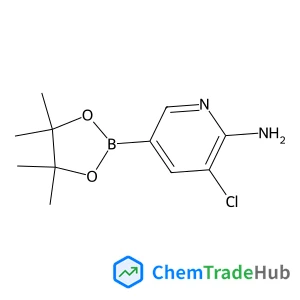
3-Chloro-5-(4,4,5,5-tetramethyl-1,3,2-dioxaborolan-2-yl)-2-pyridinamine
CAS Number:
1032758-99-8
Molecular Formula:
C11H16BClN2O2
Recommended Suppliers



Disclaimer
This page provides academic journal information for reference and research purposes only. We are not affiliated with any journal publishers and do not handle publication submissions. For publication-related inquiries, please contact the respective journal publishers directly.
If you notice any inaccuracies in the information displayed, please contact us at support@chemtradehub.com. We will promptly review and address your concerns.