












X-ray photoelectron and ion scattering spectroscopic surface analyses of amorphous and crystalline calcium phosphate nanoparticles with different chemical histories
Literature Information
Publication Date
2020-02-13
DOI
10.1039/C9CP06529F
Impact Factor
3.676
Authors
View Original
Abstract
Abundant hydration, diffusivity, and volatile phase composition render the surface of calcium phosphates (CPs) a complex dynamic region. Three CP powders were analyzed using X-ray photoelectron spectroscopy (XPS) and ion scattering spectroscopy (ISS) with regard to their surface compositions and fine structures: hydroxyapatite (HAp), amorphous CP (ACP), and a CP formed under the same conditions as ACP but allowed to ripen into HAp (ACP → HAp). XPS analyses revealed that the Ca/P atomic ratio in the 2–10 nm-thick layers of the nanoparticle surface was somewhat lower than the stoichiometric ratio for all the three CPs. However, it was still lower for ACP and ACP → HAp than that for HAp, indicating the incongruent dissolution of all the surfaces and also greater instability and higher solubility of ACP and ACP → HAp as compared to those of HAp. Consequently, as indicated by both XPS and ISS, the amount of adventitious carbon bound to HAp was higher than that on ACP or ACP → HAp. The binding energies of the most intense XPS lines of all the three main atomic elements in HAp, i.e., O1s, P2p, and Ca2p downshifted for HAp as compared to those for ACP and ACP → HAp, supporting the premise of similarity in the surface structures between the two CP powders with a common amorphous precursor and kinetic path of formation. The ISS analysis, which investigated the 1–2 topmost atomic layers of the surface, indicated a higher level of heterogeneity of the oxygen states. This coincided with 40Ca accounting for over 80% atoms in this uppermost atomic layer of the surface of all three CPs. Ca–O bonds were particularly dominant in the topmost surface layer of ACP, where the Ca/P atomic ratio was an order of magnitude higher than that in ACP → HAp or HAp. A thermodynamic explanation and structural model of the surface accounting for the overabundance of Ca2+ in the topmost layer and the overall depletion of it elsewhere are provided in the discussion. Overall, the combined results of XPS and ISS analyses demonstrate a similarity between the surfaces of the two different forms of HAp as compared to that for ACP, but also a definite impression of the traces of their formation history on them.
Related Literature
Ferrocene/air double-mediated FeTiO3-photocatalyzed semi-heterogeneous annulation of quinoxalin-2(1H)-ones in EtOH/H2O
Wen-Tao Ouyang, Hong-Tao Ji, Jun Jiang, Chao Wu, Jia-Cheng Hou, Min-Hang Zhou, Yu-Han Lu, Li-Juan Ou, Wei-Min He
2023-11-07
Communication
DOI: 10.1039/D3CC04020H
A new dual functional H2S donor for fluorescence imaging and anti-inflammatory application
Shumei Huang, Zejun Li, Wenhui You, Guansheng Zheng, Huatang Zhang, Yin Jiang
2023-10-24
Communication
DOI: 10.1039/D3CC03881E
Strengthening Pt/WOx interfacial interactions to increase the CO tolerance of Pt for hydrogen oxidation reaction
Lin Guo, Jinyu Zheng
2023-10-09
Communication
DOI: 10.1039/D3CC03990K
Selective recognition and discrimination of single isomeric changes in peptide strands with a host : guest sensing array
Junyi Chen, Parisa Fasihianifard, Alexie Andrea P. Raz, Briana L. Hickey, Jose L. Moreno, Jr., Chia-En A. Chang
2024-01-02
Edge Article
DOI: 10.1039/D3SC06087J
A triad molecular conductor: simultaneous control of charge and molecular arrangements
Naoya Kinoshita, Atsuya Maruyama
2023-10-10
Communication
DOI: 10.1039/D3CC03198E
Chemometric sensing of stereoisomeric compound mixtures with a redox-responsive optical probe
Jeffrey S. S. K. Formen, Diandra S. Hassan, Christian Wolf
2023-12-21
Edge Article
DOI: 10.1039/D3SC05706B
Organocatalytic activation of hydrogen peroxide: towards green and sustainable oxidations
Efthymios T. Poursaitidis, Petros L. Gkizis, Ierasia Triandafillidi, Christoforos G. Kokotos
2023-12-18
Perspective
DOI: 10.1039/D3SC05618J
ATP-responsive Mn(ii)-based T1 contrast agent for MRI
Lawerence Kenning, Graeme J. Stasiuk
2023-09-19
Communication
DOI: 10.1039/D3CC03430E
Construction of 5-methyleneoxazolidine-2,4-diones bearing modifiable halogen groups through a halopalladation strategy
Huilin Zhan, Bin Chen, Biao Zhu, Xiang Li, Zhengyu Han, Jianwei Sun, Hai Huang
2023-10-24
Communication
DOI: 10.1039/D3CC04475K
You might also like
Compound Q&A
What are the main uses of (5-Sulfamoyl-3-pyridinyl)boronic acid (CAS: 951233-61-7)?
(5-Sulfamoyl-3-pyridinyl)boronic acid is primarily used in chemical synthesis, p...
951233-61-7(5-Sulfamoyl-3-pyrid...
Compound Q&A
How is Benzyl 2-methyl-2-(methylsulfonyl)-4-pentenoate (CAS: 1942858-50-5) typically synthesized?
Benzyl 2-methyl-2-(methylsulfonyl)-4-pentenoate is typically synthesized via est...
1942858-50-5Benzyl 2-methyl-2-(m...
Compound Q&A
What precautions should be taken when handling 8-Fluoroquinolin-6-ol (CAS: 209353-22-0)?
When handling 8-Fluoroquinolin-6-ol (CAS: 209353-22-0), it is important to use p...
209353-22-08-Fluoroquinolin-6-o...
Compound Q&A
What are the physical and chemical properties of 1,3-Dibromo-5-(2-methyl-2-propanyl)benzene (CAS: 129316-09-2)?
1,3-Dibromo-5-(2-methyl-2-propanyl)benzene (CAS: 129316-09-2) is a crystalline c...
129316-09-21,3-Dibromo-5-(2-met...
Compound Q&A
What industries use Ethyl 7-chloro-4-oxo-1-(1,3-thiazol-2-yl)-1,4-dihydro-1,8-naphthyridine-3-carboxylate (CAS: 174726-87-5)?
Ethyl 7-chloro-4-oxo-1-(1,3-thiazol-2-yl)-1,4-dihydro-1,8-naphthyridine-3-carbox...
174726-87-5Ethyl 7-chloro-4-oxo...
Compound Q&A
What precautions should be taken when handling Delta-7-Avenasterol (CAS: 23290-26-8)?
When handling Delta-7-Avenasterol (CAS: 23290-26-8), it is important to wear app...
23290-26-8Delta-7-Avenasterol
Compound Q&A
What precautions should be taken when handling N-({(5R)-3-[3-Fluoro-4-(4-morpholinyl)phenyl]-2-oxo-1,3-oxazolidin-5-yl}methyl)acetamide (CAS: 872992-20-6)?
Proper handling involves the use of personal protective equipment such as gloves...
872992-20-6N-({(5R)-3-[3-Fluoro...
Compound Q&A
What precautions should be taken when handling 2-Methyl-2-proanyl 4-[(2-aminophenyl)amino]-1-piperidinecarboxylate (CAS: 79099-00-6)?
When handling 2-Methyl-2-proanyl 4-[(2-aminophenyl)amino]-1-piperidinecarboxylat...
79099-00-62-Methyl-2-propanyl ...
Compound Q&A
What is N-Methyl-4-chlorobenzylamine hydrochloride (CAS: 65542-24-7)?
N-Methyl-4-chlorobenzylamine hydrochloride (CAS: 65542-24-7) is a organic compou...
65542-24-7N-Methyl-4-chloroben...
Compound Q&A
Is [2-(Dodecyloxy)ethoxy]acetic acid (CAS: 27306-90-7) safe?
[2-(Dodecyloxy)ethoxy]acetic acid (CAS: 27306-90-7) is generally considered safe...
27306-90-7[2-(Dodecyloxy)ethox...
Source Journal
Physical Chemistry Chemical Physics

CiteScore:
5.5
Self-citation Rate:
10.3%
Articles per Year:
3036
Physical Chemistry Chemical Physics (PCCP) is an international journal co-owned by 19 physical chemistry and physics societies from around the world. This journal publishes original, cutting-edge research in physical chemistry, chemical physics and biophysical chemistry. To be suitable for publication in PCCP, articles must include significant innovation and/or insight into physical chemistry; this is the most important criterion that reviewers and Editors will judge against when evaluating submissions. The journal has a broad scope and welcomes contributions spanning experiment, theory, computation and data science. Topical coverage includes spectroscopy, dynamics, kinetics, statistical mechanics, thermodynamics, electrochemistry, catalysis, surface science, quantum mechanics, quantum computing and machine learning. Interdisciplinary research areas such as polymers and soft matter, materials, nanoscience, energy, surfaces/interfaces, and biophysical chemistry are welcomed if they demonstrate significant innovation and/or insight into physical chemistry. Joined experimental/theoretical studies are particularly appreciated when complementary and based on up-to-date approaches.
Recommended Compounds

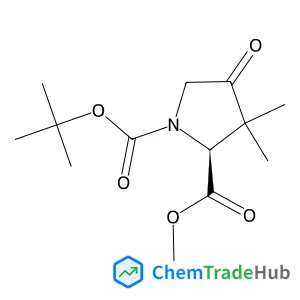
2-Methyl 1-(2-methyl-2-propanyl) (2S)-3,3-dimethyl-4-oxo-1,2-pyrrolidinedicarboxylate
CAS Number:
478698-30-5
Molecular Formula:
C13H21NO5
![(4-Methyl-1H-benzo[d]imidazol-2-yl)methanamine structure](https://static.chemtradehub.com/structs/933/933756-31-1-7b0b.webp "(4-Methyl-1H-benzo[d]imidazol-2-yl)methanamine structure")
Recommended Suppliers






Disclaimer
This page provides academic journal information for reference and research purposes only. We are not affiliated with any journal publishers and do not handle publication submissions. For publication-related inquiries, please contact the respective journal publishers directly.
If you notice any inaccuracies in the information displayed, please contact us at support@chemtradehub.com. We will promptly review and address your concerns.