












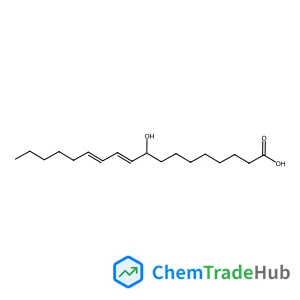
Interaction of hydantoin with solar wind minority ions: O6+ and He2+
Literature Information
Publication Date
2020-01-28
DOI
10.1039/C9CP06230K
Impact Factor
3.676
Authors
Julie Renoud, Suvasthika Indrajith, Alicja Domaracka, Patrick Rousseau, Patrick Moretto-Capelle, Bernd A. Huber, Jean-Philippe Champeaux
View Original
Abstract
The laboratory study of prebiotic molecules interacting with solar wind ions is important to understand their role in the emergence of life in the complex context of the astrochemistry of circumstellar environments. In this work, we present the first study of the interaction of hydantoin (C3N2O2H4, 100 a.m.u.) with solar wind minority multi-charged ions: O6+ at 30 keV and He2+ at 8 keV. The fragmentation mass spectra as well as correlation maps resulting from the interaction are presented and discussed in this paper. Prompt and delayed dissociations from metastable states of the ionized molecule have been observed and the corresponding lifetimes measured. Experimental results are completed by quantum Density Functional Theory (DFT) calculations for energies, structures and dynamics (Internal Reaction Coordinates and Dynamic Reaction Coordinates) of the molecule for its different reachable charge states and the major observed fragmentation pathways. These calculations show that the molecule can only support two charges before spontaneously dissociating in agreement with the experimental observations. Calculations also demonstrate that hydantoin's ring opens after double ionization of the molecule which may enhance its reactivity in the background of biological molecule formation in a cirmcumstellar environment. For the major experimentally observed fragmentations (like 44 a.m.u./56 a.m.u. dissociation), Internal Reaction Coordinate (IRC) calculations were performed pointing out for example the important role of hydrogen transfer in the fragmentation processes.
Related Literature
Theoretical prediction of long-range ferromagnetism in transition-metal atom-doped d0 dichalcogenide single layers SnS2 and ZrS2
A. Pham, H. Y. Xiao, X. T. Zu, S. Li
2016-08-11
Paper
DOI: 10.1039/C6CP02206E
Ultrafast relaxation dynamics of electronically excited piperidine: ionization signatures of Rydberg/valence evolution
Liv B. Klein, James O. F. Thompson, Stuart W. Crane, Lisa Saalbach, Theis I. Sølling, Martin J. Paterson
2016-08-26
Paper
DOI: 10.1039/C6CP04494H
Do group 1 metal salts form deep eutectic solvents?
A. P. Abbott, C. D'Agostino, S. J. Davis, L. F. Gladden, M. D. Mantle
2016-08-26
Paper
DOI: 10.1039/C6CP05880A
Electron spin dynamics and spin–lattice relaxation of trityl radicals in frozen solutions
Hanjiao Chen, Alexander G. Maryasov, Michael K. Bowman
2016-08-15
Paper
DOI: 10.1039/C6CP02649D
On the cobalt and cobalt oxide electrodeposition from a glyceline deep eutectic solvent
Alan M. P. Sakita, Rodrigo Della Noce, Cecílio S. Fugivara, Assis V. Benedetti
2016-08-10
Paper
DOI: 10.1039/C6CP04068C
Long-lived states to sustain SABRE hyperpolarised magnetisation
Soumya S. Roy, Peter J. Rayner, Philip Norcott, Gary G. R. Green, Simon B. Duckett
2016-08-15
Paper
DOI: 10.1039/C6CP02844F
Water dissociation on MnO(1 × 1)/Ag(100)
Chris Arble, Xiao Tong, Livia Giordano, Anna Maria Ferrari, John T. Newberg
2016-08-19
Paper
DOI: 10.1039/C6CP04115A
A multifunctional material of two-dimensional g-C4N3/graphene bilayer
Jie Cui, Shuhua Liang, Jianmin Zhang
2016-08-12
Paper
DOI: 10.1039/C6CP03946D
Flow-driven control of calcium carbonate precipitation patterns in a confined geometry
Gábor Schuszter, Fabian Brau, A. De Wit
2016-09-05
Paper
DOI: 10.1039/C6CP05067K
Establishing the pivotal role of local aromaticity in the electronic properties of boron-nitride graphene lateral hybrids
Claude Pouchan, Michel Rérat, Panaghiotis Karamanis
2016-08-16
Paper
DOI: 10.1039/C6CP04502B
You might also like
Compound Q&A
What precautions should be taken when handling lithium chloride hydrate (1:1:1) (CAS: 16712-20-2)?
When handling lithium chloride hydrate (1:1:1) (CAS: 16712-20-2), it is importan...
16712-20-2Lithium chloride hyd...
Compound Q&A
Is 4-(4H-1,2,4-Triazol-4-yl)piperidine (CAS: 690261-92-8) safe?
4-(4H-1,2,4-Triazol-4-yl)piperidine is generally considered safe for use in phar...
690261-92-84-(4H-1,2,4-Triazol-...
Compound Q&A
How should waste containing 1,3-Thiazole-2-carboxamide (CAS: 16733-85-0) be handled?
Waste containing 1,3-Thiazole-2-carboxamide (CAS: 16733-85-0) should be collecte...
16733-85-01,3-Thiazole-2-carbo...
Compound Q&A
What regulatory guidelines apply to 5-(Difluoromethyl)-2-fluorobenzonitrile (CAS: 934175-58-3)?
5-(Difluoromethyl)-2-fluorobenzonitrile (CAS: 934175-58-3) is subject to regulat...
934175-58-35-(Difluoromethyl)-2...
Compound Q&A
How is Methyl 3-acetamido-2-thiophenecarboxylate (CAS: 22288-79-5) typically synthesized?
Methyl 3-acetamido-2-thiophenecarboxylate can be synthesized by the reaction of ...
22288-79-5Methyl 3-acetamido-2...
Compound Q&A
What is 4-Isoquinolinecarbonitrile (CAS: 34846-65-6)?
4-Isoquinolinecarbonitrile is a chemical compound with the CAS number 34846-65-6...
34846-65-64-Isoquinolinecarbon...
Compound Q&A
How should Methyl 1H-1,2,3-triazole-4-carboxylate (CAS: 877309-59-6) be stored?
Store Methyl 1H-1,2,3-triazole-4-carboxylate (CAS: 877309-59-6) in a cool, dry p...
877309-59-6Methyl 1H-1,2,3-tria...
Compound Q&A
What regulatory guidelines apply to 6-Bromo[1,3]thiazolo[5,4-b]pyridin-2-amine (CAS: 1160791-13-8)?
6-Bromo[1,3]thiazolo[5,4-b]pyridin-2-amine (CAS: 1160791-13-8) is subject to the...
1160791-13-86-Bromo[1,3]thiazolo...
Compound Q&A
Is (2S,3S)-2-Ammonio-3-(3,4-dihydroxyphenyl)-3-hydroxypropanoate (CAS: 23651-95-8) safe?
(2S,3S)-2-Ammonio-3-(3,4-dihydroxyphenyl)-3-hydroxypropanoate (CAS: 23651-95-8) ...
23651-95-8(2S,3S)-2-Ammonio-3-...
Compound Q&A
What are the physical and chemical properties of 7-bromo-3-methyl-3,4-dihydroquinazolin-4-one (CAS: 1293987-84-4)?
7-Bromo-3-methyl-3,4-dihydroquinazolin-4-one is a solid with a crystalline form....
1293987-84-47-bromo-3-methyl-3,4...
Source Journal
Physical Chemistry Chemical Physics

CiteScore:
5.5
Self-citation Rate:
10.3%
Articles per Year:
3036
Physical Chemistry Chemical Physics (PCCP) is an international journal co-owned by 19 physical chemistry and physics societies from around the world. This journal publishes original, cutting-edge research in physical chemistry, chemical physics and biophysical chemistry. To be suitable for publication in PCCP, articles must include significant innovation and/or insight into physical chemistry; this is the most important criterion that reviewers and Editors will judge against when evaluating submissions. The journal has a broad scope and welcomes contributions spanning experiment, theory, computation and data science. Topical coverage includes spectroscopy, dynamics, kinetics, statistical mechanics, thermodynamics, electrochemistry, catalysis, surface science, quantum mechanics, quantum computing and machine learning. Interdisciplinary research areas such as polymers and soft matter, materials, nanoscience, energy, surfaces/interfaces, and biophysical chemistry are welcomed if they demonstrate significant innovation and/or insight into physical chemistry. Joined experimental/theoretical studies are particularly appreciated when complementary and based on up-to-date approaches.
Recommended Compounds
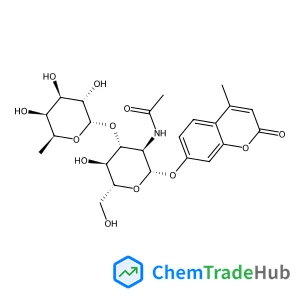
4-Methyl-2-oxo-2H-chromen-7-yl 2-acetamido-2-deoxy-3-O-(6-deoxy-alpha-L-galactopyranosyl)-beta-D-glucopyranoside
CAS Number:
383160-12-1
Molecular Formula:
C24H31NO12

4-(Bromomethyl)-1-cyclohexyl-2-(trifluoromethyl)benzene
CAS Number:
800381-60-6
Molecular Formula:
C14H16BrF3
![8-Bromo-6-fluoro[1,2,4]triazolo[1,5-a]pyridin-2-amine structure](https://static.chemtradehub.com/structs/125/1257705-51-3-9f4a.webp "8-Bromo-6-fluoro[1,2,4]triazolo[1,5-a]pyridin-2-amine structure")
8-Bromo-6-fluoro[1,2,4]triazolo[1,5-a]pyridin-2-amine
CAS Number:
1257705-51-3
Molecular Formula:
C6H4BrFN4
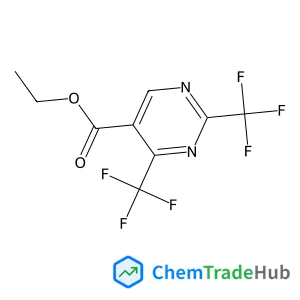
Ethyl 2,4-bis(trifluoromethyl)-5-pyrimidinecarboxylate
CAS Number:
188781-15-9
Molecular Formula:
C9H6F6N2O2
Recommended Suppliers




Disclaimer
This page provides academic journal information for reference and research purposes only. We are not affiliated with any journal publishers and do not handle publication submissions. For publication-related inquiries, please contact the respective journal publishers directly.
If you notice any inaccuracies in the information displayed, please contact us at support@chemtradehub.com. We will promptly review and address your concerns.