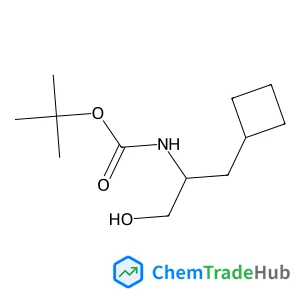
2-Methyl-2-propanyl (1-cyclobutyl-3-hydroxy-2-propanyl)carbamate
CAS Number:
816429-99-9
Molecular Formula:
C12H23NO3
Qiman Liu, Chengyu Zhang, Chang Xu, Shuanglin Hu
Owing to their unique properties, thiolate-protected gold clusters (denoted as Aun(SR)m) have attracted intense research interest both experimentally and theoretically. The superatom complex (SAC) and superatom network (SAN) models are significantly well-known concepts to explain the electronic stability of Aun(SR)m. Based on the structural characters of Aun(SR)m, the tetrahedral Au4 unit was found to be an elementary building block and used to design a series of tetrahedron-network clusters. In this work, we first build a Au22(μ4-S)(SH)12 cluster consisting of a network of four non-conjugated tetrahedral Au4 units and confirm that it is a local minimum on the potential energy surface by density functional theory calculations. Chemical bonding analysis by the AdNDP method reveals that the electronic structure of Au22(μ4-S)(SH)12 follows the SAN (4 × 2e) model. Based on the structural character of the Au22(μ4-S)(SH)12 cluster, we utilize the diamond lattice as a template to construct a stable Au4S crystal in which each S atom binds to four Au4 superatoms. The computational results demonstrate that the structure has rather good dynamic and thermal stabilities, and it is an indirect semiconductor with a band gap of 2.68 eV at the HSE06 level. Chemical bonding analysis performed by the SSAdNDP method reveals that the Au4S can be seen as a SAN crystal. These bonding patterns and properties of the solid provide references for further investigation of cluster-assembled materials.
Ting Guo, Rong Guan, Jianhua Zou, Jie Liu, Lei Ying, Wei Yang, Hongbin Wu, Yong Cao
DOI: 10.1039/C1PY00075F
Jared F. Mike, Jeremy J. Intemann, Min Cai, Teng Xiao, Ruth Shinar, Joseph Shinar, Malika Jeffries-EL
DOI: 10.1039/C1PY00218J
Shotaro Hayashi, Shinsuke Inagi, Toshio Fuchigami
DOI: 10.1039/C1PY00150G
Christophe Barnier Quer, Hana Robson Marsden, Stefan Romeijn, Harshal Zope, Alexander Kros, Wim Jiskoot
DOI: 10.1039/C1PY00010A
Etienne Grau, Jean-Pierre Broyer, Christophe Boisson, Roger Spitz, Vincent Monteil
DOI: 10.1039/C1PY00200G
Garret M. Miyake, Eugene Y.-X. Chen
DOI: 10.1039/C1PY00245G
Qianfu Luo, Hui Cheng, He Tian
DOI: 10.1039/C1PY00167A
Yu Liu, Victor Piñón, III, Marcus Weck
DOI: 10.1039/C1PY00151E
Yubing Xiong, Yujiao Wang, Hong Wang, Rongmin Wang
DOI: 10.1039/C1PY00201E
When handling 2-Methyl-2-propanyl 5-amino-2-thiophenecarboxylate (CAS: 1498311-5...
5-Bromo-1,2-dichloro-3-fluorobenzene (CAS: 1000572-93-9) is a crystalline solid ...
(2R)-2-Amino-2-(4-bromophenyl)ethanol (CAS: 354153-64-3) should be stored in a c...
Methyl 4-(aminomethyl)tetrahydro-2H-pyran-4-carboxylate hydrochloride (CAS: 3627...
1,4-Dimethyl-1H-pyrazole-5-sulfonyl chloride is primarily used as an intermediat...
Dinaphtho[1,2-b:2',1'-d]furan is generally safe when handled with appropriate pe...
The market for 7-Methyl-7,9-dihydro-1H-purine-2,6,8(3H)-trione (CAS: 612-37-3) i...
2-(4-Chlorophenyl)malonaldehyde (CAS: 205676-17-1) is a colorless or light yello...
2-Methylchrysene (CAS: 3351-32-4) is typically synthesized via the reaction of c...
N-(6-aminopyrimidin-4-yl)acetamide (CAS: 89533-23-3) is generally considered saf...

Physical Chemistry Chemical Physics (PCCP) is an international journal co-owned by 19 physical chemistry and physics societies from around the world. This journal publishes original, cutting-edge research in physical chemistry, chemical physics and biophysical chemistry. To be suitable for publication in PCCP, articles must include significant innovation and/or insight into physical chemistry; this is the most important criterion that reviewers and Editors will judge against when evaluating submissions. The journal has a broad scope and welcomes contributions spanning experiment, theory, computation and data science. Topical coverage includes spectroscopy, dynamics, kinetics, statistical mechanics, thermodynamics, electrochemistry, catalysis, surface science, quantum mechanics, quantum computing and machine learning. Interdisciplinary research areas such as polymers and soft matter, materials, nanoscience, energy, surfaces/interfaces, and biophysical chemistry are welcomed if they demonstrate significant innovation and/or insight into physical chemistry. Joined experimental/theoretical studies are particularly appreciated when complementary and based on up-to-date approaches.
![4-Chloro-N-{[4-(dimethylamino)phenyl]carbamoyl}benzenesulfonamide structure](https://static.chemtradehub.com/structs/558/5581-42-0-7dcb.webp "4-Chloro-N-{[4-(dimethylamino)phenyl]carbamoyl}benzenesulfonamide structure")