












Structure and reactivity of a water-covered anatase TiO2(001) surface
Literature Information
Publication Date
2019-12-03
DOI
10.1039/C9CP05409J
Impact Factor
3.676
Authors
Xiufeng Lang, Yanhong Liang, Jing Zhang, Lei Li, Liqin Cao, Hongsheng Zhang
View Original
Abstract
We systematically studied water adsorption and oxidation on the unreconstructed TiO2(001) surface using first-principles calculations. Water first adsorbs on the surface in a dissociative state and then in a molecular state, as water coverage increases. The geometric properties of all adsorption structures suggest that the dissociative water molecules can induce stress release of the (001) surface at low coverage, reducing reactivity of the surface and thus leading to molecular adsorption of water on the surface at high coverage. The adsorption energy (or the surface energy) monotonously increases (or decreases) with the increase of the coverage, which further confirms that water, irrespective of its dissociative or molecular state, can improve the stability of the (001) surface and reduce its activity. We deeply investigated the mechanism of the oxygen evolution reaction (OER) on the water-covered (001) surface. A new water-assisted OER pathway is identified on the (001) surface, which includes the sequential transfer of protons from molecular water and surface hydroxyls, and O–O coupling processes. During the OER pathway, the O–O coupling step exhibits the largest thermodynamic energy and highest energy barrier, clarifying that it is the rate-determining step in the whole pathway. Our findings provide new insights into the strong dependence of water adsorption modes on coverage for the anatase TiO2(001) surface and may explain the high oxidation activity of the TiO2(001) surface in aqueous environments typical of TiO2 photocatalysis.
Related Literature
Selective oxidation of cellulose, mediated by N-hydroxyphthalimide, under a metal-free environment
Sergiu Coseri, Gabriela Biliuta
2017-11-06
Paper
DOI: 10.1039/C7PY01710C
One-pot and gram-scale synthesis of biodegradable polyglycerols under ambient conditions: nanocarriers for intradermal drug delivery
Zhaoxu Tu, Sarah Hedtrich, Ali Nemati Kharat, Rainer Haag
2017-11-21
Paper
DOI: 10.1039/C7PY01470H
Nitroxide-mediated polymerization-induced self-assembly of amphiphilic block copolymers with a pH/temperature dual sensitive stabilizer block
P.-Y. Dugas, B. Charleux, M. Lansalot, E. Bourgeat-Lami
2017-06-14
Paper
DOI: 10.1039/C7PY00595D
A supramolecular peptide polymer from hydrogen-bond and coordination-driven self-assembly
Xiaomin Zhu, Rongfeng Zou, Peng Sun, Qi Wang, Junchen Wu
2017-12-05
Paper
DOI: 10.1039/C7PY01901G
Fe-Porphyrin functionalized microporous organic nanotube networks and their application for the catalytic olefination of aldehydes and carbene insertion into N–H bonds
Minghong Zhou, Hui Zhang, Linfeng Xiong, Zidong He, Tianqi Wang, Yang Xu, Kun Huang
2017-05-31
Paper
DOI: 10.1039/C7PY00530J
One-pot blue-light triggered tough interpenetrating polymeric network (IPN) using CuAAC and methacrylate reactions
Abhishek U. Shete
2017-05-08
Communication
DOI: 10.1039/C7PY00623C
ADMET polymerization of α,ω-unsaturated glycolipids: synthesis and physico-chemical properties of the resulting polymers
D. Pintori
2017-05-31
Paper
DOI: 10.1039/C7PY00788D
Effects of incorporating different chalcogenophene comonomers into random acceptor terpolymers on the morphology and performance of all-polymer solar cells
Yujin An, Jiyeon Oh, Shanshan Chen, Byongkyu Lee, Sang Myeon Lee, Daehee Han, Changduk Yang
2018-01-03
Paper
DOI: 10.1039/C7PY01907F
From mono- to tetraacylgermanes: extending the scope of visible light photoinitiators
Anna Eibel, Judith Radebner, Michael Haas, David E. Fast, Hilde Freißmuth, Eduard Stadler, Paul Faschauner, Ana Torvisco, Iris Lamparth, Norbert Moszner, Harald Stueger, Georg Gescheidt
2017-11-20
Paper
DOI: 10.1039/C7PY01590A
Temperature responsive poly(phosphonate) copolymers: from single chains to macroscopic coacervates
Thomas Wolf, Johannes Hunold, Johanna Simon, Christine Rosenauer, Dariush Hinderberger, Frederik R. Wurm
2017-12-19
Paper
DOI: 10.1039/C7PY01811H
You might also like
Compound Q&A
What precautions should be taken when handling 4-(2-Furylmethyl)thiomorpholine 1,1-dioxide (CAS: 79206-94-3)?
When handling 4-(2-Furylmethyl)thiomorpholine 1,1-dioxide (CAS: 79206-94-3), it ...
79206-94-34-(2-Furylmethyl)thi...
Compound Q&A
What precautions should be taken when handling 4-Chloro-N-[2-(4-morpholinyl)ethyl]benzamide (CAS: 71320-77-9)?
When handling 4-Chloro-N-[2-(4-morpholinyl)ethyl]benzamide (CAS: 71320-77-9), it...
71320-77-94-Chloro-N-[2-(4-mor...
Compound Q&A
How should waste containing 2-[2-(2-Methoxyethoxy)ethoxy]ethyl 4-methylbenzenesulfonate (CAS: 62921-74-8) be handled?
Waste containing this compound (CAS: 62921-74-8) should be handled according to ...
62921-74-82-[2-(2-Methoxyethox...
Compound Q&A
How should waste containing (S)-Methyl 2-amino-3-cyclohexylpropanoate be handled?
Waste containing (S)-Methyl 2-amino-3-cyclohexylpropanoate should be collected i...
40056-18-6(S)-Methyl 2-amino-3...
Compound Q&A
How is 5-({4-[(2S,4R)-4-Hydroxy-2-methyltetrahydro-2H-pyran-4-yl]-2-thienyl}sulfanyl)-1-methyl-1,3-dihydro-2H-indol-2-one (CAS: 166882-70-8) typically synthesized?
This compound can be synthesized using a multi-step process involving the conjug...
166882-70-85-({4-[(2S,4R)-4-Hyd...
Compound Q&A
Are there alternatives to (2E)-3-(3,4-Dichlorophenyl)acrylic acid (CAS: 7312-27-8) in synthesis?
There are several alternatives to (2E)-3-(3,4-Dichlorophenyl)acrylic acid in syn...
7312-27-8(2E)-3-(3,4-Dichloro...
Compound Q&A
How should Ethyl 6-(2-nitrophenyl)imidazo[2,1-b][1,3]thiazole-3-carboxylate (CAS: 925437-84-9) be stored?
Ethyl 6-(2-nitrophenyl)imidazo[2,1-b][1,3]thiazole-3-carboxylate (CAS: 925437-84...
925437-84-9Ethyl 6-(2-nitrophen...
Compound Q&A
How should waste containing 2-(1,3-Thiazol-2-yl)ethanamine (CAS: 18453-07-1) be handled?
Waste containing 2-(1,3-Thiazol-2-yl)ethanamine (CAS: 18453-07-1) should be coll...
18453-07-12-(1,3-Thiazol-2-yl)...
Compound Q&A
How is Methyl 5-iodo-2-methylbenzoate (CAS: 103440-54-6) typically synthesized?
Methyl 5-iodo-2-methylbenzoate can be synthesized through the iodination of meth...
103440-54-6Methyl 5-iodo-2-meth...
Compound Q&A
How is 5-Chloro[1,2,4]triazolo[1,5-a]pyridine (CAS: 1427399-34-5) typically synthesized?
5-Chloro[1,2,4]triazolo[1,5-a]pyridine is commonly synthesized via the condensat...
1427399-34-55-Chloro[1,2,4]triaz...
Source Journal
Physical Chemistry Chemical Physics

CiteScore:
5.5
Self-citation Rate:
10.3%
Articles per Year:
3036
Physical Chemistry Chemical Physics (PCCP) is an international journal co-owned by 19 physical chemistry and physics societies from around the world. This journal publishes original, cutting-edge research in physical chemistry, chemical physics and biophysical chemistry. To be suitable for publication in PCCP, articles must include significant innovation and/or insight into physical chemistry; this is the most important criterion that reviewers and Editors will judge against when evaluating submissions. The journal has a broad scope and welcomes contributions spanning experiment, theory, computation and data science. Topical coverage includes spectroscopy, dynamics, kinetics, statistical mechanics, thermodynamics, electrochemistry, catalysis, surface science, quantum mechanics, quantum computing and machine learning. Interdisciplinary research areas such as polymers and soft matter, materials, nanoscience, energy, surfaces/interfaces, and biophysical chemistry are welcomed if they demonstrate significant innovation and/or insight into physical chemistry. Joined experimental/theoretical studies are particularly appreciated when complementary and based on up-to-date approaches.
Recommended Compounds
![[4-(Heptyloxy)phenyl]boronic acid structure](https://static.chemtradehub.com/structs/136/136370-19-9-ad33.webp "[4-(Heptyloxy)phenyl]boronic acid structure")
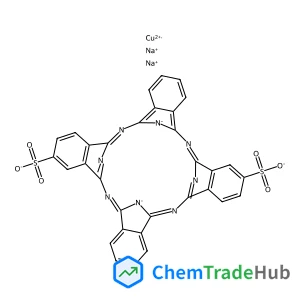
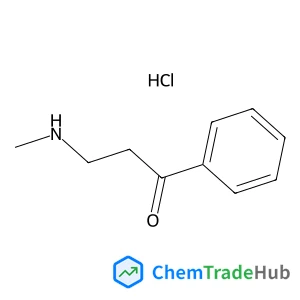
3-(Methylamino)-1-phenyl-1-propanone hydrochloride (1:1)
CAS Number:
2538-50-3
Molecular Formula:
C10H14ClNO
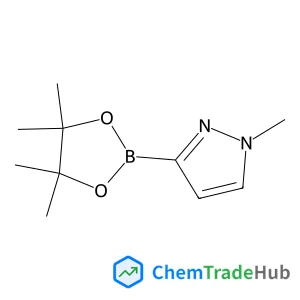
1-Methyl-3-(4,4,5,5-tetramethyl-1,3,2-dioxaborolan-2-yl)-1H-pyrazole
CAS Number:
1020174-04-2
Molecular Formula:
C10H17BN2O2
Recommended Suppliers







Disclaimer
This page provides academic journal information for reference and research purposes only. We are not affiliated with any journal publishers and do not handle publication submissions. For publication-related inquiries, please contact the respective journal publishers directly.
If you notice any inaccuracies in the information displayed, please contact us at support@chemtradehub.com. We will promptly review and address your concerns.