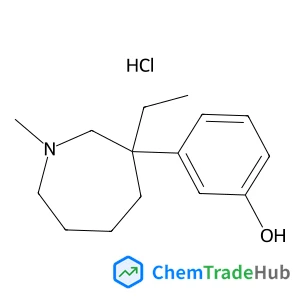
3-(3-Ethyl-1-methyl-3-azepanyl)phenol hydrochloride (1:1)
CAS Number:
59263-76-2
Molecular Formula:
C15H24ClNO
Yaqiang Ma, Yi Li, Renyi Li, Yanan Tang, Xianqi Dai
The development of metal-free catalysts for the oxygen reduction reaction (ORR) is critical for rechargeable metal–air batteries and full cells. Various light non-metallic-atom-doped graphdiyne (GDY) materials have been designed based on density functional theory and evaluated as efficient ORR electrocatalysts. Volcano curve correlations between the overpotential and Gibbs adsorption free energies of oxygenated intermediates have been derived for the ORR. Optimized compensated B,N co-doped GDY monolayers exhibit the lowest ORR overpotential of 0.57 V. In compensated B,N co-doped GDY, the B atoms are positioned in the benzene rings, and the N atoms are positioned in the acetylene linkages. Moreover, some B,N co-doped GDYs have two active sites with almost the same catalytic activity: the B atom and the C atom bearing an effective positive charge nearest to the doped N atom. Based on the theoretical analysis, ideal doped GDY monolayers are expected to exhibit comparable catalytic activity to Pt-based catalysts.
Song-Di Lin, Chih-Hao Chin, Wei-Tsung Chuang, Chain-Shu Hsu
DOI: 10.1039/C7PY01340J
Ana S. Sonzogni, Stefanie Wedepohl, Marcelo Calderón
DOI: 10.1039/C7PY01798G
Karol Erfurt, Anna Chrobok, Andrzej Zięba, Rafał Bielas
DOI: 10.1039/C7PY01726J
Leon M. Lillie, William B. Tolman, Theresa M. Reineke
DOI: 10.1039/C7PY00575J
A. C. Manikas, V. Pagliarulo, P. Ferraro, S. Cavalli
DOI: 10.1039/C7PY00462A
Zhen Yang, Huan Wang, Daize Mo, Longzhu Liu, Pengjie Chao, Yulin Zhu, Chuanjun Liu, Feng He
DOI: 10.1039/C7PY01792H
Nemal S. Gobalasingham, Seyma Ekiz, Robert M. Pankow, Eva Bundgaard, Barry C. Thompson
DOI: 10.1039/C7PY00859G
Minh T. Nguyen, Richard A. Jones, Bradley J. Holliday
DOI: 10.1039/C7PY00673J
P. Reinold, K. Bruchlos, S. Ludwigs
DOI: 10.1039/C7PY01688C
When handling 4-(2-Furylmethyl)thiomorpholine 1,1-dioxide (CAS: 79206-94-3), it ...
When handling 4-Chloro-N-[2-(4-morpholinyl)ethyl]benzamide (CAS: 71320-77-9), it...
Waste containing this compound (CAS: 62921-74-8) should be handled according to ...
Waste containing (S)-Methyl 2-amino-3-cyclohexylpropanoate should be collected i...
This compound can be synthesized using a multi-step process involving the conjug...
There are several alternatives to (2E)-3-(3,4-Dichlorophenyl)acrylic acid in syn...
Ethyl 6-(2-nitrophenyl)imidazo[2,1-b][1,3]thiazole-3-carboxylate (CAS: 925437-84...
Waste containing 2-(1,3-Thiazol-2-yl)ethanamine (CAS: 18453-07-1) should be coll...
Methyl 5-iodo-2-methylbenzoate can be synthesized through the iodination of meth...
5-Chloro[1,2,4]triazolo[1,5-a]pyridine is commonly synthesized via the condensat...

Physical Chemistry Chemical Physics (PCCP) is an international journal co-owned by 19 physical chemistry and physics societies from around the world. This journal publishes original, cutting-edge research in physical chemistry, chemical physics and biophysical chemistry. To be suitable for publication in PCCP, articles must include significant innovation and/or insight into physical chemistry; this is the most important criterion that reviewers and Editors will judge against when evaluating submissions. The journal has a broad scope and welcomes contributions spanning experiment, theory, computation and data science. Topical coverage includes spectroscopy, dynamics, kinetics, statistical mechanics, thermodynamics, electrochemistry, catalysis, surface science, quantum mechanics, quantum computing and machine learning. Interdisciplinary research areas such as polymers and soft matter, materials, nanoscience, energy, surfaces/interfaces, and biophysical chemistry are welcomed if they demonstrate significant innovation and/or insight into physical chemistry. Joined experimental/theoretical studies are particularly appreciated when complementary and based on up-to-date approaches.