












![(1R,5R)-3-{[(2-Methyl-2-propanyl)oxy]carbonyl}-3-azabicyclo[3.1.0]hexane-1-carboxylic acid structure](https://static.chemtradehub.com/structs/116/1165450-63-4-bfe1.webp "(1R,5R)-3-{[(2-Methyl-2-propanyl)oxy]carbonyl}-3-azabicyclo[3.1.0]hexane-1-carboxylic acid structure")
(1R,5R)-3-{[(2-Methyl-2-propanyl)oxy]carbonyl}-3-azabicyclo[3.1.0]hexane-1-carboxylic acid
CAS Number:
1165450-63-4
Molecular Formula:
C11H17NO4
Zhong-Fei Xu, Guangwei Geng, Dongjun Wang
Ag/AgCl-based structures have recently been receiving considerable attention as visible-light-driven plasmonic photocatalysts, wherein the fabrication of Ag/AgCl species shaped with an anisotropic morphology is considered to be an efficient way to enhance their performances. While the past decade has witnessed great progress in this direction, it is still strongly desired to initiate a green and low-cost protocol for the synthesis of Ag/AgCl based structures with high catalytic activity. Using a surfactant-assisted synthesis protocol, wherein a cationic bola-type surfactant of chloride counteranions serves both as a reactant (namely, source of chlorine) for the generation of AgCl structures and as a directing template to assist the formation of anisotropic structures, we herein report that cube-like Ag/AgCl with blunt edges could be fabricated simply by dropping an aqueous solution of silver nitrate into an ethanol solution of the hexane-1,6-bis(trimethylammonium chloride) surfactant. Importantly, compared to the sphere-like counterparts manufactured using a conventional tadpole surfactant, the as-fabricated cube-like structures exhibit substantially improved catalytic performances under visible-light or natural-sunlight irradiation. It has been revealed that photogenerated holes might serve as the main active species during the catalytic process. Meanwhile, our results have disclosed that in contrast to the sphere-like Ag/AgCl structures, the as-constructed cube-like structures are relatively enriched with high-index AgCl facets of smaller hole effective mass, which promote a faster carrier transfer, facilitate the migration of the photogenerated holes to the surface to be involved in photocatalytic reactions, and suppress carrier recombination, leading to their enhanced photocatalytic performances. Considering the tremendous diversity of surfactants (bola-, gemini-, polymeric surfactants etc.) with various halide counteranions and their sophisticated template effects, our new strategy might open up new opportunities for silver/silver halide (Ag/AgX, X = Cl, Br, and I)-based plasmonic structures with various morphologies and with superior light-to-chemical energy conversion capability.
Pieter Janssens, Jeroen Poissonnier, Mirella Virginie, Andrei Y. Khodakov, Joris W. Thybaut
DOI: 10.1039/D1RE00351H
Jungang Yi, Xianghui Wu, Huadong Wu, Jia Guo
DOI: 10.1039/D1RE90046C
Masaki Tamaki, Tsukasa Taguchi, Soichi Nakabayashi, Kota Mori, Yoshikazu Kitajyo, Ryosuke Sakai, Toyoji Kakuchi, Toshifumi Satoh
DOI: 10.1039/B9PY00223E
Yongrong Li
DOI: 10.1039/B9PY00238C
Sajal Kanti Dutta
DOI: 10.1039/D1RE00201E
Anirudh M. K. Nambiar, Christopher P. Breen, Timothy F. Jamison, Klavs F. Jensen
DOI: 10.1039/D1RE00350J
Alice E. van der Ende, Vasanth Sathiyakumar, Roberto Diaz, Dennis E. Hallahan, Eva Harth
DOI: 10.1039/B9PY00272C
Paola Vitale, Luciana Cicco, Filippo Maria Perna, Vito Capriati
DOI: 10.1039/D1RE00297J
Ling Chang, E. M. Woo
DOI: 10.1039/B9PY00237E
When handling lithium chloride hydrate (1:1:1) (CAS: 16712-20-2), it is importan...
4-(4H-1,2,4-Triazol-4-yl)piperidine is generally considered safe for use in phar...
Waste containing 1,3-Thiazole-2-carboxamide (CAS: 16733-85-0) should be collecte...
5-(Difluoromethyl)-2-fluorobenzonitrile (CAS: 934175-58-3) is subject to regulat...
Methyl 3-acetamido-2-thiophenecarboxylate can be synthesized by the reaction of ...
4-Isoquinolinecarbonitrile is a chemical compound with the CAS number 34846-65-6...
Store Methyl 1H-1,2,3-triazole-4-carboxylate (CAS: 877309-59-6) in a cool, dry p...
6-Bromo[1,3]thiazolo[5,4-b]pyridin-2-amine (CAS: 1160791-13-8) is subject to the...
(2S,3S)-2-Ammonio-3-(3,4-dihydroxyphenyl)-3-hydroxypropanoate (CAS: 23651-95-8) ...
7-Bromo-3-methyl-3,4-dihydroquinazolin-4-one is a solid with a crystalline form....

Physical Chemistry Chemical Physics (PCCP) is an international journal co-owned by 19 physical chemistry and physics societies from around the world. This journal publishes original, cutting-edge research in physical chemistry, chemical physics and biophysical chemistry. To be suitable for publication in PCCP, articles must include significant innovation and/or insight into physical chemistry; this is the most important criterion that reviewers and Editors will judge against when evaluating submissions. The journal has a broad scope and welcomes contributions spanning experiment, theory, computation and data science. Topical coverage includes spectroscopy, dynamics, kinetics, statistical mechanics, thermodynamics, electrochemistry, catalysis, surface science, quantum mechanics, quantum computing and machine learning. Interdisciplinary research areas such as polymers and soft matter, materials, nanoscience, energy, surfaces/interfaces, and biophysical chemistry are welcomed if they demonstrate significant innovation and/or insight into physical chemistry. Joined experimental/theoretical studies are particularly appreciated when complementary and based on up-to-date approaches.
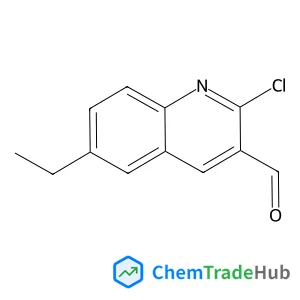
![5,10-Dihydroindeno[2,1-a]indene structure](https://static.chemtradehub.com/structs/654/6543-29-9-71ca.webp "5,10-Dihydroindeno[2,1-a]indene structure")
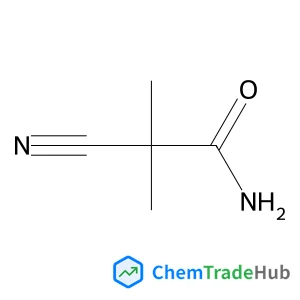
![[(2R)-6,6-Dimethyl-2-morpholinyl]methanol hydrochloride (1:1) structure](https://static.chemtradehub.com/structs/141/1416444-88-6-e06a.webp "[(2R)-6,6-Dimethyl-2-morpholinyl]methanol hydrochloride (1:1) structure")







