












![[4-(Isobutyrylamino)phenyl]boronic acid structure](https://static.chemtradehub.com/structs/874/874219-50-8-6ab5.webp "[4-(Isobutyrylamino)phenyl]boronic acid structure")
Synthesis of a photo-responsive single-walled nanoscroll and its photo-reactivity in a nano-layered microenvironment
Literature Information
Publication Date
2019-08-21
DOI
10.1039/C9CP03835C
Impact Factor
3.676
Authors
Syed Zahid Hassan, Yu Nabetani, Ayaka Matsumoto, Tsutomu Shiragami, Zhiwei Tong, Hiroshi Tachibana, Haruo Inoue
View Original
Abstract
A photo-responsive nanoscroll composed of niobate nanosheets and a polyfluoroalkyl azobenzene derivative (C3F-Azo-C6H) is one of the most interesting layered materials because the reversible winding and unwinding motion could be efficiently induced by photo-irradiations. Previously, we have studied a double-walled nanoscroll (DWNS) of niobate that could be synthesized by the intercalation of a cationic polyfluorinated surfactant only into the interlayer I of the layered niobate among the two interlayers, I and II. In this study, we have successfully synthesized another novel photo-responsive single-walled nanoscroll (SWNS) of niobate by a stepwise guest–guest ion-exchange method. All niobate nanosheets that were exfoliated at both interlayers I and II were efficiently converted to nanoscrolls by the intercalation of C3F-Azo-C6H. The synthetic yield has been quantitatively estimated. Though the photo-isomerization reaction of C3F-Azo-C6H was induced in the SWNS, its photo-reactivity was the lowest when compared with those of the nanosheet-stacked film and the DWNS. The photo-reactivity of C3F-Azo-C6H decreased in the order of DWNS > nanosheet-stacked film > SWNS. The different flexibility of the layered miroenvironment might influence the photo-reactivity of C3F-Azo-C6H in the niobate hybrid. The SWNS exhibited a reversible expansion and shrinkage of its interlayer spaces upon photo-irradiation, while the winding and unwinding motion was not observed, contrary to the DWNS. The direction of the expansion and shrinkage of the interlayer of the SWNS was opposite to those of the nanosheet-stacked film and the DWNS. Based on the experimental results, the tilt angle of C3F-Azo-C6H against the nanosheet surface and the matching structures of the top and bottom surfaces of the nanosheet could be the probable key factors that control the photo-reactivity of C3F-Azo-C6H in the layered microenvironment; the morphological changes of the nano hybrids was also discussed.
Related Literature
Ultrasensitive immunochromatographic strip for the detection of cyhalothrin in foods
Lu Lin, Shanshan Song, Xiaoling Wu, Liqiang Liu, Hua Kuang, Chuanlai Xu
2021-05-17
Paper
DOI: 10.1039/D1AY00609F
Applications of 1,3,5-trimethoxybenzene as a derivatizing agent for quantifying free chlorine, free bromine, bromamines, and bromide in aqueous systems
Ryan P. Dias, Marella H. Schammel, Keith P. Reber
2019-10-01
Paper
DOI: 10.1039/C9AY01443H
Determination of bioavailable lead in atmospheric aerosols using unmodified screen-printed carbon electrodes
Habdias de A. Silva-Neto, Thiago M. G. Cardoso, Wendell K. T. Coltro, Roberta C. Urban
2019-08-29
Paper
DOI: 10.1039/C9AY01301F
PEGylated NALC-functionalized gold nanoparticles for colorimetric discrimination of chiral tyrosine
Xin-Yue Chen, Wei Ha, Xiao-Jie Jin, Yan-Ping Shi
2020-08-20
Paper
DOI: 10.1039/D0AN01460E
Separation of metalloproteins using a novel metal ion contaminant sweeping technique and detection of protein-bound copper by a metal ion probe in polyacrylamide gel electrophoresis: distribution of copper in human serum
Shingo Saito, Mitsuyoshi Kawashima, Hiroki Ohshima, Kazuki Enomoto, Makoto Sato, Hajime Yoshimura, Keitaro Yoshimoto, Mizuo Maeda, Masami Shibukawa
2013-07-31
Paper
DOI: 10.1039/C3AN01107K
Raman micro-spectroscopy monitoring of cytochrome c redox state in Candida utilis during cell death under low-temperature plasma-induced oxidative stress
Lijiao Tian, Yong Guan, Liang Chen, Gang Liu, Han-qing Yu, Yangchao Tian
2020-03-23
Paper
DOI: 10.1039/D0AN00507J
You might also like
Compound Q&A
Are there alternatives to 1-(4-Chlorophenyl)-N-hydroxymethanimine (CAS: 3848-36-0) in synthesis?
When considering alternatives to 1-(4-Chlorophenyl)-N-hydroxymethanimine (CAS: 3...
3848-36-01-(4-Chlorophenyl)-N...
Compound Q&A
How should (1R,9S,10S,12S,14E,16S,19R,20R,21S,22R)-3,9,21-Trihydroxy-5,10,12,14,16,20,22-heptamethyl-23,24-dioxatetracyclo[17.3.1.1~6,9~.0~2,7~]tetracosa-2,5,7,14-tetraen-4-one (CAS: 183202-73-5) be stored?
This compound should be stored in a cool, dry place away from direct sunlight. I...
183202-73-5(1R,9S,10S,12S,14E,1...
Compound Q&A
How is 3-(4-Bromophenyl)-5-(2-fluorophenyl)-1,2,4-oxadiazole (CAS: 419553-16-5) typically synthesized?
3-(4-Bromophenyl)-5-(2-fluorophenyl)-1,2,4-oxadiazole is synthesized through a m...
419553-16-53-(4-Bromophenyl)-5-...
Compound Q&A
How is 5-Chloro-2-(4-chlorophenyl)-4-methyl-6-[3-(1-piperidinyl)propoxy]pyrimidine (CAS: 1639220-19-1) typically synthesized?
5-Chloro-2-(4-chlorophenyl)-4-methyl-6-[3-(1-piperidinyl)propoxy]pyrimidine (CAS...
1639220-19-15-Chloro-2-(4-chloro...
Compound Q&A
What industries use 2-Chloro-4-(difluoromethoxy)pyridine (CAS: 1206978-15-5)?
2-Chloro-4-(difluoromethoxy)pyridine is used in the pharmaceutical industry for ...
1206978-15-52-Chloro-4-(difluoro...
Compound Q&A
What regulatory guidelines apply to 3-Chloro-6-methylpyridazine (CAS: 1121-79-5)?
3-Chloro-6-methylpyridazine (CAS: 1121-79-5) is classified under the Globally Ha...
1121-79-53-Chloro-6-methylpyr...
Compound Q&A
Are there alternatives to Methyl 4,5-dimethyl-2-nitrobenzoate in synthesis?
Several alternatives can be used in the synthesis of Methyl 4,5-dimethyl-2-nitro...
90922-74-0Methyl 4,5-dimethyl-...
Compound Q&A
Are there alternatives to (2E,2'E)-3,3'-(1,4-Phenylene)bisacrylaldehyde in synthesis?
Alternatives to (2E,2'E)-3,3'-(1,4-Phenylene)bisacrylaldehyde include other acry...
63405-68-5(2E,2'E)-3,3'-(1,4-P...
Compound Q&A
What is 3-Amino-5-chloropyridin-2-ol hydrochloride (CAS: 1261906-29-9)?
3-Amino-5-chloropyridin-2-ol hydrochloride is an organic compound with the CAS n...
1261906-29-93-Amino-5-chloropyri...
Compound Q&A
What precautions should be taken when handling 6,7-Difluoro-2,3-dihydro-4H-chromen-4-one (CAS: 1092349-93-3)?
When handling 6,7-Difluoro-2,3-dihydro-4H-chromen-4-one, it is essential to wear...
1092349-93-36,7-Difluoro-2,3-dih...
Source Journal
Physical Chemistry Chemical Physics

CiteScore:
5.5
Self-citation Rate:
10.3%
Articles per Year:
3036
Physical Chemistry Chemical Physics (PCCP) is an international journal co-owned by 19 physical chemistry and physics societies from around the world. This journal publishes original, cutting-edge research in physical chemistry, chemical physics and biophysical chemistry. To be suitable for publication in PCCP, articles must include significant innovation and/or insight into physical chemistry; this is the most important criterion that reviewers and Editors will judge against when evaluating submissions. The journal has a broad scope and welcomes contributions spanning experiment, theory, computation and data science. Topical coverage includes spectroscopy, dynamics, kinetics, statistical mechanics, thermodynamics, electrochemistry, catalysis, surface science, quantum mechanics, quantum computing and machine learning. Interdisciplinary research areas such as polymers and soft matter, materials, nanoscience, energy, surfaces/interfaces, and biophysical chemistry are welcomed if they demonstrate significant innovation and/or insight into physical chemistry. Joined experimental/theoretical studies are particularly appreciated when complementary and based on up-to-date approaches.
Recommended Compounds
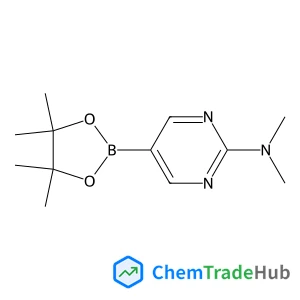
N,N-Dimethyl-5-(4,4,5,5-tetramethyl-1,3,2-dioxaborolan-2-yl)-2-pyrimidinamine
CAS Number:
1032759-30-0
Molecular Formula:
C12H20BN3O2
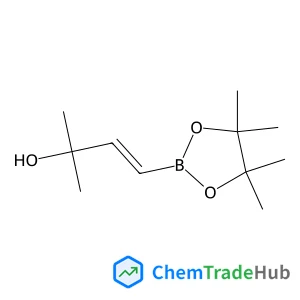
(E)-2-methyl-4-(4,4,5,5-tetramethyl-1,3,2-dioxaborolan-2-yl)but-3-en-2-ol
CAS Number:
581802-26-8
Molecular Formula:
C11H21BO3
Recommended Suppliers







Disclaimer
This page provides academic journal information for reference and research purposes only. We are not affiliated with any journal publishers and do not handle publication submissions. For publication-related inquiries, please contact the respective journal publishers directly.
If you notice any inaccuracies in the information displayed, please contact us at support@chemtradehub.com. We will promptly review and address your concerns.