













Separation of metalloproteins using a novel metal ion contaminant sweeping technique and detection of protein-bound copper by a metal ion probe in polyacrylamide gel electrophoresis: distribution of copper in human serum
Literature Information
Publication Date
2013-07-31
DOI
10.1039/C3AN01107K
Impact Factor
4.616
Authors
Shingo Saito, Mitsuyoshi Kawashima, Hiroki Ohshima, Kazuki Enomoto, Makoto Sato, Hajime Yoshimura, Keitaro Yoshimoto, Mizuo Maeda, Masami Shibukawa
View Original
Abstract
A polyacrylamide gel electrophoresis (PAGE)-based method has been developed, consisting of two types of gel electrophoresis, to obtain an accurate distribution of protein-bound metal ions in biological samples. First, proteins are separated by PAGE without the uptake of contaminant metal ions in the separation field and dissociation of metal ions from the proteins. This is followed by another PAGE for the separation and detection of protein-bound metal ions in small volume samples with high sensitivity in the ppt range using a fluorescent metal probe. The former is a new technique using blue-native (BN) PAGE to electrophoretically sweep all metal contaminants by employing two kinds of chelating agents. These agents form complexes with contaminants in the gel and the separation buffer solution, which migrate towards opposite pole directions, thus lowering the contaminants to below the ppt level during separation. This is termed “Metal Ion Contaminant Sweeping BN-PAGE (MICS-BN-PAGE)”. After the separation of proteins under these first metal-free conditions, the metal ions in the gel fractions are eluted, followed by derivatization of copper ions into the metal probe complexes to be separated and determined by fluorescence detection in the second PAGE. In this PAGE-based method, the copper ions bound to ceruloplasmin and superoxide dismutase were quantitatively determined, in addition to the exchangeable albumin-bound copper ions. This system successfully provided distribution maps of protein–copper in human serum. The precise distribution of copper in human serum was investigated, and found to be different from that which is widely accepted.
Related Literature
Molecular electrocatalysis at soft interfaces
Manuel A. Méndez, Raheleh Partovi-Nia, Imren Hatay, Bin Su, PeiYu Ge, Astrid Olaya, Nathalie Younan, Mohamad Hojeij, Hubert H. Girault
2010-10-01
Perspective
DOI: 10.1039/C0CP00590H
Rotationally resolved high-resolution spectrum of the S1–S0 transition of jet-cooled thioanisole
Mariko Hoshino-Nagasaka, Tadashi Suzuki, Teijiro Ichimura, Shunji Kasahara, Masaaki Baba, Susumu Kawauchi
2010-09-02
Paper
DOI: 10.1039/C004454G
The unusual surface chemistry of α-Al2O3 (0001)
Die Yang, Marta Krasowska, Rossen Sedev, John Ralston
2010-09-15
Paper
DOI: 10.1039/C001222J
Dynamic response of chlorine atoms on a RuO2(110) model catalyst surface
Jan Philipp Hofmann, Stefan Zweidinger, Attila Farkas, Marcus Knapp, Olivier Balmes, Edvin Lundgren, Jesper N. Andersen, Herbert Over
2010-10-22
Paper
DOI: 10.1039/C0CP01126F
Grand canonical ensemble molecular dynamics simulation of water solubility in polyamide-6,6
Nargess Mehdipour
2010-10-29
Paper
DOI: 10.1039/C0CP00910E
A structure–activity relationship for the rate coefficient of H-migration in substituted alkoxy radicals
L. Vereecken, J. Peeters
2010-08-23
Paper
DOI: 10.1039/C0CP00387E
Two-proton migration in 1,3-butadiene in intense laser fields
Tomoya Okino, Katsunori Nakai, Kaoru Yamanouchi, Stefan Roither, Xinhua Xie, Daniil Kartashov, Li Zhang, Andrius Baltuska, Markus Kitzler
2010-08-23
Communication
DOI: 10.1039/C0CP00628A
Quantification of H2O2 concentrations in aqueous solutions by means of combined NMR and pH measurements
Lisandro Buljubasich, Bernhard Blümich, Siegfried Stapf
2010-08-31
Paper
DOI: 10.1039/C0CP00330A
A chemistry/physics pathway with nanofibrous scaffolds for gene delivery
Fen Wan, Zhaohui Tang, Weidong He, Benjamin Chu
2010-08-19
Perspective
DOI: 10.1039/C002515A
You might also like
Compound Q&A
How is Ethyl 4-chlorothieno[2,3-b]pyridine-5-carboxylate (CAS: 59713-58-5) typically synthesized?
Ethyl 4-chlorothieno[2,3-b]pyridine-5-carboxylate (CAS: 59713-58-5) can be synth...
59713-58-5Ethyl 4-chlorothieno...
Compound Q&A
What regulatory guidelines apply to 5-Methyl-1H-indole-3-carbaldehyde (CAS: 52562-50-2)?
5-Methyl-1H-indole-3-carbaldehyde (CAS: 52562-50-2) is subject to various regula...
52562-50-25-Methyl-1H-indole-3...
Compound Q&A
What are the physical and chemical properties of (1,3-Dimethyl-2,4-dioxo-1,2,3,4-tetrahydro-5-pyrimidinyl)boronic acid (CAS: 223418-73-3)?
(1,3-Dimethyl-2,4-dioxo-1,2,3,4-tetrahydro-5-pyrimidinyl)boronic acid is a white...
223418-73-3(1,3-Dimethyl-2,4-di...
Compound Q&A
How should waste containing Sulfocostunolide A (CAS: 1016983-51-9) be handled?
Waste containing Sulfocostunolide A (CAS: 1016983-51-9) should be handled with c...
1016983-51-9Sulfocostunolide A
Compound Q&A
What precautions should be taken when handling Murraxocin (CAS: 88478-44-8)?
When handling Murraxocin (CAS: 88478-44-8), ensure proper personal protective eq...
88478-44-8Murraxocin
Compound Q&A
What are the physical and chemical properties of Formvar (CAS: 63148-64-1)?
Formvar (CAS: 63148-64-1) is an alkyd resin characterized by a high molecular we...
63148-64-1Formvar(R)
Compound Q&A
Is (S)-4-benzyl-2-((benzyloxy)methyl)morpholine (CAS: 205242-66-6) safe?
(S)-4-benzyl-2-((benzyloxy)methyl)morpholine is generally safe when handled with...
205242-66-6(S)-4-benzyl-2-((ben...
Compound Q&A
What industries use Methyl 1-(5-bromo-2-pyrimidinyl)cyclopropanecarboxylate (CAS: 1447607-69-3)?
Methyl 1-(5-bromo-2-pyrimidinyl)cyclopropanecarboxylate (CAS: 1447607-69-3) is p...
1447607-69-3Methyl 1-(5-bromo-2-...
Compound Q&A
Is 2-Methyl-1-phenyl-1-propanamine hydrochloride (CAS: 24290-47-9) safe?
2-Methyl-1-phenyl-1-propanamine hydrochloride (CAS: 24290-47-9) is generally con...
24290-47-92-Methyl-1-phenyl-1-...
Compound Q&A
How is 3-(4-Bromophenyl)-2-methylpropanoic acid (CAS: 66735-01-1) typically synthesized?
3-(4-Bromophenyl)-2-methylpropanoic acid is synthesized through a multi-step pro...
66735-01-13-(4-Bromophenyl)-2-...
Source Journal
Analyst

CiteScore:
7.8
Self-citation Rate:
5.6%
Articles per Year:
653
Analyst publishes analytical and bioanalytical research that reports premier fundamental discoveries and inventions, and the applications of those discoveries, unconfined by traditional discipline barriers.
Recommended Compounds
![2-(Methylsulfonyl)-2,4,5,6-tetrahydropyrrolo[3,4-c]pyrazole structure](https://static.chemtradehub.com/structs/122/1226781-80-1-09d5.webp "2-(Methylsulfonyl)-2,4,5,6-tetrahydropyrrolo[3,4-c]pyrazole structure")
2-(Methylsulfonyl)-2,4,5,6-tetrahydropyrrolo[3,4-c]pyrazole
CAS Number:
1226781-80-1
Molecular Formula:
C6H9N3O2S
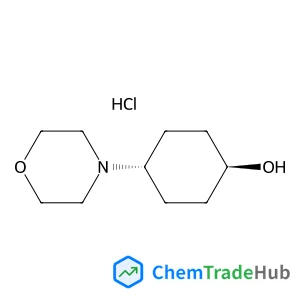
trans-4-(4-Morpholinyl)cyclohexanol hydrochloride (1:1)
CAS Number:
1588441-09-1
Molecular Formula:
C10H20ClNO2
Recommended Suppliers





Disclaimer
This page provides academic journal information for reference and research purposes only. We are not affiliated with any journal publishers and do not handle publication submissions. For publication-related inquiries, please contact the respective journal publishers directly.
If you notice any inaccuracies in the information displayed, please contact us at support@chemtradehub.com. We will promptly review and address your concerns.