












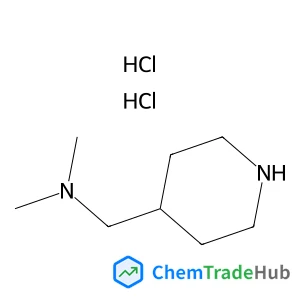
N,N-dimethyl(piperidin-4-yl)methanamine hydrochloride
CAS Number:
172281-72-0
Molecular Formula:
C8H20Cl2N2
Habdias de A. Silva-Neto, Thiago M. G. Cardoso, Wendell K. T. Coltro, Roberta C. Urban
Atmospheric aerosol or particulate matter (PM) has huge potential to affect health and climate. The adverse effects of particulate matter exposure on human health depend on its size and composition, and toxic metals, such as lead, are some of the constituents. Conventional methods to detect lead include atomic absorption and flame emission spectroscopy, which require high cost and bulky instrumentation, generate noticeable amounts of residues and need trained technicians or users. In this study, a simple, portable and low-cost electrochemical method is reported to determine bioavailable lead in PM using an unmodified screen-printed carbon electrode (SPCE) based on square wave anodic stripping voltammetry performed on a portable potentiostat. The proposed approach has provided excellent sensitivity (21 ± 1 μA μg−1 L) with a detection limit of 0.023 μg L−1, low interference from other metals and a recovery of ca. 90%. The accuracy of the method was confirmed by comparison with inductively coupled plasma mass spectrometry. Moreover, the use of the SPCE exhibited good stability allowing quantification of lead in atmospheric PM collected in Goiania city (2016). The achieved concentrations of lead ranged from 0.04 to 0.21 ng m−3. Based on the reported data, the unmodified SPCE device has successfully demonstrated great selectivity and sensitivity for environmental analysis at trace levels, making possible the monitoring of bioavailable lead in PM samples.
Zhen Zhou, Ce Hao, Zhanxian Gao, Kai Tan, Xin Lu, Zhongfang Chen
DOI: 10.1039/B923106D
A. M. Czoska, S. Livraghi, M. C. Paganini, E. Giamello, C. Di Valentin, G. Pacchioni
DOI: 10.1039/C0CP00143K
Fen Wan, Zhaohui Tang, Weidong He, Benjamin Chu
DOI: 10.1039/C002515A
Julien Guthmuller, Leticia González
DOI: 10.1039/C0CP00942C
Xianggui Ye, Shengting Cui, Valmor F. de Almeida, Benjamin P. Hay, Bamin Khomami
DOI: 10.1039/C0CP00953A
Nina Sapoletova, Tatyana Makarevich, Kirill Napolskii, Elena Mishina, Andrey Eliseev, Albert van Etteger, Theo Rasing, Galina Tsirlina
DOI: 10.1039/C0CP00812E
Yasunari Sakai, Kaname Kanai, Doseok Kim, Yukio Ouchi
DOI: 10.1039/C0CP00520G
Zhong-hua Cui, Chang-bin Shao, Si-meng Gao, Yi-hong Ding
DOI: 10.1039/C0CP00296H
Troels Bach Nielsen, Søren Hvidt, Søren Rud Keiding, Christian Petersen, Peter Westh, Kristian Keiding
DOI: 10.1039/C0CP00494D
Shaikh Nayeem Faisal, Carlos M. Pereira, Sangchul Rho, Hye Jin Lee
DOI: 10.1039/C0CP00750A
Ethyl 4-chlorothieno[2,3-b]pyridine-5-carboxylate (CAS: 59713-58-5) can be synth...
5-Methyl-1H-indole-3-carbaldehyde (CAS: 52562-50-2) is subject to various regula...
(1,3-Dimethyl-2,4-dioxo-1,2,3,4-tetrahydro-5-pyrimidinyl)boronic acid is a white...
Waste containing Sulfocostunolide A (CAS: 1016983-51-9) should be handled with c...
When handling Murraxocin (CAS: 88478-44-8), ensure proper personal protective eq...
Formvar (CAS: 63148-64-1) is an alkyd resin characterized by a high molecular we...
(S)-4-benzyl-2-((benzyloxy)methyl)morpholine is generally safe when handled with...
Methyl 1-(5-bromo-2-pyrimidinyl)cyclopropanecarboxylate (CAS: 1447607-69-3) is p...
2-Methyl-1-phenyl-1-propanamine hydrochloride (CAS: 24290-47-9) is generally con...
3-(4-Bromophenyl)-2-methylpropanoic acid is synthesized through a multi-step pro...
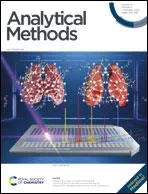
Analytical Methods welcomes early applications of new analytical and bioanalytical methods and technology demonstrating the potential for societal impact. We require that methods and technology reported in the journal are sufficiently innovative, robust, accurate, and compared to other available methods for the intended application. Developments with interdisciplinary approaches are particularly welcome. Systems should be proven with suitably complex and analytically challenging samples. We encourage developments within, but not limited to, the following technologies and applications: global health, point-of-care and molecular diagnostics biosensors and bioengineering drug development and pharmaceutical analysis applied microfluidics and nanotechnology omics studies, such as proteomics, metabolomics or glycomics environmental, agricultural and food science neuroscience biochemical and clinical analysis forensic analysis industrial process and method development
![Sodium 6-amino-3-[(E)-{4-[(E)-(4-aminophenyl)diazenyl]-2-methoxy-5-methylphenyl}diazenyl]-4-hydroxy-2-naphthalenesulfonate structure](https://static.chemtradehub.com/structs/294/2945-96-2-092f.webp "Sodium 6-amino-3-[(E)-{4-[(E)-(4-aminophenyl)diazenyl]-2-methoxy-5-methylphenyl}diazenyl]-4-hydroxy-2-naphthalenesulfonate structure")
![4-[(1-Methyl-1H-pyrrol-2-yl)methylene]-1,3(2H,4H)-isoquinolinedione structure](https://static.chemtradehub.com/structs/110/1104546-89-5-a600.webp "4-[(1-Methyl-1H-pyrrol-2-yl)methylene]-1,3(2H,4H)-isoquinolinedione structure")



