












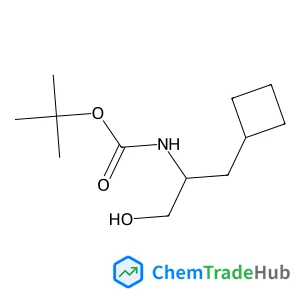
2-Methyl-2-propanyl (1-cyclobutyl-3-hydroxy-2-propanyl)carbamate
CAS Number:
816429-99-9
Molecular Formula:
C12H23NO3
V. K. Sharma, D. K. Rai, E. Mamontov
In spite of their well-known side effects, the nonsteroidal anti-inflammatory drugs (NSAIDs) are one of the most commonly prescribed medications for their antipyretic and anti-inflammatory actions. Interaction of NSAIDs with the plasma membrane plays a vital role in their therapeutic actions and defines many of their side effects. In the present study, we investigate the effects of three NSAIDs, aspirin, ibuprofen, and indomethacin, on the structure and dynamics of a model plasma membrane using a combination of small angle neutron scattering (SANS) and neutron spin echo (NSE) techniques. The SANS and NSE measurements were carried out on a 1,2-dimyristoyl-sn-glycero-3-phosphocholine (DMPC) membrane, with and without NSAIDs, at two different temperatures, 11 °C and 37 °C, where the DMPC membrane is in the gel and fluid phase, respectively. SANS data analysis shows that incorporation of NSAIDs leads to bilayer thinning of the membrane in both the phases. The dynamic properties of the membrane are represented by the intermediate scattering functions for NSE data, which are successfully described by the Zilman and Granek model. NSE data analysis shows that in both gel and fluid phases, addition of NSAIDs results in a decrease in the bending rigidity and compressibility modulus of the membrane, which is more prominent when the membrane is in the gel phase. The magnitude of the effect of NSAIDs on the bending rigidity and compressibility modulus of the membrane in the gel phase follows an order of ibuprofen > aspirin > indomethacin, whereas in the fluid phase, it is in the order of aspirin > ibuprofen > indomethacin. We find that the interaction between NSAIDs and phospholipid membranes is strongly dependent on the chemical structure of the drugs and physical state of the membrane. Mechanical properties of the membrane can be quantified by the membrane's bending rigidity. Hence, the present study reveals that incorporation of NSAIDs modulates the mechanical properties of the membrane, which may affect several physiological processes, particularly those linked to the membrane curvature.
Markus Döbbelin, Irantzu Llarena, Luis J. Claros Marfil, Germán Cabañero, Javier Rodriguez, David Mecerreyes
DOI: 10.1039/C1PY00044F
Hongjun Yang, Junpeng Zhao, Manqing Yan, Stergios Pispas
DOI: 10.1039/C1PY00334H
Garret M. Miyake, Eugene Y.-X. Chen
DOI: 10.1039/C1PY00245G
Xiaochen Wang, Maojie Zhang, Yongfang Li, Xiaoyu Li, Haiqiao Wang
DOI: 10.1039/C1PY00364J
Damien Loïc Berthier, Andreas Herrmann, Lahoussine Ouali
DOI: 10.1039/C1PY00195G
Mathurin Grogna, Rudi Cloots, André Luxen, Christine Jérôme, Catherine Passirani, Nolwenn Lautram, Jean-F. Desreux, Mike Collodoro, Marie-Claire De Pauw-Gillet, Christophe Detrembleur
DOI: 10.1039/C1PY00198A
Adeline Issoulie, Abdel Khoukh, Ahmed Benaboura, Maud Save, Christophe Derail, Laurent Billon
DOI: 10.1039/C1PY00066G
Tongjie Yao, Tieyu Cui, Jie Wu, Qiuzhi Chen, Shiwen Lu, Kening Sun
DOI: 10.1039/C1PY00311A
Jin Han, Bo Zhao, Yanqin Gao, Aijin Tang, Chao Gao
DOI: 10.1039/C1PY00235J
Mathieu Arseneault, Philippe Dufour, Isabelle Levesque, Jean-François Morin
DOI: 10.1039/C1PY00146A
When handling 2-Methyl-2-propanyl 5-amino-2-thiophenecarboxylate (CAS: 1498311-5...
5-Bromo-1,2-dichloro-3-fluorobenzene (CAS: 1000572-93-9) is a crystalline solid ...
(2R)-2-Amino-2-(4-bromophenyl)ethanol (CAS: 354153-64-3) should be stored in a c...
Methyl 4-(aminomethyl)tetrahydro-2H-pyran-4-carboxylate hydrochloride (CAS: 3627...
1,4-Dimethyl-1H-pyrazole-5-sulfonyl chloride is primarily used as an intermediat...
Dinaphtho[1,2-b:2',1'-d]furan is generally safe when handled with appropriate pe...
The market for 7-Methyl-7,9-dihydro-1H-purine-2,6,8(3H)-trione (CAS: 612-37-3) i...
2-(4-Chlorophenyl)malonaldehyde (CAS: 205676-17-1) is a colorless or light yello...
2-Methylchrysene (CAS: 3351-32-4) is typically synthesized via the reaction of c...
N-(6-aminopyrimidin-4-yl)acetamide (CAS: 89533-23-3) is generally considered saf...

Physical Chemistry Chemical Physics (PCCP) is an international journal co-owned by 19 physical chemistry and physics societies from around the world. This journal publishes original, cutting-edge research in physical chemistry, chemical physics and biophysical chemistry. To be suitable for publication in PCCP, articles must include significant innovation and/or insight into physical chemistry; this is the most important criterion that reviewers and Editors will judge against when evaluating submissions. The journal has a broad scope and welcomes contributions spanning experiment, theory, computation and data science. Topical coverage includes spectroscopy, dynamics, kinetics, statistical mechanics, thermodynamics, electrochemistry, catalysis, surface science, quantum mechanics, quantum computing and machine learning. Interdisciplinary research areas such as polymers and soft matter, materials, nanoscience, energy, surfaces/interfaces, and biophysical chemistry are welcomed if they demonstrate significant innovation and/or insight into physical chemistry. Joined experimental/theoretical studies are particularly appreciated when complementary and based on up-to-date approaches.

![2-Bromo-7-chloro-4H-pyrrolo[2,3-b]pyrazine structure](https://static.chemtradehub.com/structs/115/1150617-58-5-0b0a.webp "2-Bromo-7-chloro-4H-pyrrolo[2,3-b]pyrazine structure")
![L-Lysine,N6-[2-[[(1,1-dimethylethoxy)carbonyl]amino]benzoyl]-N2-[(9H-fluoren-9-ylmethoxy)carbonyl]- structure](https://static.chemtradehub.com/structs/159/159322-59-5-c046.webp "L-Lysine,N6-[2-[[(1,1-dimethylethoxy)carbonyl]amino]benzoyl]-N2-[(9H-fluoren-9-ylmethoxy)carbonyl]- structure")




