












![2-[2-(2-Methoxyethoxy)ethoxy]-2-methylpropane structure](https://static.chemtradehub.com/structs/527/52788-79-1-71c1.webp "2-[2-(2-Methoxyethoxy)ethoxy]-2-methylpropane structure")
Strain-tunable CO2 storage by black phosphorene and α-PC from combined first principles and molecular dynamics studies
Literature Information
Publication Date
2019-08-19
DOI
10.1039/C9CP03676H
Impact Factor
3.676
Authors
Xiaohan Song, Yang Liu, Yanmei Yang, Weifeng Li, Mingwen Zhao
View Original
Abstract
2D layered materials are intrinsically promising mediums for gas adsorption because of their recognized large surface areas and structural stability. Their gas adsorption and desorption processes are usually controlled by changing the temperature or applying high voltage. In this work, though combined density functional theory (DFT) calculations and molecular dynamics (MD) simulations, we propose that external tensile strain can also regulate the gas binding energetics and kinetics using two representative 2D materials, monolayer black phosphorene (BP) and black phosphorus carbide (α-PC), as showpiece models. The DFT results clearly show that CO2 can be physically adsorbed on BP/α-PC with moderate binding strength, which facilities the adsorption and desorption processes. For BP, strain increases the storage capacity from 10.90 ± 0.28 mmol g−1 (strain free) to 12.67 ± 0.33 (30% strain) with a tunability of 16.2%. α-PC, however, has a smaller strain response; its CO2 storage capacity increases from 15.98 ± 0.34 mmol g−1 (strain free) to 17.15 ± 0.36 mmol g−1 for a 10% strained state. DFT calculations reveal that CO2 is an electron acceptor for both BP and α-PC; however, it hardly regulates their electronic structures. The theoretical investigations suggest that BP and α-PC have great potential as gas capture and storage materials. The strain controlling approach can be generalized for the design of tunable nano-devices by external mechanical stimuli.
Related Literature
Synthesis and properties of novel electroactive poly(amic acid) and polyimidecopolymers bearing pendant oligoaniline groups
Xiaoteng Jia, Danming Chao, Hongtao Liu, Libing He, Tian Zheng, Xiujie Bian, Ce Wang
2011-04-12
Paper
DOI: 10.1039/C1PY00035G
Poly(norbornene) block copolymer-based shell cross-linked micelles with Co(iii)–salen cores
Yu Liu, Victor Piñón, III, Marcus Weck
2011-06-14
Paper
DOI: 10.1039/C1PY00151E
Aliphatic polyketone obtained by cationic polymerization of ethylketene
Najib Hayki, Nicolas Desilles, Fabrice Burel
2011-07-29
Paper
DOI: 10.1039/C1PY00199J
Thioxanthone-ethylcarbazole as a soluble visible light photoinitiator for free radical and free radical promoted cationic polymerizations
Deniz Tunc, Yusuf Yagci
2011-09-01
Paper
DOI: 10.1039/C1PY00269D
Phase behavior and self-assembly of PSn(P2VP-b-PAA)n multiarmed multisegmented star terpolymers with ampholytic arms
Zacharoula Iatridi, Yuri Roiter, Sergiy Minko
2011-06-29
Paper
DOI: 10.1039/C1PY00090J
Peptide-based lipid mimetics with tunable core properties viathiol–alkyne chemistry
Jacob G. Ray, Jack T. Ly, Daniel A. Savin
2011-03-08
Paper
DOI: 10.1039/C1PY00003A
Functional poly(vinylidene fluoride) copolymer membranesvia surface-initiated thiol–ene click reactions
Tao Cai, Rong Wang, K. G. Neoh, E. T. Kang
2011-05-27
Paper
DOI: 10.1039/C1PY00106J
Menthol-based chiral copolymers for polymer optical fibres (POF)
Eun Hee Min, Kok Hou Wong, Eki Setijadi, François Ladouceur, Mark Straton, Alexander Argyros
2011-07-05
Paper
DOI: 10.1039/C1PY00056J
Stealth macromolecular platforms for the design of MRI blood pool contrast agents
Mathurin Grogna, Rudi Cloots, André Luxen, Christine Jérôme, Catherine Passirani, Nolwenn Lautram, Jean-F. Desreux, Mike Collodoro, Marie-Claire De Pauw-Gillet, Christophe Detrembleur
2011-07-28
Paper
DOI: 10.1039/C1PY00198A
You might also like
Compound Q&A
What precautions should be taken when handling 2-Methyl-2-propanyl 5-amino-2-thiophenecarboxylate (CAS: 1498311-57-1)?
When handling 2-Methyl-2-propanyl 5-amino-2-thiophenecarboxylate (CAS: 1498311-5...
1498311-57-12-Methyl-2-propanyl ...
Compound Q&A
What are the physical and chemical properties of 5-Bromo-1,2-dichloro-3-fluorobenzene (CAS: 1000572-93-9)?
5-Bromo-1,2-dichloro-3-fluorobenzene (CAS: 1000572-93-9) is a crystalline solid ...
1000572-93-95-Bromo-1,2-dichloro...
Compound Q&A
How should (2R)-2-Amino-2-(4-bromophenyl)ethanol (CAS: 354153-64-3) be stored?
(2R)-2-Amino-2-(4-bromophenyl)ethanol (CAS: 354153-64-3) should be stored in a c...
354153-64-3(2R)-2-Amino-2-(4-br...
Compound Q&A
What regulatory guidelines apply to Methyl 4-(aminomethyl)tetrahydro-2H-pyran-4-carboxylate hydrochloride (CAS: 362707-24-2)?
Methyl 4-(aminomethyl)tetrahydro-2H-pyran-4-carboxylate hydrochloride (CAS: 3627...
362707-24-2Methyl 4-(aminomethy...
Compound Q&A
What are the main uses of 1,4-dimethyl-1H-pyrazole-5-sulfonyl chloride (CAS: 1174834-52-6)?
1,4-Dimethyl-1H-pyrazole-5-sulfonyl chloride is primarily used as an intermediat...
1174834-52-61,4-dimethyl-1H-pyra...
Compound Q&A
Is Dinaphtho[1,2-b:2',1'-d]furan (CAS: 239-69-0) safe?
Dinaphtho[1,2-b:2',1'-d]furan is generally safe when handled with appropriate pe...
239-69-0Dinaphtho[1,2-b:2',1...
Compound Q&A
What is the market or research trend for 7-Methyl-7,9-dihydro-1H-purine-2,6,8(3H)-trione (CAS: 612-37-3)?
The market for 7-Methyl-7,9-dihydro-1H-purine-2,6,8(3H)-trione (CAS: 612-37-3) i...
612-37-37-Methyl-7,9-dihydro...
Compound Q&A
What are the physical and chemical properties of 2-(4-Chlorophenyl)malonaldehyde (CAS: 205676-17-1)?
2-(4-Chlorophenyl)malonaldehyde (CAS: 205676-17-1) is a colorless or light yello...
205676-17-12-(4-Chlorophenyl)ma...
Compound Q&A
How is 2-Methylchrysene (CAS: 3351-32-4) typically synthesized?
2-Methylchrysene (CAS: 3351-32-4) is typically synthesized via the reaction of c...
3351-32-42-Methylchrysene
Compound Q&A
Is N-(6-aminopyrimidin-4-yl)acetamide (CAS: 89533-23-3) safe?
N-(6-aminopyrimidin-4-yl)acetamide (CAS: 89533-23-3) is generally considered saf...
89533-23-3N-(6-aminopyrimidin-...
Source Journal
Physical Chemistry Chemical Physics

CiteScore:
5.5
Self-citation Rate:
10.3%
Articles per Year:
3036
Physical Chemistry Chemical Physics (PCCP) is an international journal co-owned by 19 physical chemistry and physics societies from around the world. This journal publishes original, cutting-edge research in physical chemistry, chemical physics and biophysical chemistry. To be suitable for publication in PCCP, articles must include significant innovation and/or insight into physical chemistry; this is the most important criterion that reviewers and Editors will judge against when evaluating submissions. The journal has a broad scope and welcomes contributions spanning experiment, theory, computation and data science. Topical coverage includes spectroscopy, dynamics, kinetics, statistical mechanics, thermodynamics, electrochemistry, catalysis, surface science, quantum mechanics, quantum computing and machine learning. Interdisciplinary research areas such as polymers and soft matter, materials, nanoscience, energy, surfaces/interfaces, and biophysical chemistry are welcomed if they demonstrate significant innovation and/or insight into physical chemistry. Joined experimental/theoretical studies are particularly appreciated when complementary and based on up-to-date approaches.
Recommended Compounds
![2-Bromo-7-chloro-4H-pyrrolo[2,3-b]pyrazine structure](https://static.chemtradehub.com/structs/115/1150617-58-5-0b0a.webp "2-Bromo-7-chloro-4H-pyrrolo[2,3-b]pyrazine structure")
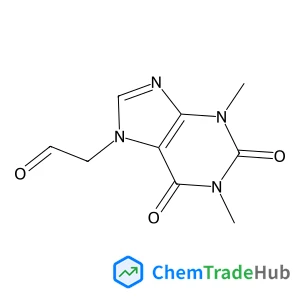
(1,3-Dimethyl-2,6-dioxo-1,2,3,6-tetrahydro-7H-purin-7-yl)acetaldehyde
CAS Number:
5614-53-9
Molecular Formula:
C9H10N4O3

Recommended Suppliers



Disclaimer
This page provides academic journal information for reference and research purposes only. We are not affiliated with any journal publishers and do not handle publication submissions. For publication-related inquiries, please contact the respective journal publishers directly.
If you notice any inaccuracies in the information displayed, please contact us at support@chemtradehub.com. We will promptly review and address your concerns.