












![[4-Amino-2-(methylsulfanyl)-5-pyrimidinyl]methanol structure](https://static.chemtradehub.com/structs/588/588-36-3-fc73.webp "[4-Amino-2-(methylsulfanyl)-5-pyrimidinyl]methanol structure")
Orientational order in the splay nematic ground state
Literature Information
Publication Date
2019-08-20
DOI
10.1039/C9CP03581H
Impact Factor
3.676
Authors
Richard J. Mandle, Alenka Mertelj
View Original
Abstract
Modulated nematic liquid crystal phases, which lack positional order but have some periodic variation in the direction of average orientation present in a classical nematic, have attracted significant interest. In the recently discovered splay nematic (NS) phase the average orientational order is augmented with a periodic splay deformation of orientation perpendicular to the director. We use X-ray scattering experiments to measure the orientational order parameters in the nematic (N) and splay nematic (NS) phases of the liquid crystalline material RM734. The degree of orientational order is somewhat larger in the NS phase than in the preceding nematic and temperature dependent. We reconstruct the orientational distribution function and find it to be nematic-like in the NS phase, indicating the change in orientation between neighbouring molecules due to the splay modulation is very small. A small splay angle implies that the splay modulation period is larger than the few tens of nanometers originally envisaged. The method described herein can be used to assist in unambiguous identification of the splay-nematic phase.
Related Literature
Ten-gram scale SiC@SiO2 nanowires: high-yield synthesis towards industrialization, in situ growth mechanism and their peculiar photoluminescence and electromagnetic wave absorption properties
Z. J. Li, H. Y. Yu, G. Y. Song, J. Zhao, H. Zhang, M. Zhang, A. L. Meng, Q. D. Li
2017-01-03
Paper
DOI: 10.1039/C6CP07457J
Charge transport mechanisms in sol–gel grown La0.7Pb0.3MnO3/LaAlO3 manganite films
Eesh Vaghela, M. J. Keshvani, Keval Gadani, Zalak Joshi, Hetal Boricha, K. Asokan, D. Venkateshwarlu, V. Ganesan, N. A. Shah, P. S. Solanki
2017-01-31
Paper
DOI: 10.1039/C6CP07730G
Temperature-dependent ESR and computational studies on antiferromagnetic electron transfer in the yeast NADH dehydrogenase Ndi1
Kaiqi Wu, Wenfei Li, Lu Yu, Wei Tong, Yue Feng, Shenglong Ling, Longhua Zhang, Xiao Zheng, Maojun Yang
2017-01-09
Paper
DOI: 10.1039/C6CP08107J
Conceptual density functional theory for electron transfer and transport in mesoscopic systems
Paulo R. Bueno, David A. Miranda
2017-02-02
Paper
DOI: 10.1039/C6CP02504H
Effect of Ag and Pd promotion on CH4 selectivity in Fe(100) Fischer–Tröpsch catalysis
Jennifer Wilcox, David W. Ball
2017-01-23
Paper
DOI: 10.1039/C6CP07116C
Comparative study of the intermolecular dynamics of imidazolium-based ionic liquids with linear and branched alkyl chains: OHD-RIKES measurements
Lianjie Xue, Fehmi Bardak, George Tamas, Edward L. Quitevis
2017-01-19
Paper
DOI: 10.1039/C6CP08263G
Collective proton transfer in ordinary ice: local environments, temperature dependence and deuteration effects
Christof Drechsel-Grau, Dominik Marx
2016-11-07
Perspective
DOI: 10.1039/C6CP05679B
The shortest Th–Th distance from a new type of quadruple bond
Han-Shi Hu, Nikolas Kaltsoyannis
2017-01-10
Paper
DOI: 10.1039/C7CP00113D
Hydration of the simplest α-keto acid: a rotational spectroscopic and ab initio study of the pyruvic acid–water complex
Elijah G. Schnitzler, Nathan A. Seifert, Supriya Ghosh, Javix Thomas, Yunjie Xu, Wolfgang Jäger
2017-01-17
Paper
DOI: 10.1039/C6CP08741H
You might also like
Compound Q&A
What precautions should be taken when handling 4-(2-Furylmethyl)thiomorpholine 1,1-dioxide (CAS: 79206-94-3)?
When handling 4-(2-Furylmethyl)thiomorpholine 1,1-dioxide (CAS: 79206-94-3), it ...
79206-94-34-(2-Furylmethyl)thi...
Compound Q&A
What precautions should be taken when handling 4-Chloro-N-[2-(4-morpholinyl)ethyl]benzamide (CAS: 71320-77-9)?
When handling 4-Chloro-N-[2-(4-morpholinyl)ethyl]benzamide (CAS: 71320-77-9), it...
71320-77-94-Chloro-N-[2-(4-mor...
Compound Q&A
How should waste containing 2-[2-(2-Methoxyethoxy)ethoxy]ethyl 4-methylbenzenesulfonate (CAS: 62921-74-8) be handled?
Waste containing this compound (CAS: 62921-74-8) should be handled according to ...
62921-74-82-[2-(2-Methoxyethox...
Compound Q&A
How should waste containing (S)-Methyl 2-amino-3-cyclohexylpropanoate be handled?
Waste containing (S)-Methyl 2-amino-3-cyclohexylpropanoate should be collected i...
40056-18-6(S)-Methyl 2-amino-3...
Compound Q&A
How is 5-({4-[(2S,4R)-4-Hydroxy-2-methyltetrahydro-2H-pyran-4-yl]-2-thienyl}sulfanyl)-1-methyl-1,3-dihydro-2H-indol-2-one (CAS: 166882-70-8) typically synthesized?
This compound can be synthesized using a multi-step process involving the conjug...
166882-70-85-({4-[(2S,4R)-4-Hyd...
Compound Q&A
Are there alternatives to (2E)-3-(3,4-Dichlorophenyl)acrylic acid (CAS: 7312-27-8) in synthesis?
There are several alternatives to (2E)-3-(3,4-Dichlorophenyl)acrylic acid in syn...
7312-27-8(2E)-3-(3,4-Dichloro...
Compound Q&A
How should Ethyl 6-(2-nitrophenyl)imidazo[2,1-b][1,3]thiazole-3-carboxylate (CAS: 925437-84-9) be stored?
Ethyl 6-(2-nitrophenyl)imidazo[2,1-b][1,3]thiazole-3-carboxylate (CAS: 925437-84...
925437-84-9Ethyl 6-(2-nitrophen...
Compound Q&A
How should waste containing 2-(1,3-Thiazol-2-yl)ethanamine (CAS: 18453-07-1) be handled?
Waste containing 2-(1,3-Thiazol-2-yl)ethanamine (CAS: 18453-07-1) should be coll...
18453-07-12-(1,3-Thiazol-2-yl)...
Compound Q&A
How is Methyl 5-iodo-2-methylbenzoate (CAS: 103440-54-6) typically synthesized?
Methyl 5-iodo-2-methylbenzoate can be synthesized through the iodination of meth...
103440-54-6Methyl 5-iodo-2-meth...
Compound Q&A
How is 5-Chloro[1,2,4]triazolo[1,5-a]pyridine (CAS: 1427399-34-5) typically synthesized?
5-Chloro[1,2,4]triazolo[1,5-a]pyridine is commonly synthesized via the condensat...
1427399-34-55-Chloro[1,2,4]triaz...
Source Journal
Physical Chemistry Chemical Physics

CiteScore:
5.5
Self-citation Rate:
10.3%
Articles per Year:
3036
Physical Chemistry Chemical Physics (PCCP) is an international journal co-owned by 19 physical chemistry and physics societies from around the world. This journal publishes original, cutting-edge research in physical chemistry, chemical physics and biophysical chemistry. To be suitable for publication in PCCP, articles must include significant innovation and/or insight into physical chemistry; this is the most important criterion that reviewers and Editors will judge against when evaluating submissions. The journal has a broad scope and welcomes contributions spanning experiment, theory, computation and data science. Topical coverage includes spectroscopy, dynamics, kinetics, statistical mechanics, thermodynamics, electrochemistry, catalysis, surface science, quantum mechanics, quantum computing and machine learning. Interdisciplinary research areas such as polymers and soft matter, materials, nanoscience, energy, surfaces/interfaces, and biophysical chemistry are welcomed if they demonstrate significant innovation and/or insight into physical chemistry. Joined experimental/theoretical studies are particularly appreciated when complementary and based on up-to-date approaches.
Recommended Compounds
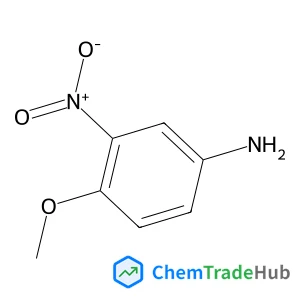
![[4-(Heptyloxy)phenyl]boronic acid structure](https://static.chemtradehub.com/structs/136/136370-19-9-ad33.webp "[4-(Heptyloxy)phenyl]boronic acid structure")

Methyl 2-cyano-3,12-dioxooleana-1,9(11)-dien-28-oate
CAS Number:
218600-53-4
Molecular Formula:
C32H43NO4
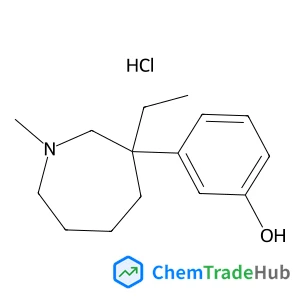
3-(3-Ethyl-1-methyl-3-azepanyl)phenol hydrochloride (1:1)
CAS Number:
59263-76-2
Molecular Formula:
C15H24ClNO
Recommended Suppliers





Disclaimer
This page provides academic journal information for reference and research purposes only. We are not affiliated with any journal publishers and do not handle publication submissions. For publication-related inquiries, please contact the respective journal publishers directly.
If you notice any inaccuracies in the information displayed, please contact us at support@chemtradehub.com. We will promptly review and address your concerns.