












Calculating rate constants for intersystem crossing and internal conversion in the Franck–Condon and Herzberg–Teller approximations
Literature Information
Publication Date
2019-08-05
DOI
10.1039/C9CP03183A
Impact Factor
3.676
Authors
Victor N. Cherepanov, Rinat T. Nasibullin, Dage Sundholm, Theo Kurten
View Original
Abstract
Effective and fast algorithms for calculating rate constants for internal conversion (IC) and intersystem crossing (ISC) in the Franck–Condon and Herzberg–Teller approximations have been developed and implemented. The methods have been employed for calculating IC and ISC rate constants for the pyrromethene-567 dye (PM567), hetero[8]circulene (4B) and free-base porphyrin (H2P). The fluorescence quantum yields obtained by comparing calculated rate constants for the radiative and non-radiative processes are in good agreement with experimental data.
Related Literature
Light-responsive polymer brushes: active topographic cues for cell culture applications
A. C. Manikas, V. Pagliarulo, P. Ferraro, S. Cavalli
2017-04-28
Paper
DOI: 10.1039/C7PY00462A
Facile construction of crosslinked anion exchange membranes based on fluorenyl-containing polysulfone via click chemistry
Bo Hu, Luyang Miao, Yang Bai, Changli Lü
2017-06-27
Paper
DOI: 10.1039/C7PY00789B
Hybrid single-chain nanoparticles via the metal induced crosslinking of N-donor functionalized polymer chains
Karen Freytag, Stefanie Säfken, Kai Wolter, Jan C. Namyslo, Eike G. Hübner
2017-11-16
Paper
DOI: 10.1039/C7PY01487B
From mono- to tetraacylgermanes: extending the scope of visible light photoinitiators
Anna Eibel, Judith Radebner, Michael Haas, David E. Fast, Hilde Freißmuth, Eduard Stadler, Paul Faschauner, Ana Torvisco, Iris Lamparth, Norbert Moszner, Harald Stueger, Georg Gescheidt
2017-11-20
Paper
DOI: 10.1039/C7PY01590A
RAFT synthesis and micellization of a photo-, temperature- and pH-responsive diblock copolymer based on spiropyran
Yuan Zhang, Mengjiao Cao, Bing Yuan, Tianying Guo
2017-11-03
Paper
DOI: 10.1039/C7PY01714F
Selective oxidation of cellulose, mediated by N-hydroxyphthalimide, under a metal-free environment
Sergiu Coseri, Gabriela Biliuta
2017-11-06
Paper
DOI: 10.1039/C7PY01710C
Transiently malleable multi-healable hydrogel nanocomposites based on responsive boronic acid copolymers
Adérito J. R. Amaral, Mina Emamzadeh, George Pasparakis
2018-01-10
Paper
DOI: 10.1039/C7PY01202K
A sustainable photocontrolled ATRP strategy: facile separation and recycling of a visible-light-mediated catalyst fac-[Ir(ppy)3]
Xiaodong Liu, Yuanyuan Ni, Jian Wu, Hongjuan Jiang, Zhengbiao Zhang, Lifen Zhang, Zhenping Cheng
2018-01-03
Paper
DOI: 10.1039/C7PY02008B
Effect of conjugation length and metal-backbone interactions on charge transport properties of conducting metallopolymers
Minh T. Nguyen, Richard A. Jones, Bradley J. Holliday
2017-06-13
Paper
DOI: 10.1039/C7PY00673J
You might also like
Compound Q&A
What precautions should be taken when handling 4-(2-Furylmethyl)thiomorpholine 1,1-dioxide (CAS: 79206-94-3)?
When handling 4-(2-Furylmethyl)thiomorpholine 1,1-dioxide (CAS: 79206-94-3), it ...
79206-94-34-(2-Furylmethyl)thi...
Compound Q&A
What precautions should be taken when handling 4-Chloro-N-[2-(4-morpholinyl)ethyl]benzamide (CAS: 71320-77-9)?
When handling 4-Chloro-N-[2-(4-morpholinyl)ethyl]benzamide (CAS: 71320-77-9), it...
71320-77-94-Chloro-N-[2-(4-mor...
Compound Q&A
How should waste containing 2-[2-(2-Methoxyethoxy)ethoxy]ethyl 4-methylbenzenesulfonate (CAS: 62921-74-8) be handled?
Waste containing this compound (CAS: 62921-74-8) should be handled according to ...
62921-74-82-[2-(2-Methoxyethox...
Compound Q&A
How should waste containing (S)-Methyl 2-amino-3-cyclohexylpropanoate be handled?
Waste containing (S)-Methyl 2-amino-3-cyclohexylpropanoate should be collected i...
40056-18-6(S)-Methyl 2-amino-3...
Compound Q&A
How is 5-({4-[(2S,4R)-4-Hydroxy-2-methyltetrahydro-2H-pyran-4-yl]-2-thienyl}sulfanyl)-1-methyl-1,3-dihydro-2H-indol-2-one (CAS: 166882-70-8) typically synthesized?
This compound can be synthesized using a multi-step process involving the conjug...
166882-70-85-({4-[(2S,4R)-4-Hyd...
Compound Q&A
Are there alternatives to (2E)-3-(3,4-Dichlorophenyl)acrylic acid (CAS: 7312-27-8) in synthesis?
There are several alternatives to (2E)-3-(3,4-Dichlorophenyl)acrylic acid in syn...
7312-27-8(2E)-3-(3,4-Dichloro...
Compound Q&A
How should Ethyl 6-(2-nitrophenyl)imidazo[2,1-b][1,3]thiazole-3-carboxylate (CAS: 925437-84-9) be stored?
Ethyl 6-(2-nitrophenyl)imidazo[2,1-b][1,3]thiazole-3-carboxylate (CAS: 925437-84...
925437-84-9Ethyl 6-(2-nitrophen...
Compound Q&A
How should waste containing 2-(1,3-Thiazol-2-yl)ethanamine (CAS: 18453-07-1) be handled?
Waste containing 2-(1,3-Thiazol-2-yl)ethanamine (CAS: 18453-07-1) should be coll...
18453-07-12-(1,3-Thiazol-2-yl)...
Compound Q&A
How is Methyl 5-iodo-2-methylbenzoate (CAS: 103440-54-6) typically synthesized?
Methyl 5-iodo-2-methylbenzoate can be synthesized through the iodination of meth...
103440-54-6Methyl 5-iodo-2-meth...
Compound Q&A
How is 5-Chloro[1,2,4]triazolo[1,5-a]pyridine (CAS: 1427399-34-5) typically synthesized?
5-Chloro[1,2,4]triazolo[1,5-a]pyridine is commonly synthesized via the condensat...
1427399-34-55-Chloro[1,2,4]triaz...
Source Journal
Physical Chemistry Chemical Physics

CiteScore:
5.5
Self-citation Rate:
10.3%
Articles per Year:
3036
Physical Chemistry Chemical Physics (PCCP) is an international journal co-owned by 19 physical chemistry and physics societies from around the world. This journal publishes original, cutting-edge research in physical chemistry, chemical physics and biophysical chemistry. To be suitable for publication in PCCP, articles must include significant innovation and/or insight into physical chemistry; this is the most important criterion that reviewers and Editors will judge against when evaluating submissions. The journal has a broad scope and welcomes contributions spanning experiment, theory, computation and data science. Topical coverage includes spectroscopy, dynamics, kinetics, statistical mechanics, thermodynamics, electrochemistry, catalysis, surface science, quantum mechanics, quantum computing and machine learning. Interdisciplinary research areas such as polymers and soft matter, materials, nanoscience, energy, surfaces/interfaces, and biophysical chemistry are welcomed if they demonstrate significant innovation and/or insight into physical chemistry. Joined experimental/theoretical studies are particularly appreciated when complementary and based on up-to-date approaches.
Recommended Compounds
![[4-(Heptyloxy)phenyl]boronic acid structure](https://static.chemtradehub.com/structs/136/136370-19-9-ad33.webp "[4-(Heptyloxy)phenyl]boronic acid structure")
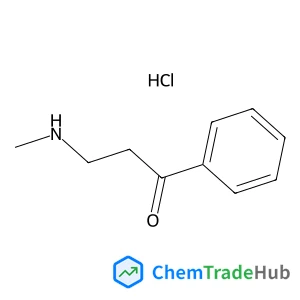
3-(Methylamino)-1-phenyl-1-propanone hydrochloride (1:1)
CAS Number:
2538-50-3
Molecular Formula:
C10H14ClNO
Recommended Suppliers





Disclaimer
This page provides academic journal information for reference and research purposes only. We are not affiliated with any journal publishers and do not handle publication submissions. For publication-related inquiries, please contact the respective journal publishers directly.
If you notice any inaccuracies in the information displayed, please contact us at support@chemtradehub.com. We will promptly review and address your concerns.