













A comprehensive study of the molecular vibrations in solid-state benzylic amide [2]catenane
Literature Information
Publication Date
2019-08-20
DOI
10.1039/C9CP03053K
Impact Factor
3.676
Authors
Carlos Romero-Muñiz, Denís Paredes-Roibás, Antonio Hernanz, José María Gavira-Vallejo
View Original
Abstract
The interpretation of vibrational spectra is often complex but a detailed knowledge of the normal modes responsible for the experimental bands provides valuable information about the molecular structure of the sample. In this work we record and assign in detail the infrared (IR) spectrum of the benzylic amide [2]catenane, a complex molecular solid displaying crimped mechanical bonds like the links of a chain. In spite of the large size of the unit cell, we calculate all the vibrational modes of the catenane crystal using quantum first-principles calculations. The activity of each mode is also evaluated using the Born effective charges approach and a theoretical spectrum is constructed for comparison purposes. We find a remarkable agreement between the calculations and the experimental results without the need to apply any further empirical correction or fitting to the eigenfrequencies. A detailed description in terms of the usual internal coordinates is provided for over 1000 normal modes. This thorough analysis allows us to perform the complete assignment of the spectrum, revealing the nature of the most active modes responsible for the IR features. Finally, we compare the obtained results with those of Raman spectroscopy, studying the effects of the rule of mutual exclusion in vibrational spectroscopy according to the different levels of molecular symmetry embedded in this mechanically interlocked molecular compound.
Recommended Journals
Related Literature
Room-temperature ferromagnetism in the two-dimensional layered Cu2MoS4 nanosheets
Ke Zhang, Rashid Khan, Hongyan Guo, Irfan Ali, Xiuling Li, Yunxiang Lin, Haiping Chen, Wensheng Yan, Xiaojun Wu, Li Song
2016-12-12
Communication
DOI: 10.1039/C6CP07270D
A new approach to distance measurements between two spin labels in the >10 nm range
2017-01-27
Paper
DOI: 10.1039/C6CP07597E
Piezochromism and structural and electronic properties of benz[a]anthracene under pressure
Weizhao Cai, Rong Zhang, Shanti Deemyad
2017-01-31
Paper
DOI: 10.1039/C6CP08171A
The crucial role of Mn spiral spin order in stabilizing the Dy–Mn exchange striction in multiferroic DyMnO3
H. W. Wang, C. L. Li, S. L. Yuan, J. F. Wang, C. L. Lu, J.-M. Liu
2017-01-04
Paper
DOI: 10.1039/C6CP06369A
Layered structure of the near-surface region of oxidized chalcopyrite (CuFeS2): hard X-ray photoelectron spectroscopy, X-ray absorption spectroscopy and DFT+U studies
Yuri Mikhlin, Vladimir Nasluzov, Alexander Romanchenko, Yevgeny Tomashevich, Alexey Shor, Roberto Félix
2017-01-09
Paper
DOI: 10.1039/C6CP07598C
Cyclopentadithiophene organic core in small molecule organic solar cells: morphological control of carrier recombination
Rocío Domínguez, Núria F. Montcada, Pilar de la Cruz, Fernando Langa
2016-12-23
Paper
DOI: 10.1039/C6CP08166E
Corrosion inhibition of copper in aqueous chloride solution by 1H-1,2,3-triazole and 1,2,4-triazole and their combinations: electrochemical, Raman and theoretical studies
Stanley Udochukwu Ofoegbu, Tiago L. P. Galvão, José R. B. Gomes, João Tedim, Helena I. S. Nogueira, M. G. S. Ferreira
2017-02-07
Paper
DOI: 10.1039/C7CP00241F
Charge transport in organic donor–acceptor mixed-stack crystals: the role of nonlocal electron–phonon couplings
Lingyun Zhu, Hua Geng, Yuanping Yi, Zhixiang Wei
2017-01-06
Paper
DOI: 10.1039/C6CP07417K
Conceptual density functional theory for electron transfer and transport in mesoscopic systems
Paulo R. Bueno, David A. Miranda
2017-02-02
Paper
DOI: 10.1039/C6CP02504H
You might also like
Compound Q&A
What precautions should be taken when handling 4-(2-Furylmethyl)thiomorpholine 1,1-dioxide (CAS: 79206-94-3)?
When handling 4-(2-Furylmethyl)thiomorpholine 1,1-dioxide (CAS: 79206-94-3), it ...
79206-94-34-(2-Furylmethyl)thi...
Compound Q&A
What precautions should be taken when handling 4-Chloro-N-[2-(4-morpholinyl)ethyl]benzamide (CAS: 71320-77-9)?
When handling 4-Chloro-N-[2-(4-morpholinyl)ethyl]benzamide (CAS: 71320-77-9), it...
71320-77-94-Chloro-N-[2-(4-mor...
Compound Q&A
How should waste containing 2-[2-(2-Methoxyethoxy)ethoxy]ethyl 4-methylbenzenesulfonate (CAS: 62921-74-8) be handled?
Waste containing this compound (CAS: 62921-74-8) should be handled according to ...
62921-74-82-[2-(2-Methoxyethox...
Compound Q&A
How should waste containing (S)-Methyl 2-amino-3-cyclohexylpropanoate be handled?
Waste containing (S)-Methyl 2-amino-3-cyclohexylpropanoate should be collected i...
40056-18-6(S)-Methyl 2-amino-3...
Compound Q&A
How is 5-({4-[(2S,4R)-4-Hydroxy-2-methyltetrahydro-2H-pyran-4-yl]-2-thienyl}sulfanyl)-1-methyl-1,3-dihydro-2H-indol-2-one (CAS: 166882-70-8) typically synthesized?
This compound can be synthesized using a multi-step process involving the conjug...
166882-70-85-({4-[(2S,4R)-4-Hyd...
Compound Q&A
Are there alternatives to (2E)-3-(3,4-Dichlorophenyl)acrylic acid (CAS: 7312-27-8) in synthesis?
There are several alternatives to (2E)-3-(3,4-Dichlorophenyl)acrylic acid in syn...
7312-27-8(2E)-3-(3,4-Dichloro...
Compound Q&A
How should Ethyl 6-(2-nitrophenyl)imidazo[2,1-b][1,3]thiazole-3-carboxylate (CAS: 925437-84-9) be stored?
Ethyl 6-(2-nitrophenyl)imidazo[2,1-b][1,3]thiazole-3-carboxylate (CAS: 925437-84...
925437-84-9Ethyl 6-(2-nitrophen...
Compound Q&A
How should waste containing 2-(1,3-Thiazol-2-yl)ethanamine (CAS: 18453-07-1) be handled?
Waste containing 2-(1,3-Thiazol-2-yl)ethanamine (CAS: 18453-07-1) should be coll...
18453-07-12-(1,3-Thiazol-2-yl)...
Compound Q&A
How is Methyl 5-iodo-2-methylbenzoate (CAS: 103440-54-6) typically synthesized?
Methyl 5-iodo-2-methylbenzoate can be synthesized through the iodination of meth...
103440-54-6Methyl 5-iodo-2-meth...
Compound Q&A
How is 5-Chloro[1,2,4]triazolo[1,5-a]pyridine (CAS: 1427399-34-5) typically synthesized?
5-Chloro[1,2,4]triazolo[1,5-a]pyridine is commonly synthesized via the condensat...
1427399-34-55-Chloro[1,2,4]triaz...
Source Journal
Physical Chemistry Chemical Physics

CiteScore:
5.5
Self-citation Rate:
10.3%
Articles per Year:
3036
Physical Chemistry Chemical Physics (PCCP) is an international journal co-owned by 19 physical chemistry and physics societies from around the world. This journal publishes original, cutting-edge research in physical chemistry, chemical physics and biophysical chemistry. To be suitable for publication in PCCP, articles must include significant innovation and/or insight into physical chemistry; this is the most important criterion that reviewers and Editors will judge against when evaluating submissions. The journal has a broad scope and welcomes contributions spanning experiment, theory, computation and data science. Topical coverage includes spectroscopy, dynamics, kinetics, statistical mechanics, thermodynamics, electrochemistry, catalysis, surface science, quantum mechanics, quantum computing and machine learning. Interdisciplinary research areas such as polymers and soft matter, materials, nanoscience, energy, surfaces/interfaces, and biophysical chemistry are welcomed if they demonstrate significant innovation and/or insight into physical chemistry. Joined experimental/theoretical studies are particularly appreciated when complementary and based on up-to-date approaches.
Recommended Compounds
![[4-(Heptyloxy)phenyl]boronic acid structure](https://static.chemtradehub.com/structs/136/136370-19-9-ad33.webp "[4-(Heptyloxy)phenyl]boronic acid structure")
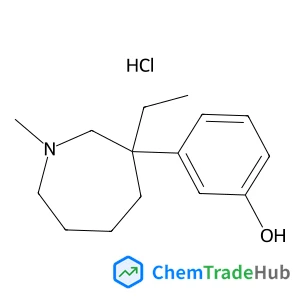
3-(3-Ethyl-1-methyl-3-azepanyl)phenol hydrochloride (1:1)
CAS Number:
59263-76-2
Molecular Formula:
C15H24ClNO

Recommended Suppliers




Disclaimer
This page provides academic journal information for reference and research purposes only. We are not affiliated with any journal publishers and do not handle publication submissions. For publication-related inquiries, please contact the respective journal publishers directly.
If you notice any inaccuracies in the information displayed, please contact us at support@chemtradehub.com. We will promptly review and address your concerns.