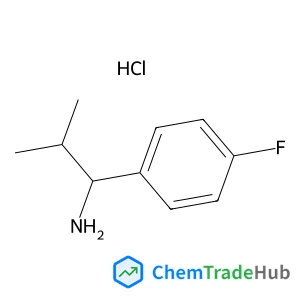
(1R)-1-(4-Fluorophenyl)-2-methyl-1-propanamine hydrochloride (1:1)
CAS Number:
1213329-40-8
Molecular Formula:
C10H15ClFN
Eudes Eterno Fileti
Development of efficient electrodes is one of the main ways to increase the performance of an electrochemical energy storage device. It is known that such performance is associated with the electrode specific area, which allows a much larger interfacial interaction with the electrolyte. In this work, molecular dynamics is employed to model C60/graphene composite electrodes that can expand the effective area by approximately 70% relative to a pure graphene electrode. Our simulations indicate that the performance of supercapacitors of C60/graphene electrodes is superior to those made of planar graphene, in some cases up to 150%. The inherent electrolyte asymmetry in the investigated supercapacitors has a negative effect on the total capacitance, indicating that even better results could be obtained after rational design of the fullerene density on the surface of the graphene as well as the choice of the ions in the liquid ionic composition.

Pure and Applied Chemistry

Journal of Physics and Chemistry of Solids

Molecular Pharmacology

Helvetica Chimica Acta

Proceedings of the National Academy of Sciences of the United States of America

Russian Chemical Reviews

Pharmacological Reviews

Science Progress

Kinetics and Catalysis

Journal of Medicinal Chemistry
Andrey V. Zaytsev, Amit Sil, Glib V. Baryshnikov, J. A. Gareth Williams, Fernando B. Dias, Valery N. Kozhevnikov
DOI: 10.1039/D3SC04450E
Subhankar Sahu, Lokesh Kumar, Sumita Das, Dipti Gupta, Ruchi Anand
DOI: 10.1039/D3SC03509C
Andy S. Anker, Keith T. Butler, Kirsten M. Ø. Jensen
DOI: 10.1039/D3SC05081E
Manuel Weh, Olga Anhalt
DOI: 10.1039/D3SC05341E
Liming Sun, Yaya Yuan, Xiaoxiao He, Wenwen Zhan, Dong Li, Yanli Zhao, Xiao-Jun Wang, Xiguang Han
DOI: 10.1039/D3SC04328B
Roman M. Mironenko
DOI: 10.1039/D3SC04691E
Marcin Oszajca, Dariusz Matoga
DOI: 10.1039/D3SC04401G
James D. Swarbrick, Alasdair I. McKay
DOI: 10.1039/D3SC01944F
3-(2-Bromoimidazo[2,1-b]thiazol-6-yl)propanoic acid hydrochloride is typically s...
2-Isopropyl-1,3-dioxane-5-carboxylic acid is typically synthesized by the carbox...
Alisporivir (CAS: 254435-95-5) is an antiviral medication used in the treatment ...
[1,2,4]triazolo[3,4-a]phthalazine (CAS: 234-80-0) is a crystalline compound with...
Regulatory guidelines for (2S)-5-Hydroxy-2-(4-hydroxyphenyl)-4-oxo-3,4-dihydro-2...
2,2-Difluorocyclohexanamine hydrochloride is generally safe when handled under p...
3-Nitro-2-phenylthiophene is primarily used in the synthesis of other organic co...
1-(Trifluoroacetyl)-4-piperidinecarbonitrile (CAS: 77940-79-5) is a colorless to...
Research and market trends for 1,3,6,8-Tetranitro-9H-carbazole (CAS: 4543-33-3) ...
Waste containing Dibenzo[b,d]thiophen-1-ylboronic acid (CAS: 1245943-60-5) shoul...

Physical Chemistry Chemical Physics (PCCP) is an international journal co-owned by 19 physical chemistry and physics societies from around the world. This journal publishes original, cutting-edge research in physical chemistry, chemical physics and biophysical chemistry. To be suitable for publication in PCCP, articles must include significant innovation and/or insight into physical chemistry; this is the most important criterion that reviewers and Editors will judge against when evaluating submissions. The journal has a broad scope and welcomes contributions spanning experiment, theory, computation and data science. Topical coverage includes spectroscopy, dynamics, kinetics, statistical mechanics, thermodynamics, electrochemistry, catalysis, surface science, quantum mechanics, quantum computing and machine learning. Interdisciplinary research areas such as polymers and soft matter, materials, nanoscience, energy, surfaces/interfaces, and biophysical chemistry are welcomed if they demonstrate significant innovation and/or insight into physical chemistry. Joined experimental/theoretical studies are particularly appreciated when complementary and based on up-to-date approaches.