












Vibrational sum-frequency generation spectroscopy of electrode surfaces: studying the mechanisms of sustainable fuel generation and utilisation
Literature Information
Publication Date
2019-05-23
DOI
10.1039/C9CP02225B
Impact Factor
3.676
Authors
Adrian M. Gardner, Khezar H. Saeed, Alexander J. Cowan
View Original
Abstract
The electrocatalytic oxidation of water coupled to the reduction of carbon dioxide, to make carbon based products, or the reduction of protons to provide hydrogen, offers a sustainable route to generating useful fuels. However new improved electrocatalysts and electrode materials are needed for these reactions. Similarly fuel cells for fuel utilisation rely on precious metal electrodes and new lower-cost materials are needed. Developing efficient catalysts for sustainable fuel generation can be accelerated with an improved understanding of the underlying mechanisms. Herein, we present a perspective on the use of vibrational sum-frequency generation (VSFG) spectroscopy to study such electrocatalytic mechanisms. We briefly outline the basic principles of VSFG spectroscopy pertinent to the study of electrochemical interfaces. We then review the use of VSFG to study water at charged and electrode interfaces, relevant to the mechanisms of water oxidation, the mechanisms of alcohol oxidation and also molecular electrocatalysts for carbon dioxide reduction.
Related Literature
Metathesis polymerization of monomers containing two diphenylacetylene units: synthesis and properties of poly(diphenylacetylene)s bearing diphenylacetylene units on the side chain
Toshikazu Sakaguchi, Hikaru Shimada, Tamotsu Hashimoto
2020-09-24
Paper
DOI: 10.1039/D0PY01182G
Predictive model of polymer reaction kinetics and coagulation behavior in seeded emulsion co- and ter-polymerizations
Luca Banetta, Giuseppe Storti, George Hoggard, Gareth Simpson
2020-09-21
Paper
DOI: 10.1039/D0PY01138J
Body temperature polymerization and in situ drug encapsulation in supercritical carbon dioxide
Zi-Kun Rao, Tian-Qiang Wang, Yang Li, Hong-Yu Zhu, Yu Liu, Jian-Yuan Hao
2020-10-07
Paper
DOI: 10.1039/D0PY01131B
Semifluorinated, kinked polyarylenes via direct arylation polycondensation
Fabian Kempe, Felix Riehle, Hartmut Komber, Rukiya Matsidik, Michael Walter, Michael Sommer
2020-10-07
Paper
DOI: 10.1039/D0PY00973C
Novel D–π-A and A–π-D–π-A three-component photoinitiating systems based on carbazole/triphenylamino based chalcones and application in 3D and 4D printing
Guillaume Noirbent, Damien Brunel, Didier Gigmes, Pu Xiao, Frédéric Dumur
2020-09-21
Paper
DOI: 10.1039/D0PY01197E
Correction: Synthesis and properties of block copolymers composed of norbornene/higher α-olefin gradient segments using ansa-fluorenylamidodimethyltitanium-[Ph3C][B(C6F5)4] catalyst system
Haobo Yuan, Takumitsu Kida, Ryo Tanaka, Zhengguo Cai, Yuushou Nakayama, Takeshi Shiono
2021-01-21
Correction
DOI: 10.1039/D1PY90010B
One-component rapid Norrish Type II photoinitiation of bulk photo-CuAAC polymer networks
Abhishek U. Shete, Bryan P. Sutherland
2020-11-03
Paper
DOI: 10.1039/D0PY01310B
Preparation of thermoresponsive hydrogels via polymerizable deep eutectic monomer solvents
Yeasmin Nahar, James Horne, Vinh Truong, Alex C. Bissember, Stuart C. Thickett
2020-11-24
Paper
DOI: 10.1039/D0PY01159B
Biobased thermosensitive polyrotaxanes constructed by polymerization of cyclodextrin-triterpenoid inclusion complexes
Jiawei Li, Xia Yu, Yiran Zhao, Hao Zhang, Jun Hu
2020-09-09
Paper
DOI: 10.1039/D0PY00966K
You might also like
Compound Q&A
What are the main uses of 1H-Indazole-6-carbonitrile (CAS: 141290-59-7)?
1H-Indazole-6-carbonitrile finds applications in pharmaceuticals, where it serve...
141290-59-71H-Indazole-6-carbon...
Compound Q&A
How should waste containing Dioctyl (2E)-2-butenedioate (CAS: 2997-85-5) be handled?
Waste containing Dioctyl (2E)-2-butenedioate (CAS: 2997-85-5) should be collecte...
2997-85-5Dioctyl (2E)-2-buten...
Compound Q&A
What industries use Sodium [(1,2-benzoxazol-3-ylmethyl)sulfonyl]azanide (CAS: 68291-98-5)?
Sodium [(1,2-benzoxazol-3-ylmethyl)sulfonyl]azanide is primarily used in pharmac...
68291-98-5Sodium [(1,2-benzoxa...
Compound Q&A
Are there alternatives to Dimethyl 4-(4,4,5,5-tetramethyl-1,3,2-dioxaborolan-2-yl)-2,6-pyridinedicarboxylate (CAS: 741709-66-0) in synthesis?
Dimethyl 4-(4,4,5,5-tetramethyl-1,3,2-dioxaborolan-2-yl)-2,6-pyridinedicarboxyla...
741709-66-0Dimethyl 4-(4,4,5,5-...
Compound Q&A
How should waste containing 2-Fluoro-6-hydrazinopyridine (CAS: 80714-39-2) be handled?
Waste containing 2-Fluoro-6-hydrazinopyridine (CAS: 80714-39-2) should be manage...
80714-39-22-Fluoro-6-hydrazino...
Compound Q&A
What is 6-Formyl-2-pyridinecarboxylic acid (CAS: 499214-11-8)?
6-Formyl-2-pyridinecarboxylic acid is an organic compound with the molecular for...
499214-11-86-Formyl-2-pyridinec...
Compound Q&A
What is the market or research trend for 3-(3,4-dimethoxyphenyl)-2,5-dimethyl-N-(2-morpholin-4-ylethyl)pyrazolo[1,5-a]pyrimidin-7-amine (CAS: 900874-91-1)?
Research trends for this compound indicate a focus on its potential applications...
900874-91-13-(3,4-dimethoxyphen...
Compound Q&A
How is 9H-Tribenzo[b,d,f]azepine (CAS: 29875-73-8) typically synthesized?
9H-Tribenzo[b,d,f]azepine is typically synthesized via a multi-step process invo...
29875-73-89H-Tribenzo[b,d,f]az...
Compound Q&A
How is 1-Cyclopropyl-7-ethoxy-6-fluoro-8-methoxy-4-oxo-1,4-dihydro-3-quinolinecarboxylic acid (CAS: 1797982-51-4) typically synthesized?
1-Cyclopropyl-7-ethoxy-6-fluoro-8-methoxy-4-oxo-1,4-dihydro-3-quinolinecarboxyli...
1797982-51-41-Cyclopropyl-7-etho...
Compound Q&A
How should waste containing Methyl 3-oxo-1,2,3,4-tetrahydro-6-quinoxalinecarboxylate (CAS: 671820-52-3) be handled?
Waste containing Methyl 3-oxo-1,2,3,4-tetrahydro-6-quinoxalinecarboxylate (CAS: ...
671820-52-3Methyl 3-oxo-1,2,3,4...
Source Journal
Physical Chemistry Chemical Physics

CiteScore:
5.5
Self-citation Rate:
10.3%
Articles per Year:
3036
Physical Chemistry Chemical Physics (PCCP) is an international journal co-owned by 19 physical chemistry and physics societies from around the world. This journal publishes original, cutting-edge research in physical chemistry, chemical physics and biophysical chemistry. To be suitable for publication in PCCP, articles must include significant innovation and/or insight into physical chemistry; this is the most important criterion that reviewers and Editors will judge against when evaluating submissions. The journal has a broad scope and welcomes contributions spanning experiment, theory, computation and data science. Topical coverage includes spectroscopy, dynamics, kinetics, statistical mechanics, thermodynamics, electrochemistry, catalysis, surface science, quantum mechanics, quantum computing and machine learning. Interdisciplinary research areas such as polymers and soft matter, materials, nanoscience, energy, surfaces/interfaces, and biophysical chemistry are welcomed if they demonstrate significant innovation and/or insight into physical chemistry. Joined experimental/theoretical studies are particularly appreciated when complementary and based on up-to-date approaches.
Recommended Compounds
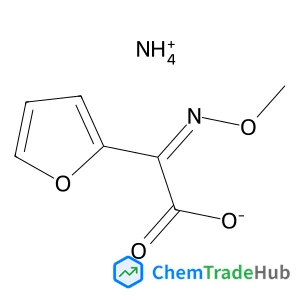
Ammonium (Z)-2-(furan-2-yl)-2-(methoxyimino)acetate
CAS Number:
97148-39-5
Molecular Formula:
C7H10N2O4

Recommended Suppliers






Disclaimer
This page provides academic journal information for reference and research purposes only. We are not affiliated with any journal publishers and do not handle publication submissions. For publication-related inquiries, please contact the respective journal publishers directly.
If you notice any inaccuracies in the information displayed, please contact us at support@chemtradehub.com. We will promptly review and address your concerns.