


Novel D–π-A and A–π-D–π-A three-component photoinitiating systems based on carbazole/triphenylamino based chalcones and application in 3D and 4D printing
Literature Information
Publication Date
2020-09-21
DOI
10.1039/D0PY01197E
Impact Factor
5.582
Authors
Guillaume Noirbent, Damien Brunel, Didier Gigmes, Pu Xiao, Frédéric Dumur
View Original
Abstract
A series of carbazole or triphenylamine based mono-chalcones, displaying either D–π-A or A–π-D–π-A architecture, have been designed and synthesized for intense absorption bands at around 405 nm with high molar extinction coefficients around 105 M−1 cm−1 corresponding to π–π* electronic transitions. Photosensitivity of the new photoinitiating systems composed of a chalcone and an iodonium salt (Iod) was investigated by UV-visible absorption and fluorescence spectroscopies, and their photoinitiation abilities were examined during the free radical polymerization of acrylates, whose polymerization kinetics were monitored by real-time Fourier Transform Infrared (RT-FTIR) spectroscopy upon irradiation with a LED@405 nm. In this work, a series of ten chalcones comprising a carbazole unit or a triphenylamine (TPA) group used as the electron donor for chalcones were specifically designed. Remarkably, nine of the proposed chalcones were never reported in the literature (never synthesized before). Only chalcone 7 was reported but only as a precursor for the design of pyrazolines for optical materials. As a result of this strategy, highly conjugated high-molecular-weight photoinitiators were obtained, displaying improved light absorption properties due to their extended polyaromaticity. These new photoinitiators offer new prospects for the design of novel and efficient photoinitiators. To evidence the interest of these new chalcones, 3D and 4D printing experiments were carried out with a polyethylene glycol (PEG)-diacrylate photosensitive resin comprising the best photoinitiating systems investigated. The shapes of 3D patterns can be reversibly modified by means of a thermal or hydrophilic response of PEG for a 4D activation.
Recommended Journals

Colloid Journal

Electroanalysis

Medicinal Chemistry Research

Bioorganic & Medicinal Chemistry Letters

Biocatalysis and Biotransformation

Journal of Asian Natural Products Research

Journal of Chemical Sciences

Chinese Journal of Chemistry

Polycyclic Aromatic Compounds

Critical Reviews in Solid State and Materials Sciences
Related Literature
Activating lattice oxygen of single-layer ZnO for the catalytic oxidation reaction
Le Lin, Hao Wu, Rentao Mu, Qiang Fu
2023-07-11
Paper
DOI: 10.1039/D3CP02580B
Comparison of diffuse-reflectance absorbance and attenuated total reflectance FT-IR for the discrimination of bacteria
Catherine L. Winder, Royston Goodacre
2004-10-04
Paper
DOI: 10.1039/B408169B
Screening of specific antigens for SARS clinical diagnosis using a protein microarray
Dan-Dan Lu, Su-Hong Chen, Shi-Meng Zhang, Min-Li Zhang, Wei Zhang, Xiao-Chen Bo, Sheng-Qi Wang
2005-02-14
Paper
DOI: 10.1039/B415888A
Design and characterization of a directly polarized radioluminescent light source
James H. Barnes, IV, Gary M. Hieftje
2004-07-14
Paper
DOI: 10.1039/B314563H
Measurement of nitric oxide by 4,5-diaminofluorescein without interferences
Xiaoying Ye, Won-Suk Kim, Stanislav S. Rubakhin, Jonathan V. Sweedler
2004-11-09
Paper
DOI: 10.1039/B409394A
In-tube solid-phase microextraction with poly(methacrylic acid-ethylene glycol dimethacrylate) monolithic capillary for direct high-performance liquid chromatographic determination of ketamine in urine samples
Yi Fan, Yu-Qi Feng, Shi-Lu Da, Xiao-Ping Gao
2004-10-06
Paper
DOI: 10.1039/B410785C
Enhancing proton mobility and thermal stability in phosphate glasses with WO3: the mixed glass former effect in proton conducting glasses
Aman Sharma, Issei Suzuki, Tomohiro Ishiyama, Takahisa Omata
2023-07-03
Paper
DOI: 10.1039/D3CP01453C
Oxidative stress effects on erythrocytes determined by FT-IRspectrometry
2004-08-19
Paper
DOI: 10.1039/B408931F
You might also like
Compound Q&A
What are the main uses of 1H-Indazole-6-carbonitrile (CAS: 141290-59-7)?
1H-Indazole-6-carbonitrile finds applications in pharmaceuticals, where it serve...
141290-59-71H-Indazole-6-carbon...
Compound Q&A
How should waste containing Dioctyl (2E)-2-butenedioate (CAS: 2997-85-5) be handled?
Waste containing Dioctyl (2E)-2-butenedioate (CAS: 2997-85-5) should be collecte...
2997-85-5Dioctyl (2E)-2-buten...
Compound Q&A
What industries use Sodium [(1,2-benzoxazol-3-ylmethyl)sulfonyl]azanide (CAS: 68291-98-5)?
Sodium [(1,2-benzoxazol-3-ylmethyl)sulfonyl]azanide is primarily used in pharmac...
68291-98-5Sodium [(1,2-benzoxa...
Compound Q&A
Are there alternatives to Dimethyl 4-(4,4,5,5-tetramethyl-1,3,2-dioxaborolan-2-yl)-2,6-pyridinedicarboxylate (CAS: 741709-66-0) in synthesis?
Dimethyl 4-(4,4,5,5-tetramethyl-1,3,2-dioxaborolan-2-yl)-2,6-pyridinedicarboxyla...
741709-66-0Dimethyl 4-(4,4,5,5-...
Compound Q&A
How should waste containing 2-Fluoro-6-hydrazinopyridine (CAS: 80714-39-2) be handled?
Waste containing 2-Fluoro-6-hydrazinopyridine (CAS: 80714-39-2) should be manage...
80714-39-22-Fluoro-6-hydrazino...
Compound Q&A
What is 6-Formyl-2-pyridinecarboxylic acid (CAS: 499214-11-8)?
6-Formyl-2-pyridinecarboxylic acid is an organic compound with the molecular for...
499214-11-86-Formyl-2-pyridinec...
Compound Q&A
What is the market or research trend for 3-(3,4-dimethoxyphenyl)-2,5-dimethyl-N-(2-morpholin-4-ylethyl)pyrazolo[1,5-a]pyrimidin-7-amine (CAS: 900874-91-1)?
Research trends for this compound indicate a focus on its potential applications...
900874-91-13-(3,4-dimethoxyphen...
Compound Q&A
How is 9H-Tribenzo[b,d,f]azepine (CAS: 29875-73-8) typically synthesized?
9H-Tribenzo[b,d,f]azepine is typically synthesized via a multi-step process invo...
29875-73-89H-Tribenzo[b,d,f]az...
Compound Q&A
How is 1-Cyclopropyl-7-ethoxy-6-fluoro-8-methoxy-4-oxo-1,4-dihydro-3-quinolinecarboxylic acid (CAS: 1797982-51-4) typically synthesized?
1-Cyclopropyl-7-ethoxy-6-fluoro-8-methoxy-4-oxo-1,4-dihydro-3-quinolinecarboxyli...
1797982-51-41-Cyclopropyl-7-etho...
Compound Q&A
How should waste containing Methyl 3-oxo-1,2,3,4-tetrahydro-6-quinoxalinecarboxylate (CAS: 671820-52-3) be handled?
Waste containing Methyl 3-oxo-1,2,3,4-tetrahydro-6-quinoxalinecarboxylate (CAS: ...
671820-52-3Methyl 3-oxo-1,2,3,4...
Source Journal
Polymer Chemistry

CiteScore:
8.6
Self-citation Rate:
7.3%
Articles per Year:
457
Polymer Chemistry welcomes submissions in all areas of polymer science that have a strong focus on macromolecular chemistry. Manuscripts may cover a broad range of fields, yet no direct application focus is required.
Recommended Compounds

![Sodium (2Z)-7-{[(2R)-2-amino-2-carboxyethyl]sulfanyl}-2-({[(1S)-2,2-dimethylcyclopropyl]carbonyl}amino)-2-heptenoate structure](https://static.chemtradehub.com/structs/811/81129-83-1-441c.webp "Sodium (2Z)-7-{[(2R)-2-amino-2-carboxyethyl]sulfanyl}-2-({[(1S)-2,2-dimethylcyclopropyl]carbonyl}amino)-2-heptenoate structure")
Sodium (2Z)-7-{[(2R)-2-amino-2-carboxyethyl]sulfanyl}-2-({[(1S)-2,2-dimethylcyclopropyl]carbonyl}amino)-2-heptenoate
CAS Number:
81129-83-1
Molecular Formula:
C16H25N2NaO5S
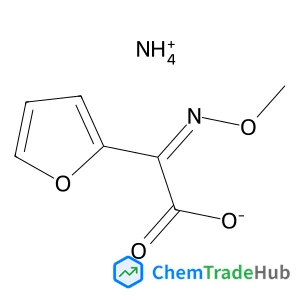
Ammonium (Z)-2-(furan-2-yl)-2-(methoxyimino)acetate
CAS Number:
97148-39-5
Molecular Formula:
C7H10N2O4
Recommended Suppliers






Disclaimer
This page provides academic journal information for reference and research purposes only. We are not affiliated with any journal publishers and do not handle publication submissions. For publication-related inquiries, please contact the respective journal publishers directly.
If you notice any inaccuracies in the information displayed, please contact us at support@chemtradehub.com. We will promptly review and address your concerns.