


Ne- and O2-filled ice XVII: a neutron diffraction study
Literature Information
Publication Date
2019-06-05
DOI
10.1039/C9CP02218J
Impact Factor
3.676
Authors
Michele Catti, Leonardo del Rosso, Lorenzo Ulivi, Milva Celli, Francesco Grazzi, Thomas C. Hansen
View Original
Abstract
Deuterated ice XVII, a metastable solid water polymorph, was filled with Ne and O2 at p ≈ 100 kPa and studied by in situ neutron diffraction (ILL, France). Powder patterns were collected in the ranges of 20–50 K (Ne) and 4.6–90 K (O2). Rietveld refinement and difference Fourier techniques showed that the gas molecules were located inside the hexagonal channels of the host ice. Both Ne atoms and O2 molecules are arranged in a spiral-like configuration off the channel axis, preserving the P6122 symmetry of the host in the case of Ne, but reducing it to P61 in O2. A larger Ne absorption compared to Ne-filled ice II is observed, which is consistent with longer host–guest contacts producing smaller hydrophobic repulsion. In O2-filled ice XVII, instead, short O–D distances (2.37 Å) have attractive character and stabilize the structure.
Recommended Journals

Journal of Organometallic Chemistry

Russian Chemical Reviews

Molecular Pharmacology

European Journal of Wood and Wood Products

Helvetica Chimica Acta

Pure and Applied Chemistry

Proceedings of the National Academy of Sciences of the United States of America

Nature

Organic Preparations and Procedures International

Pharmacological Reviews
Related Literature
Photocatalytic, modular difunctionalization of alkenes enabled by ligand-to-metal charge transfer and radical ligand transfer
Kang-Jie Bian, David Nemoto, Jr, Xiao-Wei Chen, Shih-Chieh Kao, James Hooson, Julian G. West
2023-11-24
Edge Article
DOI: 10.1039/D3SC05231A
Organic metal chalcogenide-assisted metabolic molecular diagnosis of central precocious puberty
Dan Ouyang, Chuanzhe Wang, Chao Zhong, Juan Lin, Gang Xu, Guane Wang, Zian Lin
2023-11-27
Edge Article
DOI: 10.1039/D3SC05633C
Quantitative detection of microRNA-21 in vivo using in situ assembled photoacoustic and SERS nanoprobes
Liting Zheng, Qingqing Li, Ying Wu, Lichao Su, Wei Du, Jibin Song, Lanlan Chen, Huanghao Yang
2023-11-21
Edge Article
DOI: 10.1039/D3SC04371A
Engineering TADF, mechanochromism, and second harmonic up-conversion properties in regioisomeric substitution space
Abhijit Chatterjee, Joy Chatterjee, Subrahmanyam Sappati, Riteeka Tanwar, Madan D. Ambhore, Habibul Arfin, Rintu M. Umesh, Mayurika Lahiri, Pankaj Mandal, Partha Hazra
2023-11-08
Edge Article
DOI: 10.1039/D3SC04280D
An orbitally adapted push–pull template for N2 activation and reduction to diazene-diide
David Specklin, Marie-Christine Boegli, Anaïs Coffinet, Léon Escomel, Laure Vendier, Mary Grellier, Antoine Simonneau
2023-11-21
Edge Article
DOI: 10.1039/D3SC04390H
Boosting the interfacial dynamics and thermodynamics in polyanion cathode by carbon dots for ultrafast-charging sodium ion batteries
Yujin Li, Yu Mei, Roya Momen, Bai Song, Yujie Huang, Xue Zhong, Hanrui Ding, Wentao Deng, Guoqiang Zou, Hongshuai Hou, Xiaobo Ji
2023-11-30
Edge Article
DOI: 10.1039/D3SC05593K
Solution-state mechanochromic luminescence of Pt(ii)-complexes displayed within micellar aromatic capsules
Yoshihisa Hashimoto, Yuri Katagiri, Yuya Tanaka, Michito Yoshizawa
2023-11-21
Edge Article
DOI: 10.1039/D3SC04613C
Visible light-induced palladium–carbon bond weakening in catalytically relevant T-shaped complexes
Peter M. Waddell, Lei Tian, Anthony R. Scavuzzo, Lalu Venigalla, Gregory D. Scholes, Brad P. Carrow
2023-11-28
Edge Article
DOI: 10.1039/D3SC02588H
You might also like
Compound Q&A
How is 3-(2-Bromoimidazo[2,1-b]thiazol-6-yl)propanoic acid hydrochloride (CAS: 1187830-80-3) typically synthesized?
3-(2-Bromoimidazo[2,1-b]thiazol-6-yl)propanoic acid hydrochloride is typically s...
1187830-80-33-(2-Bromoimidazo[2,...
Compound Q&A
How is 2-Isopropyl-1,3-dioxane-5-carboxylic acid (CAS: 116193-72-7) typically synthesized?
2-Isopropyl-1,3-dioxane-5-carboxylic acid is typically synthesized by the carbox...
116193-72-72-Isopropyl-1,3-diox...
Compound Q&A
What is Alisporivir (CAS: 254435-95-5)?
Alisporivir (CAS: 254435-95-5) is an antiviral medication used in the treatment ...
254435-95-5Alisporivir
Compound Q&A
What are the physical and chemical properties of [1,2,4]triazolo[3,4-a]phthalazine (CAS: 234-80-0)?
[1,2,4]triazolo[3,4-a]phthalazine (CAS: 234-80-0) is a crystalline compound with...
234-80-0[1,2,4]triazolo[3,4-...
Compound Q&A
What regulatory guidelines apply to (2S)-5-Hydroxy-2-(4-hydroxyphenyl)-4-oxo-3,4-dihydro-2H-chromen-7-yl methyl beta-D-glucopyranosiduronate (CAS: 1985597-72-5)?
Regulatory guidelines for (2S)-5-Hydroxy-2-(4-hydroxyphenyl)-4-oxo-3,4-dihydro-2...
1985597-72-5(2S)-5-Hydroxy-2-(4-...
Compound Q&A
Is 2,2-Difluorocyclohexanamine hydrochloride (CAS: 921602-83-7) safe?
2,2-Difluorocyclohexanamine hydrochloride is generally safe when handled under p...
921602-83-72,2-Difluorocyclohex...
Compound Q&A
What are the main uses of 3-Nitro-2-phenylthiophene (CAS: 18150-94-2)?
3-Nitro-2-phenylthiophene is primarily used in the synthesis of other organic co...
18150-94-23-Nitro-2-phenylthio...
Compound Q&A
What is 1-(Trifluoroacetyl)-4-piperidinecarbonitrile (CAS: 77940-79-5)?
1-(Trifluoroacetyl)-4-piperidinecarbonitrile (CAS: 77940-79-5) is a colorless to...
77940-79-51-(Trifluoroacetyl)-...
Compound Q&A
What is the market or research trend for 1,3,6,8-Tetranitro-9H-carbazole (CAS: 4543-33-3)?
Research and market trends for 1,3,6,8-Tetranitro-9H-carbazole (CAS: 4543-33-3) ...
4543-33-31,3,6,8-Tetranitro-9...
Compound Q&A
How should waste containing Dibenzo[b,d]thiophen-1-ylboronic acid (CAS: 1245943-60-5) be handled?
Waste containing Dibenzo[b,d]thiophen-1-ylboronic acid (CAS: 1245943-60-5) shoul...
1245943-60-5Dibenzo[b,d]thiophen...
Source Journal
Physical Chemistry Chemical Physics

CiteScore:
5.5
Self-citation Rate:
10.3%
Articles per Year:
3036
Physical Chemistry Chemical Physics (PCCP) is an international journal co-owned by 19 physical chemistry and physics societies from around the world. This journal publishes original, cutting-edge research in physical chemistry, chemical physics and biophysical chemistry. To be suitable for publication in PCCP, articles must include significant innovation and/or insight into physical chemistry; this is the most important criterion that reviewers and Editors will judge against when evaluating submissions. The journal has a broad scope and welcomes contributions spanning experiment, theory, computation and data science. Topical coverage includes spectroscopy, dynamics, kinetics, statistical mechanics, thermodynamics, electrochemistry, catalysis, surface science, quantum mechanics, quantum computing and machine learning. Interdisciplinary research areas such as polymers and soft matter, materials, nanoscience, energy, surfaces/interfaces, and biophysical chemistry are welcomed if they demonstrate significant innovation and/or insight into physical chemistry. Joined experimental/theoretical studies are particularly appreciated when complementary and based on up-to-date approaches.
Recommended Compounds
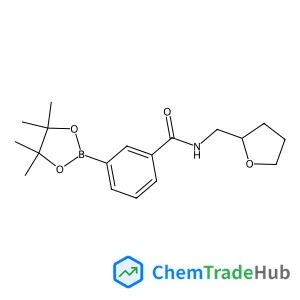
N-(Tetrahydro-2-furanylmethyl)-3-(4,4,5,5-tetramethyl-1,3,2-dioxaborolan-2-yl)benzamide
CAS Number:
1073355-06-2
Molecular Formula:
C18H26BNO4
Recommended Suppliers






Disclaimer
This page provides academic journal information for reference and research purposes only. We are not affiliated with any journal publishers and do not handle publication submissions. For publication-related inquiries, please contact the respective journal publishers directly.
If you notice any inaccuracies in the information displayed, please contact us at support@chemtradehub.com. We will promptly review and address your concerns.