












A new way of studying chemical reactions: a hand-in-hand URVA and QTAIM approach‡
Literature Information
Publication Date
2019-06-18
DOI
10.1039/C9CP01933B
Impact Factor
3.676
Authors
Sadisha Nanayakkara, Elfi Kraka
View Original
Abstract
Bond formation and bond cleavage processes are central to a chemical reaction. They can be investigated by monitoring changes in the potential energy surface (PES) or changes in the electron density (ED) distribution ρ(r) taking place during the reaction. However, it is not yet clear how the corresponding changes in the PES and ED are related, although the connection between energy and density has been postulated in the famous Hohenberg–Kohn theorem. Our unified reaction valley approach (URVA) identifies the locations of bond formation/cleavage events along the reaction path via the reaction path curvature peaks and their decomposition into the internal coordinate components associated with the bond to be formed or cleaved. One can also investigate bond formation/cleavage events using the quantum theory of atoms-in-molecule (QTAIM) analysis by monitoring changes in the topological properties of ρ(r) and the associated Laplacian ∇2ρ(r). By a systematic comparison of these two approaches for a series of ten representative chemical reactions ranging from hydrogen migration to cycloaddition reactions and gold(I) catalysis, we could for the first time unravel the PES–ED relationship. In the case of a bond formation, all changes in the ED occur shortly before or at the corresponding curvature peak, and in a bond cleavage, the ED changes occur at or shortly after the curvature peak. In any case, the ED changes always occurred in the vicinity of the curvature peak in accordance with the Hohenberg–Kohn theorem. Our findings provide a comprehensive view on bond formation/cleavage processes seen through the eyes of both the PES and ED and offer valuable guidelines on where to search for significant ED changes associated with bond formation or cleavage events.
Related Literature
Recent advances in the utilization of covalent organic frameworks (COFs) as electrode materials for supercapacitors
Shen Xu, Jinghang Wu, Xiang Wang
2023-11-07
Review Article
DOI: 10.1039/D3SC04571D
On-DNA hydroalkylation of N-vinyl heterocycles via photoinduced EDA-complex activation
Mohammed Sharique, Bianca Matsuo, Albert Granados, Saegun Kim, Mahwish Arshad, Hyunjung Oh, Victoria E. Wu, Minxue Huang, Adam Csakai, Lisa A. Marcaurelle, Gary A. Molander
2023-09-14
Edge Article
DOI: 10.1039/D3SC03731B
Manipulating the crystal plane angle within the primary particle arrangement for the radial ordered structure in a Ni-rich cathode
Ting Chen, Chuyao Wen, Chen Wu, Lang Qiu, Zhenguo Wu, Jiayang Li, Yanfang Zhu, Haoyu Li, Qingquan Kong, Yang Song, Fang Wan, Mingzhe Chen, Ismael Saadoune, Benhe Zhong, Shixue Dou, Yao Xiao
2023-11-27
Edge Article
DOI: 10.1039/D3SC05461F
Photocatalytic, modular difunctionalization of alkenes enabled by ligand-to-metal charge transfer and radical ligand transfer
Kang-Jie Bian, David Nemoto, Jr, Xiao-Wei Chen, Shih-Chieh Kao, James Hooson, Julian G. West
2023-11-24
Edge Article
DOI: 10.1039/D3SC05231A
Hollow anatase TiO2 tetrakaidecahedral crystals with an active {001}/{110} redox interface toward high-performance photocatalytic activity
Liming Sun, Yaya Yuan, Xiaoxiao He, Wenwen Zhan, Dong Li, Yanli Zhao, Xiao-Jun Wang, Xiguang Han
2023-12-05
Edge Article
DOI: 10.1039/D3SC04328B
Computationally guided bioengineering of the active site, substrate access pathway, and water channels of thermostable cytochrome P450, CYP175A1, for catalyzing the alkane hydroxylation reaction
Mohd Taher, Kshatresh Dutta Dubey, Shyamalava Mazumdar
2023-12-04
Edge Article
DOI: 10.1039/D3SC02857G
New light on the imbroglio surrounding the C8H +6 isomers formed from ionized azulene and naphthalene using ion–molecule reactions
Corentin Rossi, Giel Muller, Sandesh Gondarry, Paul M. Mayer, Ugo Jacovella
2023-11-24
Edge Article
DOI: 10.1039/D3SC03015F
Selective chiral dimerization and folding driven by arene–perfluoroarene force
Qiuhong Cheng, Aiyou Hao, Pengyao Xing
2023-11-29
Edge Article
DOI: 10.1039/D3SC05212E
Engineering TADF, mechanochromism, and second harmonic up-conversion properties in regioisomeric substitution space
Abhijit Chatterjee, Joy Chatterjee, Subrahmanyam Sappati, Riteeka Tanwar, Madan D. Ambhore, Habibul Arfin, Rintu M. Umesh, Mayurika Lahiri, Pankaj Mandal, Partha Hazra
2023-11-08
Edge Article
DOI: 10.1039/D3SC04280D
You might also like
Compound Q&A
How is 3-(2-Bromoimidazo[2,1-b]thiazol-6-yl)propanoic acid hydrochloride (CAS: 1187830-80-3) typically synthesized?
3-(2-Bromoimidazo[2,1-b]thiazol-6-yl)propanoic acid hydrochloride is typically s...
1187830-80-33-(2-Bromoimidazo[2,...
Compound Q&A
How is 2-Isopropyl-1,3-dioxane-5-carboxylic acid (CAS: 116193-72-7) typically synthesized?
2-Isopropyl-1,3-dioxane-5-carboxylic acid is typically synthesized by the carbox...
116193-72-72-Isopropyl-1,3-diox...
Compound Q&A
What is Alisporivir (CAS: 254435-95-5)?
Alisporivir (CAS: 254435-95-5) is an antiviral medication used in the treatment ...
254435-95-5Alisporivir
Compound Q&A
What are the physical and chemical properties of [1,2,4]triazolo[3,4-a]phthalazine (CAS: 234-80-0)?
[1,2,4]triazolo[3,4-a]phthalazine (CAS: 234-80-0) is a crystalline compound with...
234-80-0[1,2,4]triazolo[3,4-...
Compound Q&A
What regulatory guidelines apply to (2S)-5-Hydroxy-2-(4-hydroxyphenyl)-4-oxo-3,4-dihydro-2H-chromen-7-yl methyl beta-D-glucopyranosiduronate (CAS: 1985597-72-5)?
Regulatory guidelines for (2S)-5-Hydroxy-2-(4-hydroxyphenyl)-4-oxo-3,4-dihydro-2...
1985597-72-5(2S)-5-Hydroxy-2-(4-...
Compound Q&A
Is 2,2-Difluorocyclohexanamine hydrochloride (CAS: 921602-83-7) safe?
2,2-Difluorocyclohexanamine hydrochloride is generally safe when handled under p...
921602-83-72,2-Difluorocyclohex...
Compound Q&A
What are the main uses of 3-Nitro-2-phenylthiophene (CAS: 18150-94-2)?
3-Nitro-2-phenylthiophene is primarily used in the synthesis of other organic co...
18150-94-23-Nitro-2-phenylthio...
Compound Q&A
What is 1-(Trifluoroacetyl)-4-piperidinecarbonitrile (CAS: 77940-79-5)?
1-(Trifluoroacetyl)-4-piperidinecarbonitrile (CAS: 77940-79-5) is a colorless to...
77940-79-51-(Trifluoroacetyl)-...
Compound Q&A
What is the market or research trend for 1,3,6,8-Tetranitro-9H-carbazole (CAS: 4543-33-3)?
Research and market trends for 1,3,6,8-Tetranitro-9H-carbazole (CAS: 4543-33-3) ...
4543-33-31,3,6,8-Tetranitro-9...
Compound Q&A
How should waste containing Dibenzo[b,d]thiophen-1-ylboronic acid (CAS: 1245943-60-5) be handled?
Waste containing Dibenzo[b,d]thiophen-1-ylboronic acid (CAS: 1245943-60-5) shoul...
1245943-60-5Dibenzo[b,d]thiophen...
Source Journal
Physical Chemistry Chemical Physics

CiteScore:
5.5
Self-citation Rate:
10.3%
Articles per Year:
3036
Physical Chemistry Chemical Physics (PCCP) is an international journal co-owned by 19 physical chemistry and physics societies from around the world. This journal publishes original, cutting-edge research in physical chemistry, chemical physics and biophysical chemistry. To be suitable for publication in PCCP, articles must include significant innovation and/or insight into physical chemistry; this is the most important criterion that reviewers and Editors will judge against when evaluating submissions. The journal has a broad scope and welcomes contributions spanning experiment, theory, computation and data science. Topical coverage includes spectroscopy, dynamics, kinetics, statistical mechanics, thermodynamics, electrochemistry, catalysis, surface science, quantum mechanics, quantum computing and machine learning. Interdisciplinary research areas such as polymers and soft matter, materials, nanoscience, energy, surfaces/interfaces, and biophysical chemistry are welcomed if they demonstrate significant innovation and/or insight into physical chemistry. Joined experimental/theoretical studies are particularly appreciated when complementary and based on up-to-date approaches.
Recommended Compounds
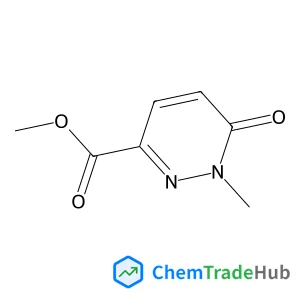
Methyl 1-methyl-6-oxo-1,6-dihydro-3-pyridazinecarboxylate
CAS Number:
74173-58-3
Molecular Formula:
C7H8N2O3
Recommended Suppliers






Disclaimer
This page provides academic journal information for reference and research purposes only. We are not affiliated with any journal publishers and do not handle publication submissions. For publication-related inquiries, please contact the respective journal publishers directly.
If you notice any inaccuracies in the information displayed, please contact us at support@chemtradehub.com. We will promptly review and address your concerns.