![(1S)-1,5-Anhydro-1-[3-(1-benzothiophen-2-ylmethyl)-4-fluorophenyl]-D-glucitol structure](https://static.chemtradehub.com/structs/761/761423-87-4-dbeb.webp "(1S)-1,5-Anhydro-1-[3-(1-benzothiophen-2-ylmethyl)-4-fluorophenyl]-D-glucitol structure")
(1S)-1,5-Anhydro-1-[3-(1-benzothiophen-2-ylmethyl)-4-fluorophenyl]-D-glucitol
CAS Number:
761423-87-4
Molecular Formula:
C21H21FO5S
Xiaojun Li, Jun Lu
Graphene (GE), graphyne (GY) and graphdiyne (GDY) have promising applications because of their unique structural features with largely delocalized π-conjugated frameworks. Based on the density functional theory calculations, we investigated the adsorption behavior of alkali-metal fluorides (M3F, M = Li, Na, and K) on graphene, graphyne and graphdiyne, including the adsorption configurations, charge transfer, binding energy, and electrical conductivity. The electronic properties including orbital interactions and density of states (DOS) were also discussed. The results revealed that alkali-metal fluorides favorably adsorb on the carbon surface, forming intramolecular electron donor–acceptor (D–π–A) pairs, and these complexes are rather stable against dissociation into fluorides, especially Li3F@GDY0/+ complexes. Moreover, the adsorption of the fluorides largely affects the electronic structures of the 2D carbon materials. More importantly, it is found that the static first hyperpolarizability (βtot) of these complexes not only depends on the M3F fluorides but also on their charge-states, and these cationic M3F@GDY+ complexes exhibit large βtot values in order to establish their strong nonlinear optical (NLO) response, e.g., as high as ∼1.63 × 10⁵ a.u. for Li3F@GDY+. However, the K3F@GE complex possesses the largest βtot value (4.59 × 10⁵ a.u.), which is even preferable to the cationic M3F@GDY+ (M = Li, Na, and K) complexes, and the largest βtot value can be further explained by the crucial electronic transitions from TDDFT calculations. This study not only provides an effective strategy to design new carbon-based NLO optoelectronic materials, but it will also inevitably stimulate future experimental investigation for synthesis.
Magdalena A. Przybyla, Gokhan Yilmaz, C. Remzi Becer
DOI: 10.1039/D0PY01464H
Shan-Qing Peng, Butian Zhang, Wenhao Fan, Shuifeng Wang, Zhi-Hao Zhang, Yan Liu, Shi-Lu Chen, Mu-Hua Huang
DOI: 10.1039/D0PY00994F
Ethan W. Kent, Evan M. Lewoczko, Bin Zhao
DOI: 10.1039/D0PY01466D
Anil Kumar, Shubham Bawa, Kapil Ganorkar, Sujit Kumar Ghosh, Anasuya Bandyopadhyay
DOI: 10.1039/D0PY00953A
Dylan Karis, Alshakim Nelson
DOI: 10.1039/D0PY01129K
Andreas Hess, Bernhard V. K. J. Schmidt, Helmut Schlaad
DOI: 10.1039/D0PY01365J
Charlène Boussiron, Mickaël Le Bechec, Julia Sabalot, Sylvie Lacombe, Maud Save
DOI: 10.1039/D0PY01128B
1H-Indazole-6-carbonitrile finds applications in pharmaceuticals, where it serve...
Waste containing Dioctyl (2E)-2-butenedioate (CAS: 2997-85-5) should be collecte...
Sodium [(1,2-benzoxazol-3-ylmethyl)sulfonyl]azanide is primarily used in pharmac...
Dimethyl 4-(4,4,5,5-tetramethyl-1,3,2-dioxaborolan-2-yl)-2,6-pyridinedicarboxyla...
Waste containing 2-Fluoro-6-hydrazinopyridine (CAS: 80714-39-2) should be manage...
6-Formyl-2-pyridinecarboxylic acid is an organic compound with the molecular for...
Research trends for this compound indicate a focus on its potential applications...
9H-Tribenzo[b,d,f]azepine is typically synthesized via a multi-step process invo...
1-Cyclopropyl-7-ethoxy-6-fluoro-8-methoxy-4-oxo-1,4-dihydro-3-quinolinecarboxyli...
Waste containing Methyl 3-oxo-1,2,3,4-tetrahydro-6-quinoxalinecarboxylate (CAS: ...

Physical Chemistry Chemical Physics (PCCP) is an international journal co-owned by 19 physical chemistry and physics societies from around the world. This journal publishes original, cutting-edge research in physical chemistry, chemical physics and biophysical chemistry. To be suitable for publication in PCCP, articles must include significant innovation and/or insight into physical chemistry; this is the most important criterion that reviewers and Editors will judge against when evaluating submissions. The journal has a broad scope and welcomes contributions spanning experiment, theory, computation and data science. Topical coverage includes spectroscopy, dynamics, kinetics, statistical mechanics, thermodynamics, electrochemistry, catalysis, surface science, quantum mechanics, quantum computing and machine learning. Interdisciplinary research areas such as polymers and soft matter, materials, nanoscience, energy, surfaces/interfaces, and biophysical chemistry are welcomed if they demonstrate significant innovation and/or insight into physical chemistry. Joined experimental/theoretical studies are particularly appreciated when complementary and based on up-to-date approaches.
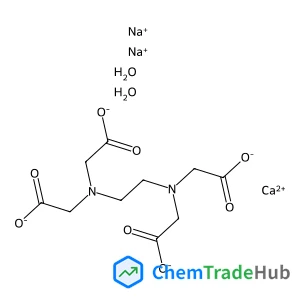
![Sodium (2Z)-7-{[(2R)-2-amino-2-carboxyethyl]sulfanyl}-2-({[(1S)-2,2-dimethylcyclopropyl]carbonyl}amino)-2-heptenoate structure](https://static.chemtradehub.com/structs/811/81129-83-1-441c.webp "Sodium (2Z)-7-{[(2R)-2-amino-2-carboxyethyl]sulfanyl}-2-({[(1S)-2,2-dimethylcyclopropyl]carbonyl}amino)-2-heptenoate structure")