












Time-dependent covalent network formation in extrudable hydrogels
Literature Information
Publication Date
2020-09-17
DOI
10.1039/D0PY01129K
Impact Factor
5.582
Authors
Dylan Karis, Alshakim Nelson
View Original
Abstract
The fabrication of hydrogel materials has gained increased attention for a broad range of biomedical and biotechnological applications. However, one longstanding challenge in the field is to develop hydrogels that can be easily processed into the desired form factor, while achieving the necessary final physical and biochemical properties. Herein, we report a shear-thinning hydrogel ink that can be photo-cured to create a stretchable, suturable hydrogel whose polymer network is formed via the combination of thiol-Michael addition and radical polymerization. A shear-thinning hydrogel based on bis-methacrylated Pluronic® F-127 was modified with varying equivalents of 2,2′-(ethylenedioxy)diethanethiol (EDT) as an additive. We observed that aging the hydrogel over time prior to extrusion allowed the relatively slow thiol-Michael addition to occur (between thiol and methacrylate) prior to UV initiated photopolymerization of the methacrylates. The viscoelastic properties of these hydrogels could be tuned based on the amount of EDT added, and the aging time of the hydrogel formulation. The changes to the physical properties of the hydrogels were attributed to the increased chain length between network junctions that resulted from the thiol-Michael addition reactions. The optimized hydrogel composition was then extruded from a coaxial nozzle to produce hydrogel tubes that, after curing, were resistant to tearing and were suturable. These extrudable synthetic hydrogels with tunable viscoelastic properties are promising for tissue engineering applications and as surgical training models for human vasculature.
Related Literature
Encapsulation of multi-walled carbon nanotubes (MWCNTs) in Ba2+-alginate to form coated micro-beads and their application to the pre-concentration/elimination of dibenzo-p-dioxin, dibenzofuran, and biphenyl from contaminated water
Bunshi Fugetsu, Shuya Satoh, Alexander Iles, Kazuhiko Tanaka, Norio Nishi, Fumio Watari
2004-06-11
Communication
DOI: 10.1039/B405325G
Forensic isotope ratio mass spectrometry of packaging tapes
James F. Carter, Polly L. Grundy, Jenny C. Hill, Neil C. Ronan, Emma L. Titterton, Richard Sleeman
2004-10-11
Paper
DOI: 10.1039/B409341K
Strain-induced giant enhancement of anisotropic dielectric constant in layered nitrides SrHfN2 and SrZrN2
Yuanyun Zhang, Jianmin Ban, Junjie Hou, Bowen Zhang, Junwei Liu, Xiaojun Kuang
2023-06-23
Paper
DOI: 10.1039/D3CP01907A
Imprinted polymers for chiral resolution of (±)-ephedrine: understanding the pre-polymerisation equilibrium and the action of different mobile phase modifiers
Richard J. Ansell, Kim L. Kuah
2004-12-03
Paper
DOI: 10.1039/B408751H
Principles of Fourier transform ion cyclotron resonance mass spectrometry and its application in structural biology
Mark P. Barrow, William I. Burkitt, Peter J. Derrick
2004-08-24
Tutorial Review
DOI: 10.1039/B403880K
Correlation-driven topological phase transition in 2D valleytronic materials: a mini-review
Xiao-Shu Guo, San-Dong Guo
2023-06-19
Review Article
DOI: 10.1039/D3CP01368E
Immunoassay for B. globigii spores as a model for detecting B. anthracis spores in finished water
Svetlana Farrell, H. Brian Halsall, William R. Heineman
2005-02-10
Paper
DOI: 10.1039/B413652G
Recent progress of gold nanostructures and their applications
Khadiga Ali Dahan, Ying Li
2023-06-07
Review Article
DOI: 10.1039/D3CP01549A
Ion-interaction chromatography of zwitterions. The fractional charge approach to model the influence of the mobile phase concentration of the ion-interaction reagent
Teresa Cecchi, Filippo Pucciarelli, Paolo Passamonti
2004-08-16
Paper
DOI: 10.1039/B404721D
You might also like
Compound Q&A
What are the main uses of 1H-Indazole-6-carbonitrile (CAS: 141290-59-7)?
1H-Indazole-6-carbonitrile finds applications in pharmaceuticals, where it serve...
141290-59-71H-Indazole-6-carbon...
Compound Q&A
How should waste containing Dioctyl (2E)-2-butenedioate (CAS: 2997-85-5) be handled?
Waste containing Dioctyl (2E)-2-butenedioate (CAS: 2997-85-5) should be collecte...
2997-85-5Dioctyl (2E)-2-buten...
Compound Q&A
What industries use Sodium [(1,2-benzoxazol-3-ylmethyl)sulfonyl]azanide (CAS: 68291-98-5)?
Sodium [(1,2-benzoxazol-3-ylmethyl)sulfonyl]azanide is primarily used in pharmac...
68291-98-5Sodium [(1,2-benzoxa...
Compound Q&A
Are there alternatives to Dimethyl 4-(4,4,5,5-tetramethyl-1,3,2-dioxaborolan-2-yl)-2,6-pyridinedicarboxylate (CAS: 741709-66-0) in synthesis?
Dimethyl 4-(4,4,5,5-tetramethyl-1,3,2-dioxaborolan-2-yl)-2,6-pyridinedicarboxyla...
741709-66-0Dimethyl 4-(4,4,5,5-...
Compound Q&A
How should waste containing 2-Fluoro-6-hydrazinopyridine (CAS: 80714-39-2) be handled?
Waste containing 2-Fluoro-6-hydrazinopyridine (CAS: 80714-39-2) should be manage...
80714-39-22-Fluoro-6-hydrazino...
Compound Q&A
What is 6-Formyl-2-pyridinecarboxylic acid (CAS: 499214-11-8)?
6-Formyl-2-pyridinecarboxylic acid is an organic compound with the molecular for...
499214-11-86-Formyl-2-pyridinec...
Compound Q&A
What is the market or research trend for 3-(3,4-dimethoxyphenyl)-2,5-dimethyl-N-(2-morpholin-4-ylethyl)pyrazolo[1,5-a]pyrimidin-7-amine (CAS: 900874-91-1)?
Research trends for this compound indicate a focus on its potential applications...
900874-91-13-(3,4-dimethoxyphen...
Compound Q&A
How is 9H-Tribenzo[b,d,f]azepine (CAS: 29875-73-8) typically synthesized?
9H-Tribenzo[b,d,f]azepine is typically synthesized via a multi-step process invo...
29875-73-89H-Tribenzo[b,d,f]az...
Compound Q&A
How is 1-Cyclopropyl-7-ethoxy-6-fluoro-8-methoxy-4-oxo-1,4-dihydro-3-quinolinecarboxylic acid (CAS: 1797982-51-4) typically synthesized?
1-Cyclopropyl-7-ethoxy-6-fluoro-8-methoxy-4-oxo-1,4-dihydro-3-quinolinecarboxyli...
1797982-51-41-Cyclopropyl-7-etho...
Compound Q&A
How should waste containing Methyl 3-oxo-1,2,3,4-tetrahydro-6-quinoxalinecarboxylate (CAS: 671820-52-3) be handled?
Waste containing Methyl 3-oxo-1,2,3,4-tetrahydro-6-quinoxalinecarboxylate (CAS: ...
671820-52-3Methyl 3-oxo-1,2,3,4...
Source Journal
Polymer Chemistry

CiteScore:
8.6
Self-citation Rate:
7.3%
Articles per Year:
457
Polymer Chemistry welcomes submissions in all areas of polymer science that have a strong focus on macromolecular chemistry. Manuscripts may cover a broad range of fields, yet no direct application focus is required.
Recommended Compounds
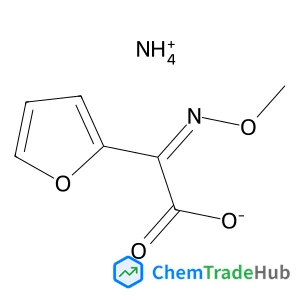
Ammonium (Z)-2-(furan-2-yl)-2-(methoxyimino)acetate
CAS Number:
97148-39-5
Molecular Formula:
C7H10N2O4

Recommended Suppliers






Disclaimer
This page provides academic journal information for reference and research purposes only. We are not affiliated with any journal publishers and do not handle publication submissions. For publication-related inquiries, please contact the respective journal publishers directly.
If you notice any inaccuracies in the information displayed, please contact us at support@chemtradehub.com. We will promptly review and address your concerns.