












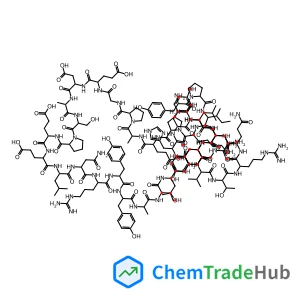
Molecular QCA embedding in microporous materials
Literature Information
Publication Date
2019-03-25
DOI
10.1039/C9CP00832B
Impact Factor
3.676
Authors
Alberto M. Pintus, Andrea Gabrieli, Federico G. Pazzona, Giovanni Pireddu, Pierfranco Demontis
View Original
Abstract
We propose an environment for information encoding and transmission via a nanoconfined molecular Quantum Dot Cellular Automata (QCA) wire, composed of a single row of head-to-tail interacting 2-dots molecular switches. While most of the research in the field refers to dots-bearing molecules bound on some type of surface, forming a bidimensional array of square cells capable of performing QCA typical functions, we propose here to embed the information bearing elements within the channels of a microporous matrix. In this way molecules would self-assemble in a row as a consequence of adsorption inside the pores of the material, forming an encased wire, with the crystalline environment giving stability and protection to the structure. DFT calculations on a diferrocenyl carborane, previously proposed and synthesized [J. A. Christie, R. P. Forrest, S. A. Corcelli, N. A. Wasio, R. C. Quardokus, R. Brown, S. A. Kandel, Y. Lu, C. S. Lent and K. W. Henderson, Angew. Chem., Int. Ed., 2015, 54, 15448], were performed both in vacuum and inside the channels of zeolite ITQ-51, indicating that information encoding and transmission is possible within the nanoconfined environment.
Related Literature
Sunlight induced atom transfer radical polymerization by using dimanganese decacarbonyl
Mustafa Ciftci
2013-08-30
Paper
DOI: 10.1039/C3PY01009K
Core cross-linked star (CCS) polymers with temperature and salt dual responsiveness: synthesis, formation of high internal phase emulsions (HIPEs) and triggered demulsification
Qijing Chen, Yuanyuan Xu, Xueteng Cao, Lianjie Qin, Zesheng An
2013-08-30
Paper
DOI: 10.1039/C3PY00942D
Salt-induced reentrant hydrogel of poly(ethylene glycol)–poly(lactide-co-glycolide) block copolymers
Ting Li, Tianyuan Ci, Liang Chen, Lin Yu, Jiandong Ding
2013-09-26
Paper
DOI: 10.1039/C3PY01107K
Polymer-modified gold nanoparticles via RAFT polymerization: a detailed study for a biosensing application
Masaki Takara, Masayuki Toyoshima, Hirokazu Seto, Yu Hoshino, Yoshiko Miura
2013-09-20
Paper
DOI: 10.1039/C3PY01001E
Synthesis and volume phase transition of concanavalin A-based glucose-responsive nanogels
Ting Ye, Suting Yan, Yumei Hu, Li Ding, Weitai Wu
2013-08-07
Paper
DOI: 10.1039/C3PY00778B
(Meth)acrylic monomers with heteroatom-containing ester side chains: a systematic PLP-SEC and polymerization study
Marek Stach, Anna Chovancová, Andrea M. Misske, Igor Lacík
2013-09-03
Paper
DOI: 10.1039/C3PY00948C
Direct synthesis of poly(p-phenyleneethynylene)s from calcium carbide
Nopparat Thavornsin, Mongkol Sukwattanasinitt, Sumrit Wacharasindhu
2013-08-12
Communication
DOI: 10.1039/C3PY01068F
Synthesis of well-defined amphiphilic branched polyethylene-graft-poly (N-isopropylacrylamide) copolymers by coordination copolymerization in tandem with RAFT polymerization and their self-assembled vesicles
Ye Zhao, Haiyang Gao, Guodong Liang, Fangming Zhu, Qing Wu
2013-09-27
Paper
DOI: 10.1039/C3PY01289A
Synthesis and photovoltaic properties of a low bandgap BODIPY–Pt conjugated polymer
Wenhan He, Yingbing Jiang, Yang Qin
2013-10-22
Paper
DOI: 10.1039/C3PY01396K
Nonvolatile organic field-effect transistor memory devices using polymer electrets with different thiophene chain lengths
Ying-Hsuan Chou, Sanae Takasugi, Raita Goseki, Takashi Ishizone, Wen-Chang Chen
2013-10-14
Paper
DOI: 10.1039/C3PY01124K
You might also like
Compound Q&A
What are the main uses of 1H-Indazole-6-carbonitrile (CAS: 141290-59-7)?
1H-Indazole-6-carbonitrile finds applications in pharmaceuticals, where it serve...
141290-59-71H-Indazole-6-carbon...
Compound Q&A
How should waste containing Dioctyl (2E)-2-butenedioate (CAS: 2997-85-5) be handled?
Waste containing Dioctyl (2E)-2-butenedioate (CAS: 2997-85-5) should be collecte...
2997-85-5Dioctyl (2E)-2-buten...
Compound Q&A
What industries use Sodium [(1,2-benzoxazol-3-ylmethyl)sulfonyl]azanide (CAS: 68291-98-5)?
Sodium [(1,2-benzoxazol-3-ylmethyl)sulfonyl]azanide is primarily used in pharmac...
68291-98-5Sodium [(1,2-benzoxa...
Compound Q&A
Are there alternatives to Dimethyl 4-(4,4,5,5-tetramethyl-1,3,2-dioxaborolan-2-yl)-2,6-pyridinedicarboxylate (CAS: 741709-66-0) in synthesis?
Dimethyl 4-(4,4,5,5-tetramethyl-1,3,2-dioxaborolan-2-yl)-2,6-pyridinedicarboxyla...
741709-66-0Dimethyl 4-(4,4,5,5-...
Compound Q&A
How should waste containing 2-Fluoro-6-hydrazinopyridine (CAS: 80714-39-2) be handled?
Waste containing 2-Fluoro-6-hydrazinopyridine (CAS: 80714-39-2) should be manage...
80714-39-22-Fluoro-6-hydrazino...
Compound Q&A
What is 6-Formyl-2-pyridinecarboxylic acid (CAS: 499214-11-8)?
6-Formyl-2-pyridinecarboxylic acid is an organic compound with the molecular for...
499214-11-86-Formyl-2-pyridinec...
Compound Q&A
What is the market or research trend for 3-(3,4-dimethoxyphenyl)-2,5-dimethyl-N-(2-morpholin-4-ylethyl)pyrazolo[1,5-a]pyrimidin-7-amine (CAS: 900874-91-1)?
Research trends for this compound indicate a focus on its potential applications...
900874-91-13-(3,4-dimethoxyphen...
Compound Q&A
How is 9H-Tribenzo[b,d,f]azepine (CAS: 29875-73-8) typically synthesized?
9H-Tribenzo[b,d,f]azepine is typically synthesized via a multi-step process invo...
29875-73-89H-Tribenzo[b,d,f]az...
Compound Q&A
How is 1-Cyclopropyl-7-ethoxy-6-fluoro-8-methoxy-4-oxo-1,4-dihydro-3-quinolinecarboxylic acid (CAS: 1797982-51-4) typically synthesized?
1-Cyclopropyl-7-ethoxy-6-fluoro-8-methoxy-4-oxo-1,4-dihydro-3-quinolinecarboxyli...
1797982-51-41-Cyclopropyl-7-etho...
Compound Q&A
How should waste containing Methyl 3-oxo-1,2,3,4-tetrahydro-6-quinoxalinecarboxylate (CAS: 671820-52-3) be handled?
Waste containing Methyl 3-oxo-1,2,3,4-tetrahydro-6-quinoxalinecarboxylate (CAS: ...
671820-52-3Methyl 3-oxo-1,2,3,4...
Source Journal
Physical Chemistry Chemical Physics

CiteScore:
5.5
Self-citation Rate:
10.3%
Articles per Year:
3036
Physical Chemistry Chemical Physics (PCCP) is an international journal co-owned by 19 physical chemistry and physics societies from around the world. This journal publishes original, cutting-edge research in physical chemistry, chemical physics and biophysical chemistry. To be suitable for publication in PCCP, articles must include significant innovation and/or insight into physical chemistry; this is the most important criterion that reviewers and Editors will judge against when evaluating submissions. The journal has a broad scope and welcomes contributions spanning experiment, theory, computation and data science. Topical coverage includes spectroscopy, dynamics, kinetics, statistical mechanics, thermodynamics, electrochemistry, catalysis, surface science, quantum mechanics, quantum computing and machine learning. Interdisciplinary research areas such as polymers and soft matter, materials, nanoscience, energy, surfaces/interfaces, and biophysical chemistry are welcomed if they demonstrate significant innovation and/or insight into physical chemistry. Joined experimental/theoretical studies are particularly appreciated when complementary and based on up-to-date approaches.
Recommended Compounds

Recommended Suppliers






Disclaimer
This page provides academic journal information for reference and research purposes only. We are not affiliated with any journal publishers and do not handle publication submissions. For publication-related inquiries, please contact the respective journal publishers directly.
If you notice any inaccuracies in the information displayed, please contact us at support@chemtradehub.com. We will promptly review and address your concerns.