












Sub-100 nanometer silver doped gold–cysteine supramolecular assemblies with enhanced nonlinear optical properties
Literature Information
Publication Date
2019-04-30
DOI
10.1039/C9CP00829B
Impact Factor
3.676
Authors
Hussein Fakhouri, Martina Perić, Franck Bertorelle, Philippe Dugourd, Xavier Dagany, Isabelle Russier-Antoine, Pierre-François Brevet, Rodolphe Antoine
View Original
Abstract
The ability of gold(I) thiolates to self-assemble into supramolecular architectures opens the route for a new class of nanomaterials with a unique structure–optical property relationship. However, for a confirmed structure–optical property relationship, a control of the supramolecular architectures is required. In this work, we report a simple synthesis of sub-100 nanometer gold–cysteine and silver doped gold–cysteine supramolecular assemblies. We explore in particular silver-doping as a strategy to enhance the optical properties of these supramolecular assemblies. By an accurate characterization of as-synthesized supramolecular nanoparticles, we have been able to measure for the first time, their absolute two-photon absorption cross-section, two-photon excited fluorescence cross-section and first hyperpolarizabilities at different near-IR wavelengths. Huge values are obtained for silver doped gold–cysteine supramolecular assemblies, as compared to their corresponding undoped counterpart. In addition, we employ DFT and TD-DFT methods to study the geometric and electronic structures of model gold–cysteine and silver doped gold–cysteine compounds in order to address the structure−linear/nonlinear optical property relationship. The aim is to gain insights into the origin of the nonlinear optical enhancement of silver-doped gold supramolecular assemblies.
Related Literature
Identifying and mapping chemical bonding within phenolic resin using secondary electron hyperspectral imaging
Sameer F. Hamad, Euan Gray, Christopher M. Magazzeni, Fodio Longman, David E. J. Armstrong, Joel P. Foreman, Frederik Claeyssens, Cornelia Rodenburg
2020-12-15
Communication
DOI: 10.1039/D0PY01220C
A supramolecular polymer with ultra-stretchable, notch-insensitive, rapid self-healing and adhesive properties
Lun Zhang, Dong Wang, Liqiang Xu, Aimin Zhang
2020-12-14
Paper
DOI: 10.1039/D0PY01536A
Semifluorinated, kinked polyarylenes via direct arylation polycondensation
Fabian Kempe, Felix Riehle, Hartmut Komber, Rukiya Matsidik, Michael Walter, Michael Sommer
2020-10-07
Paper
DOI: 10.1039/D0PY00973C
Retracted Article: Non-thermal microwave effects in radical polymerization of bio-based terpenoid (meth)acrylates
Amaia Agirre, José M. Asua
2020-10-13
Paper
DOI: 10.1039/D0PY01192D
3D Printing of a self-healing, high strength, and reprocessable thermoset
Tianyu Yuan, Lisha Zhang, Tony Li, Ruowen Tu
2020-09-01
Paper
DOI: 10.1039/D0PY00819B
Lipase-catalysed polycondensation of levulinic acid derived diol-diamide monomers: access to new poly(ester-co-amide)s
Julie Meimoun, Yann Bernhard, Lydie Pelinski, Till Bousquet, Sylvain Pellegrini, Jean-Marie Raquez, Julien De Winter, Pascal Gerbaux, Frédéric Cazaux, Jean-François Tahon, Valérie Gaucher, Thomas Chenal, Audrey Favrelle-Huret, Philippe Zinck
2020-11-12
Paper
DOI: 10.1039/D0PY01301C
Stimuli-responsive non-ionic Gemini amphiphiles for drug delivery applications
Rashmi, Abhishek K. Singh, Katharina Achazi, Christoph Böttcher, Rainer Haag, Sunil K. Sharma
2020-09-29
Paper
DOI: 10.1039/D0PY01040E
You might also like
Compound Q&A
What are the main uses of 1H-Indazole-6-carbonitrile (CAS: 141290-59-7)?
1H-Indazole-6-carbonitrile finds applications in pharmaceuticals, where it serve...
141290-59-71H-Indazole-6-carbon...
Compound Q&A
How should waste containing Dioctyl (2E)-2-butenedioate (CAS: 2997-85-5) be handled?
Waste containing Dioctyl (2E)-2-butenedioate (CAS: 2997-85-5) should be collecte...
2997-85-5Dioctyl (2E)-2-buten...
Compound Q&A
What industries use Sodium [(1,2-benzoxazol-3-ylmethyl)sulfonyl]azanide (CAS: 68291-98-5)?
Sodium [(1,2-benzoxazol-3-ylmethyl)sulfonyl]azanide is primarily used in pharmac...
68291-98-5Sodium [(1,2-benzoxa...
Compound Q&A
Are there alternatives to Dimethyl 4-(4,4,5,5-tetramethyl-1,3,2-dioxaborolan-2-yl)-2,6-pyridinedicarboxylate (CAS: 741709-66-0) in synthesis?
Dimethyl 4-(4,4,5,5-tetramethyl-1,3,2-dioxaborolan-2-yl)-2,6-pyridinedicarboxyla...
741709-66-0Dimethyl 4-(4,4,5,5-...
Compound Q&A
How should waste containing 2-Fluoro-6-hydrazinopyridine (CAS: 80714-39-2) be handled?
Waste containing 2-Fluoro-6-hydrazinopyridine (CAS: 80714-39-2) should be manage...
80714-39-22-Fluoro-6-hydrazino...
Compound Q&A
What is 6-Formyl-2-pyridinecarboxylic acid (CAS: 499214-11-8)?
6-Formyl-2-pyridinecarboxylic acid is an organic compound with the molecular for...
499214-11-86-Formyl-2-pyridinec...
Compound Q&A
What is the market or research trend for 3-(3,4-dimethoxyphenyl)-2,5-dimethyl-N-(2-morpholin-4-ylethyl)pyrazolo[1,5-a]pyrimidin-7-amine (CAS: 900874-91-1)?
Research trends for this compound indicate a focus on its potential applications...
900874-91-13-(3,4-dimethoxyphen...
Compound Q&A
How is 9H-Tribenzo[b,d,f]azepine (CAS: 29875-73-8) typically synthesized?
9H-Tribenzo[b,d,f]azepine is typically synthesized via a multi-step process invo...
29875-73-89H-Tribenzo[b,d,f]az...
Compound Q&A
How is 1-Cyclopropyl-7-ethoxy-6-fluoro-8-methoxy-4-oxo-1,4-dihydro-3-quinolinecarboxylic acid (CAS: 1797982-51-4) typically synthesized?
1-Cyclopropyl-7-ethoxy-6-fluoro-8-methoxy-4-oxo-1,4-dihydro-3-quinolinecarboxyli...
1797982-51-41-Cyclopropyl-7-etho...
Compound Q&A
How should waste containing Methyl 3-oxo-1,2,3,4-tetrahydro-6-quinoxalinecarboxylate (CAS: 671820-52-3) be handled?
Waste containing Methyl 3-oxo-1,2,3,4-tetrahydro-6-quinoxalinecarboxylate (CAS: ...
671820-52-3Methyl 3-oxo-1,2,3,4...
Source Journal
Physical Chemistry Chemical Physics

CiteScore:
5.5
Self-citation Rate:
10.3%
Articles per Year:
3036
Physical Chemistry Chemical Physics (PCCP) is an international journal co-owned by 19 physical chemistry and physics societies from around the world. This journal publishes original, cutting-edge research in physical chemistry, chemical physics and biophysical chemistry. To be suitable for publication in PCCP, articles must include significant innovation and/or insight into physical chemistry; this is the most important criterion that reviewers and Editors will judge against when evaluating submissions. The journal has a broad scope and welcomes contributions spanning experiment, theory, computation and data science. Topical coverage includes spectroscopy, dynamics, kinetics, statistical mechanics, thermodynamics, electrochemistry, catalysis, surface science, quantum mechanics, quantum computing and machine learning. Interdisciplinary research areas such as polymers and soft matter, materials, nanoscience, energy, surfaces/interfaces, and biophysical chemistry are welcomed if they demonstrate significant innovation and/or insight into physical chemistry. Joined experimental/theoretical studies are particularly appreciated when complementary and based on up-to-date approaches.
Recommended Compounds
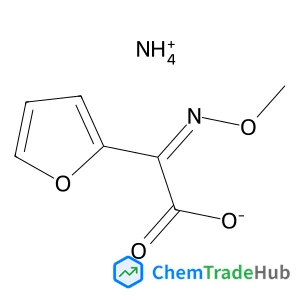
Ammonium (Z)-2-(furan-2-yl)-2-(methoxyimino)acetate
CAS Number:
97148-39-5
Molecular Formula:
C7H10N2O4
Recommended Suppliers





Disclaimer
This page provides academic journal information for reference and research purposes only. We are not affiliated with any journal publishers and do not handle publication submissions. For publication-related inquiries, please contact the respective journal publishers directly.
If you notice any inaccuracies in the information displayed, please contact us at support@chemtradehub.com. We will promptly review and address your concerns.