












Chemical modifier methods for the determination of bismuth and silver in nickel-based alloys and steels by Zeeman electrothermal atomization
Literature Information
Publication Date
DOI
10.1039/JA9951000785
Impact Factor
4.023
Authors
View Original
Abstract
A reliable ETAAS method for determining trace amounts of silver and bismuth in a wide range of nickel superalloys and steels has been developed. This uses a single matrix calibration based on nickel and suitable chemical modifiers, such as hafnium and tartaric acid for bismuth and ammonium dihydrogen phosphate for silver. Detection limits are 0.06 µg dm–3 for silver and 1 µg dm–3 for bismuth. The method allows a wide range of alloy types to be analysed from a common set of calibration standards, which considerably simplifies and shortens the analysis.
Related Literature
Providing theoretical insight into the role of symmetry in the photoisomerization mechanism of a non-symmetric dithienylethene photoswitch
Edison Salazar, Suzanne Reinink, Shirin Faraji
2022-05-02
Paper
DOI: 10.1039/D2CP00550F
Trapping Ca+ inside a molecular cavity: computational study of the potential energy surfaces for Ca+-[n]cycloparaphenylene, n = 5–12
Cole D. Allen, Susan L. B. Rempe, Timothy S. Zwier, Pengyu Ren
2022-04-07
Paper
DOI: 10.1039/D2CP00717G
Thermodynamics of hydrogels for applications in atmospheric water harvesting, evaporation, and desalination
2022-04-19
Paper
DOI: 10.1039/D2CP00356B
SrFeO3−δ: a novel Fe4+ ↔ Fe2+ redox mediated pseudocapacitive electrode in aqueous electrolyte
Asha Gupta, Vishal Kushwaha, Rakesh Mondal, Abhay Narayan Singh, Rajiv Prakash, K. D. Mandal, Preetam Singh
2022-04-06
Paper
DOI: 10.1039/D1CP04751E
DLSSAffinity: protein–ligand binding affinity prediction via a deep learning model
Huiwen Wang, Haoquan Liu, Shangbo Ning, Chengwei Zeng, Yunjie Zhao
2022-04-04
Paper
DOI: 10.1039/D1CP05558E
Artificial synthesis of covalent triazine frameworks for local structure and property determination
Catherine Mollart, Sarah Holcroft, Michael J. G. Peach, Adam Rowling, Abbie Trewin
2022-08-13
Communication
DOI: 10.1039/D2CP02430F
Infrared photodissociation spectroscopy of (Al2O3)2–5FeO+: influence of Fe-substitution on small alumina clusters
Marcel Jorewitz, Knut R. Asmis, Julius B. Stückrath, Florian A. Bischoff, Joachim Sauer
2022-08-15
Paper
DOI: 10.1039/D2CP02938C
Electronic polarization effects on membrane translocation of anti-cancer drugs
Atiyeh (Najla) Hosseini, Mohammad Reza Ejtehadi
2022-04-18
Paper
DOI: 10.1039/D2CP00056C
Ion transport mechanism in anhydrous lithium thiocyanate LiSCN Part I: ionic conductivity and defect chemistry
Markus Joos, Ashkan Rad, Payam Kaghazchi, Rotraut Merkle, Robert E. Dinnebier, Thomas Schleid, Joachim Maier
2022-08-05
Paper
DOI: 10.1039/D2CP01836E
On the atomic structure of two-dimensional materials with Janus structures
2022-03-11
Communication
DOI: 10.1039/D1CP05311F
You might also like
Compound Q&A
How is Ethyl 4-chlorothieno[2,3-b]pyridine-5-carboxylate (CAS: 59713-58-5) typically synthesized?
Ethyl 4-chlorothieno[2,3-b]pyridine-5-carboxylate (CAS: 59713-58-5) can be synth...
59713-58-5Ethyl 4-chlorothieno...
Compound Q&A
What regulatory guidelines apply to 5-Methyl-1H-indole-3-carbaldehyde (CAS: 52562-50-2)?
5-Methyl-1H-indole-3-carbaldehyde (CAS: 52562-50-2) is subject to various regula...
52562-50-25-Methyl-1H-indole-3...
Compound Q&A
What are the physical and chemical properties of (1,3-Dimethyl-2,4-dioxo-1,2,3,4-tetrahydro-5-pyrimidinyl)boronic acid (CAS: 223418-73-3)?
(1,3-Dimethyl-2,4-dioxo-1,2,3,4-tetrahydro-5-pyrimidinyl)boronic acid is a white...
223418-73-3(1,3-Dimethyl-2,4-di...
Compound Q&A
How should waste containing Sulfocostunolide A (CAS: 1016983-51-9) be handled?
Waste containing Sulfocostunolide A (CAS: 1016983-51-9) should be handled with c...
1016983-51-9Sulfocostunolide A
Compound Q&A
What precautions should be taken when handling Murraxocin (CAS: 88478-44-8)?
When handling Murraxocin (CAS: 88478-44-8), ensure proper personal protective eq...
88478-44-8Murraxocin
Compound Q&A
What are the physical and chemical properties of Formvar (CAS: 63148-64-1)?
Formvar (CAS: 63148-64-1) is an alkyd resin characterized by a high molecular we...
63148-64-1Formvar(R)
Compound Q&A
Is (S)-4-benzyl-2-((benzyloxy)methyl)morpholine (CAS: 205242-66-6) safe?
(S)-4-benzyl-2-((benzyloxy)methyl)morpholine is generally safe when handled with...
205242-66-6(S)-4-benzyl-2-((ben...
Compound Q&A
What industries use Methyl 1-(5-bromo-2-pyrimidinyl)cyclopropanecarboxylate (CAS: 1447607-69-3)?
Methyl 1-(5-bromo-2-pyrimidinyl)cyclopropanecarboxylate (CAS: 1447607-69-3) is p...
1447607-69-3Methyl 1-(5-bromo-2-...
Compound Q&A
Is 2-Methyl-1-phenyl-1-propanamine hydrochloride (CAS: 24290-47-9) safe?
2-Methyl-1-phenyl-1-propanamine hydrochloride (CAS: 24290-47-9) is generally con...
24290-47-92-Methyl-1-phenyl-1-...
Compound Q&A
How is 3-(4-Bromophenyl)-2-methylpropanoic acid (CAS: 66735-01-1) typically synthesized?
3-(4-Bromophenyl)-2-methylpropanoic acid is synthesized through a multi-step pro...
66735-01-13-(4-Bromophenyl)-2-...
Source Journal
Journal of Analytical Atomic Spectrometry

CiteScore:
6.2
Self-citation Rate:
25.8%
Articles per Year:
254
The Journal of Analytical Atomic Spectrometry (JAAS) is the central journal for publishing innovative research on fundamentals, instrumentation, and methods in the determination, speciation and isotopic analysis of (trace) elements within all fields of application. This includes, but is not restricted to, the most recent progress, developments and achievements in all forms of atomic and elemental detection, isotope ratio determination, molecular analysis, plasma-based analysis and X-ray techniques. The journal welcomes full papers, communications, technical notes, critical and tutorial review articles, editorials, and comments, in addition to the Atomic Spectrometry Updates (ASU) literature reviews that are prepared by an expert panel. Submissions are welcome in the following areas, but note this list reflects the current scope and authors are strongly encouraged to contact the Editorial team if they believe that their work offers potentially new and emerging research relevant to the journal remit: Fundamental studies in the following. New and existing sources for atomic emission, absorption, fluorescence and mass spectrometry and those that provide both atomic and molecular information Sample introduction techniques for solids, liquids, gases Improvements in sensitivity, selectivity, precision, accuracy and/or robustness Isotope ratio measurements, including techniques for improving precision and mass bias correction Single channel and multichannel simultaneous detection systems Chemometrics, statistics, calibration techniques and internal standardisation Theoretical and numerical modelling of fundamental processes related to all of the above methodologies Novel or improved methodologies in areas of application including, but not limited to the following. Biosciences, including elemental, speciation and isotopic analysis in biological systems, immunoassays based on metal-labeled antibodies, bio-imaging, and nanoparticle toxicology Geochemistry Environmental science Materials science, including engineered nanoparticles and quantum dots Metrology, including reference materials Forensic analysis Food and agricultural sciences Energy Archaeometry Molecular analysis. Molecular sources for elemental and isotopic analysis Atomic sources for molecular analysis Atomic and molecular techniques simultaneously used for complementary chemical information All contributions are judged on originality and quality of scientific content, and appropriateness of length to content of new science.
Recommended Compounds
![4-{1-[4-(4,4,5,5-Tetramethyl-1,3,2-dioxaborolan-2-yl)phenyl]cyclopropyl}morpholine structure](https://static.chemtradehub.com/structs/120/1206594-08-2-7afb.webp "4-{1-[4-(4,4,5,5-Tetramethyl-1,3,2-dioxaborolan-2-yl)phenyl]cyclopropyl}morpholine structure")
4-{1-[4-(4,4,5,5-Tetramethyl-1,3,2-dioxaborolan-2-yl)phenyl]cyclopropyl}morpholine
CAS Number:
1206594-08-2
Molecular Formula:
C19H28BNO3
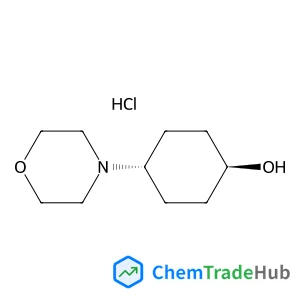
trans-4-(4-Morpholinyl)cyclohexanol hydrochloride (1:1)
CAS Number:
1588441-09-1
Molecular Formula:
C10H20ClNO2
Recommended Suppliers





Disclaimer
This page provides academic journal information for reference and research purposes only. We are not affiliated with any journal publishers and do not handle publication submissions. For publication-related inquiries, please contact the respective journal publishers directly.
If you notice any inaccuracies in the information displayed, please contact us at support@chemtradehub.com. We will promptly review and address your concerns.