












Excitation of singlet–triplet coherences in pairs of nearly-equivalent spins
Literature Information
Publication Date
2019-02-18
DOI
10.1039/C9CP00451C
Impact Factor
3.676
Authors
Christian Bengs, Joseph T. Hill-Cousins, Lynda J. Brown, Richard C. D. Brown, Giuseppe Pileio, Malcolm H. Levitt
View Original
Abstract
We present approaches for an efficient excitation of singlet–triplet coherences in pairs of nearly-equivalent spins. Standard Nuclear Magnetic Resonance (NMR) pulse sequences do not excite these coherences at all or with very low efficiency. The single quantum singlet–triplet coherences, here termed the outer singlet–triplet coherences, correspond to lines of low intensity in the NMR spectrum of a strongly-coupled spin pair (they are sometimes referred to as “forbidden transitions”), whereas the zero-quantum coherences, here termed the inner singlet–triplet coherences, do not have a direct spectral manifestation. In the present study, we investigated singlet–triplet coherences in a pair of nearly-equivalent carbon spins of the 13C-isotopomer of a specially designed naphthalene derivative with optimized relaxation properties. We propose and compare several techniques to drive the singlet–triplet coherence in strongly coupled spin pairs. First, we study different methods for efficient excitation of the outer singlet–triplet coherences. The achieved conversion efficiency of magnetization to the coherences of interest is close to the theoretically allowed maximum. Second, we propose methods to convert the outer coherences into the inner singlet–triplet coherence. The inner singlet–triplet coherence is insensitive to field inhomogeneity and can be long-lived. By probing this coherence, we perform a very precise measurement of the spin–spin J-couplings. A remarkable property of this coherence is that it can be preserved even in absence of a spin-locking radiofrequency field. Consequently, it is possible to shuttle the sample between different magnetic fields preserving the coherence. This allows one to study the field dependence of the relaxation time, TIST, of the inner singlet–triplet coherence by performing field-cycling experiments. We observed dramatic changes of the ratio TIST/T1 from about 1 (in strong fields) up to 2.4 (in weak fields), which is the evidence of a significant influence of the chemical shift anisotropy on relaxation. We have detected a remarkably long lifetime of the inner singlet–triplet coherence of about 200 s at the magnetic field of 5 mT.
Recommended Journals
Related Literature
A facile approach to fabricate functionalized superparamagnetic copolymer-silica nanocomposite spheres
Dechao Niu, Yongsheng Li, Xiaoli Qiao, Liang Li, Wenru Zhao, Hangrong Chen, Qiaoling Zhao, Zhi Ma
2008-07-29
Communication
DOI: 10.1039/B807781A
Chemogenetic protein engineering: an efficient tool for the optimization of artificial metalloenzymes
Anca Pordea, Thomas R. Ward
2008-08-12
Feature Article
DOI: 10.1039/B806652C
A BODIPY boronium cation for the sensing of fluoride ions‡
Todd W. Hudnall, François P. Gabbaï
2008-08-19
Communication
DOI: 10.1039/B808740G
Cyclometallated platinum(ii) complexes incorporating ethynyl–flavoneligands: switching between triplet and singlet emission induced by selective binding of Pb2+ ions
Pierre-Henri Lanoë, Jean-Luc Fillaut, Loïc Toupet, J. A. Gareth Williams, Hubert Le Bozec, Véronique Guerchais
2008-07-16
Communication
DOI: 10.1039/B806935B
Sulfate anion-templated assembly of a [2]catenane
Buqing Huang, Sergio M. Santos, Vitor Felix, Paul D. Beer
2008-07-22
Communication
DOI: 10.1039/B808094A
Hydroxylamine as an oxygen nucleophile. Chemical evidence from its reaction with a phosphate triester
Anthony J. Kirby, Bruno S. Souza, Michelle Medeiros, Jacks P. Priebe, Alex M. Manfredi, Faruk Nome
2008-08-13
Communication
DOI: 10.1039/B810408E
Microwave effect on the surface composition of the Urushibara Ni hydrogenation catalyst and improved reduction of acetophenone
Junichi Tsuzuki, Futoshi Sakai, Masatsugu Kajitani, Nick Serpone
2008-08-04
Communication
DOI: 10.1039/B808188C
Controlled formation of porous magnetic nanorodsvia a liquid/liquid solvothermal method
Oscar Bomati-Miguel, Aldo F. Rebolledo, Pedro Tartaj
2008-07-07
Communication
DOI: 10.1039/B805239E
You might also like
Compound Q&A
What precautions should be taken when handling 4-(2-Furylmethyl)thiomorpholine 1,1-dioxide (CAS: 79206-94-3)?
When handling 4-(2-Furylmethyl)thiomorpholine 1,1-dioxide (CAS: 79206-94-3), it ...
79206-94-34-(2-Furylmethyl)thi...
Compound Q&A
What precautions should be taken when handling 4-Chloro-N-[2-(4-morpholinyl)ethyl]benzamide (CAS: 71320-77-9)?
When handling 4-Chloro-N-[2-(4-morpholinyl)ethyl]benzamide (CAS: 71320-77-9), it...
71320-77-94-Chloro-N-[2-(4-mor...
Compound Q&A
How should waste containing 2-[2-(2-Methoxyethoxy)ethoxy]ethyl 4-methylbenzenesulfonate (CAS: 62921-74-8) be handled?
Waste containing this compound (CAS: 62921-74-8) should be handled according to ...
62921-74-82-[2-(2-Methoxyethox...
Compound Q&A
How should waste containing (S)-Methyl 2-amino-3-cyclohexylpropanoate be handled?
Waste containing (S)-Methyl 2-amino-3-cyclohexylpropanoate should be collected i...
40056-18-6(S)-Methyl 2-amino-3...
Compound Q&A
How is 5-({4-[(2S,4R)-4-Hydroxy-2-methyltetrahydro-2H-pyran-4-yl]-2-thienyl}sulfanyl)-1-methyl-1,3-dihydro-2H-indol-2-one (CAS: 166882-70-8) typically synthesized?
This compound can be synthesized using a multi-step process involving the conjug...
166882-70-85-({4-[(2S,4R)-4-Hyd...
Compound Q&A
Are there alternatives to (2E)-3-(3,4-Dichlorophenyl)acrylic acid (CAS: 7312-27-8) in synthesis?
There are several alternatives to (2E)-3-(3,4-Dichlorophenyl)acrylic acid in syn...
7312-27-8(2E)-3-(3,4-Dichloro...
Compound Q&A
How should Ethyl 6-(2-nitrophenyl)imidazo[2,1-b][1,3]thiazole-3-carboxylate (CAS: 925437-84-9) be stored?
Ethyl 6-(2-nitrophenyl)imidazo[2,1-b][1,3]thiazole-3-carboxylate (CAS: 925437-84...
925437-84-9Ethyl 6-(2-nitrophen...
Compound Q&A
How should waste containing 2-(1,3-Thiazol-2-yl)ethanamine (CAS: 18453-07-1) be handled?
Waste containing 2-(1,3-Thiazol-2-yl)ethanamine (CAS: 18453-07-1) should be coll...
18453-07-12-(1,3-Thiazol-2-yl)...
Compound Q&A
How is Methyl 5-iodo-2-methylbenzoate (CAS: 103440-54-6) typically synthesized?
Methyl 5-iodo-2-methylbenzoate can be synthesized through the iodination of meth...
103440-54-6Methyl 5-iodo-2-meth...
Compound Q&A
How is 5-Chloro[1,2,4]triazolo[1,5-a]pyridine (CAS: 1427399-34-5) typically synthesized?
5-Chloro[1,2,4]triazolo[1,5-a]pyridine is commonly synthesized via the condensat...
1427399-34-55-Chloro[1,2,4]triaz...
Source Journal
Physical Chemistry Chemical Physics

CiteScore:
5.5
Self-citation Rate:
10.3%
Articles per Year:
3036
Physical Chemistry Chemical Physics (PCCP) is an international journal co-owned by 19 physical chemistry and physics societies from around the world. This journal publishes original, cutting-edge research in physical chemistry, chemical physics and biophysical chemistry. To be suitable for publication in PCCP, articles must include significant innovation and/or insight into physical chemistry; this is the most important criterion that reviewers and Editors will judge against when evaluating submissions. The journal has a broad scope and welcomes contributions spanning experiment, theory, computation and data science. Topical coverage includes spectroscopy, dynamics, kinetics, statistical mechanics, thermodynamics, electrochemistry, catalysis, surface science, quantum mechanics, quantum computing and machine learning. Interdisciplinary research areas such as polymers and soft matter, materials, nanoscience, energy, surfaces/interfaces, and biophysical chemistry are welcomed if they demonstrate significant innovation and/or insight into physical chemistry. Joined experimental/theoretical studies are particularly appreciated when complementary and based on up-to-date approaches.
Recommended Compounds
![Pyrazolo[1,5-a]pyridine-3-carbothioamide structure](https://static.chemtradehub.com/structs/885/885275-44-5-aae0.webp "Pyrazolo[1,5-a]pyridine-3-carbothioamide structure")
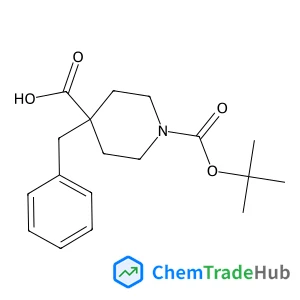
4-Benzyl-1-(tert-butoxycarbonyl)piperidine-4-carboxylic acid
CAS Number:
170838-87-6
Molecular Formula:
C18H25NO4
Recommended Suppliers




Disclaimer
This page provides academic journal information for reference and research purposes only. We are not affiliated with any journal publishers and do not handle publication submissions. For publication-related inquiries, please contact the respective journal publishers directly.
If you notice any inaccuracies in the information displayed, please contact us at support@chemtradehub.com. We will promptly review and address your concerns.