












Pathways of amyloid-beta absorption and aggregation in a membranous environment
Literature Information
Publication Date
2019-03-27
DOI
10.1039/C9CP00040B
Impact Factor
3.676
Authors
Abhilash Sahoo, Hongcheng Xu
View Original
Abstract
Aggregation of misfolded oligomeric amyloid-beta (Aβ) peptides on lipid membranes has been identified as a primary event in Alzheimer's pathogenesis. However, the structural and dynamical features of this membrane assisted Aβ aggregation have not been well characterized. The microscopic characterization of dynamic molecular-level interactions in peptide aggregation pathways has been challenging both computationally and experimentally. In this work, we explore differential patterns of membrane-induced Aβ 16–22 (K–L–V–F–F–A–E) aggregation from the microscopic perspective of molecular interactions. Physics-based coarse-grained molecular dynamics (CG-MD) simulations were employed to investigate the effect of lipid headgroup charge – zwitterionic (1-palmitoyl-2-oleoyl-sn-glycero-3-phosphocholine: POPC) and anionic (1-palmitoyl-2-oleoyl-sn-glycero-3-phospho-L-serine: POPS) – on Aβ 16–22 peptide aggregation. Our analyses present an extensive overview of multiple pathways for peptide absorption and biomechanical forces governing peptide folding and aggregation. In agreement with experimental observations, anionic POPS molecules promote extended configurations in Aβ peptides that contribute towards faster emergence of ordered β-sheet-rich peptide assemblies compared to POPC, suggesting faster fibrillation. In addition, lower cumulative rates of peptide aggregation in POPS due to higher peptide–lipid interactions and slower lipid diffusion result in multiple distinct ordered peptide aggregates that can serve as nucleation seeds for subsequent Aβ aggregation. This study provides an in-silico assessment of experimentally observed aggregation patterns, presents new morphological insights and highlights the importance of lipid headgroup chemistry in modulating the peptide absorption and aggregation process.
Related Literature
Effect of chemically modified graphene oxide on the phase separation behaviour and properties of an epoxy/polyetherimide binary system
Guijun Yu, Peiyi Wu
2013-07-31
Paper
DOI: 10.1039/C3PY00878A
Polymer patchy colloids with sticky patches
Yi Zhao, Rüdiger Berger, Katharina Landfester, Daniel Crespy
2013-09-12
Paper
DOI: 10.1039/C3PY01096A
Scalable synthesis and derivation of functional polyesters bearing ene and epoxide side chains
Yunfeng Yan, Daniel J. Siegwart
2013-11-13
Paper
DOI: 10.1039/C3PY01474F
Polymer-modified gold nanoparticles via RAFT polymerization: a detailed study for a biosensing application
Masaki Takara, Masayuki Toyoshima, Hirokazu Seto, Yu Hoshino, Yoshiko Miura
2013-09-20
Paper
DOI: 10.1039/C3PY01001E
Precise evaluation of the block copolymer nanoparticle growth in polymerization-induced self-assembly under dispersion conditions
Yang Su, Xin Xiao, Shentong Li, Meihan Dan, Xiaohui Wang, Wangqing Zhang
2013-08-30
Paper
DOI: 10.1039/C3PY00995E
Growing polymers from peptides and proteins: a biomedical perspective
Yizhi Qi
2013-10-11
Review Article
DOI: 10.1039/C3PY01089A
Nitroxide mediated polymerization of methacrylates at moderate temperature
Christophe Detrembleur, Christine Jérôme, Julien De Winter, Pascal Gerbaux, Jean-Louis Clément, Yohann Guillaneuf, Didier Gigmes
2013-09-17
Communication
DOI: 10.1039/C3PY01133J
Sulfonated poly(arylene ether phosphine oxide)s with various distributions and contents of pendant sulfonic acid groups synthesized by direct polycondensation
Huiying Liao, Ke Zhang, Gangsheng Tong, Guyu Xiao, Deyue Yan
2013-09-16
Paper
DOI: 10.1039/C3PY00821E
One-step synthesis of polypyrazoles and self-assembled polypyrazole–copper catalysts for click chemistry
Longqiang Xiao, Shaojun Cai, Qingye Liu, Liqiong Liao, Xin Guo, Yan Li, Xiangxiang Jia, Feifei Li, Lijian Liu
2013-09-03
Paper
DOI: 10.1039/C3PY01105D
Synthesis and solid state helix to helix rearrangement of poly(phenylacetylene) bearing n-octyl alkyl side chains
Asahi Motoshige, Yoshiaki Yoshida, Ranko Motoshige
2013-09-26
Paper
DOI: 10.1039/C3PY01000G
You might also like
Compound Q&A
What are the main uses of 1H-Indazole-6-carbonitrile (CAS: 141290-59-7)?
1H-Indazole-6-carbonitrile finds applications in pharmaceuticals, where it serve...
141290-59-71H-Indazole-6-carbon...
Compound Q&A
How should waste containing Dioctyl (2E)-2-butenedioate (CAS: 2997-85-5) be handled?
Waste containing Dioctyl (2E)-2-butenedioate (CAS: 2997-85-5) should be collecte...
2997-85-5Dioctyl (2E)-2-buten...
Compound Q&A
What industries use Sodium [(1,2-benzoxazol-3-ylmethyl)sulfonyl]azanide (CAS: 68291-98-5)?
Sodium [(1,2-benzoxazol-3-ylmethyl)sulfonyl]azanide is primarily used in pharmac...
68291-98-5Sodium [(1,2-benzoxa...
Compound Q&A
Are there alternatives to Dimethyl 4-(4,4,5,5-tetramethyl-1,3,2-dioxaborolan-2-yl)-2,6-pyridinedicarboxylate (CAS: 741709-66-0) in synthesis?
Dimethyl 4-(4,4,5,5-tetramethyl-1,3,2-dioxaborolan-2-yl)-2,6-pyridinedicarboxyla...
741709-66-0Dimethyl 4-(4,4,5,5-...
Compound Q&A
How should waste containing 2-Fluoro-6-hydrazinopyridine (CAS: 80714-39-2) be handled?
Waste containing 2-Fluoro-6-hydrazinopyridine (CAS: 80714-39-2) should be manage...
80714-39-22-Fluoro-6-hydrazino...
Compound Q&A
What is 6-Formyl-2-pyridinecarboxylic acid (CAS: 499214-11-8)?
6-Formyl-2-pyridinecarboxylic acid is an organic compound with the molecular for...
499214-11-86-Formyl-2-pyridinec...
Compound Q&A
What is the market or research trend for 3-(3,4-dimethoxyphenyl)-2,5-dimethyl-N-(2-morpholin-4-ylethyl)pyrazolo[1,5-a]pyrimidin-7-amine (CAS: 900874-91-1)?
Research trends for this compound indicate a focus on its potential applications...
900874-91-13-(3,4-dimethoxyphen...
Compound Q&A
How is 9H-Tribenzo[b,d,f]azepine (CAS: 29875-73-8) typically synthesized?
9H-Tribenzo[b,d,f]azepine is typically synthesized via a multi-step process invo...
29875-73-89H-Tribenzo[b,d,f]az...
Compound Q&A
How is 1-Cyclopropyl-7-ethoxy-6-fluoro-8-methoxy-4-oxo-1,4-dihydro-3-quinolinecarboxylic acid (CAS: 1797982-51-4) typically synthesized?
1-Cyclopropyl-7-ethoxy-6-fluoro-8-methoxy-4-oxo-1,4-dihydro-3-quinolinecarboxyli...
1797982-51-41-Cyclopropyl-7-etho...
Compound Q&A
How should waste containing Methyl 3-oxo-1,2,3,4-tetrahydro-6-quinoxalinecarboxylate (CAS: 671820-52-3) be handled?
Waste containing Methyl 3-oxo-1,2,3,4-tetrahydro-6-quinoxalinecarboxylate (CAS: ...
671820-52-3Methyl 3-oxo-1,2,3,4...
Source Journal
Physical Chemistry Chemical Physics

CiteScore:
5.5
Self-citation Rate:
10.3%
Articles per Year:
3036
Physical Chemistry Chemical Physics (PCCP) is an international journal co-owned by 19 physical chemistry and physics societies from around the world. This journal publishes original, cutting-edge research in physical chemistry, chemical physics and biophysical chemistry. To be suitable for publication in PCCP, articles must include significant innovation and/or insight into physical chemistry; this is the most important criterion that reviewers and Editors will judge against when evaluating submissions. The journal has a broad scope and welcomes contributions spanning experiment, theory, computation and data science. Topical coverage includes spectroscopy, dynamics, kinetics, statistical mechanics, thermodynamics, electrochemistry, catalysis, surface science, quantum mechanics, quantum computing and machine learning. Interdisciplinary research areas such as polymers and soft matter, materials, nanoscience, energy, surfaces/interfaces, and biophysical chemistry are welcomed if they demonstrate significant innovation and/or insight into physical chemistry. Joined experimental/theoretical studies are particularly appreciated when complementary and based on up-to-date approaches.
Recommended Compounds
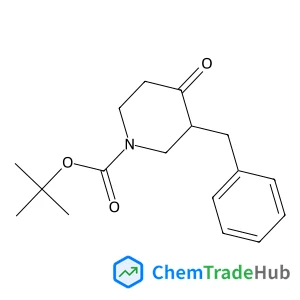
2-Methyl-2-propanyl 3-benzyl-4-oxo-1-piperidinecarboxylate
CAS Number:
193274-82-7
Molecular Formula:
C17H23NO3
![(3R)-4-(4-Chlorophenyl)-3-({[(2-methyl-2-propanyl)oxy]carbonyl}amino)butanoic acid structure](https://static.chemtradehub.com/structs/218/218608-96-9-f871.webp "(3R)-4-(4-Chlorophenyl)-3-({[(2-methyl-2-propanyl)oxy]carbonyl}amino)butanoic acid structure")
(3R)-4-(4-Chlorophenyl)-3-({[(2-methyl-2-propanyl)oxy]carbonyl}amino)butanoic acid
CAS Number:
218608-96-9
Molecular Formula:
C15H20ClNO4
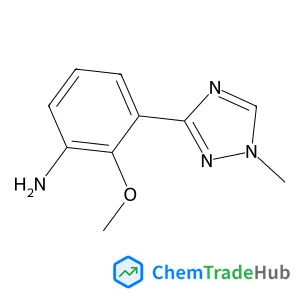
2-Methoxy-3-(1-methyl-1H-1,2,4-triazol-3-yl)aniline
CAS Number:
1609394-10-6
Molecular Formula:
C10H12N4O
Recommended Suppliers





Disclaimer
This page provides academic journal information for reference and research purposes only. We are not affiliated with any journal publishers and do not handle publication submissions. For publication-related inquiries, please contact the respective journal publishers directly.
If you notice any inaccuracies in the information displayed, please contact us at support@chemtradehub.com. We will promptly review and address your concerns.