












Synthesis and solid state helix to helix rearrangement of poly(phenylacetylene) bearing n-octyl alkyl side chains
Literature Information
Publication Date
2013-09-26
DOI
10.1039/C3PY01000G
Impact Factor
5.582
Authors
Asahi Motoshige, Yoshiaki Yoshida, Ranko Motoshige
View Original
Abstract
Highly stereoregular polymerisations of p-n-octyphenylacetylene (pOcPA) were performed using a [Rh(norbornadiene)Cl]2-triethylamine catalyst in ethanol at −20 and 25 °C to afford yellow and orange polymers, Poly(Y) and Poly(O), in yields of 64 and 99%, respectively. The XRD patterns of Poly(Y) showed a hexagonal columnar crystal with a contracted cis–cisoid helix, HexaPoly(Y)CC. The XRD pattern of Poly(O) matched that of Poly(Y) when heated to 80 °C. The heat treatment of HexaPoly(Y)CC at 100 °C generated two tetragonal crystals: Tetra1Poly(R)CC, containing contracted cis–cisoid helices, and Tetra2Poly(R)CT, containing stretched cis–transoid helices. The helical diameters of HexaPoly(Y)CC before and after heat treatment were estimated using XRD and were consistent with the results of MMFF 94 calculations, although the n-octyl alkyl chains of HexaPoly(Y)CC and Tetra2Poly(R)CT did not have linear alkyl chains; a bend in the chains was confirmed by 13C CP-MAS NMR. When HexaPoly(Y)CC was heated to 100 °C in the solid phase, the λmax in the diffuse reflective UV-vis spectra shifted from 448 nm to 565 nm. Furthermore, the endothermic transition for HexaPoly(Y)CC occurred at 100 °C in the DSC trace. Therefore, these data corroborated the assertion that HexaPoly(Y)CC thermally converted into Tetra1Poly(R)CC and Tetra2Poly(R)CT.
Recommended Journals
Related Literature
One order of magnitude increase of triplet state lifetime observed in deprotonated form selenium substituted uracil
Peipei Jin, Xueli Wang, Haifeng Pan
2021-12-01
Paper
DOI: 10.1039/D1CP04811B
An overview of hydroxy-based polyanionic cathode insertion materials for metal-ion batteries
Shashwat Singh, Valérie Pralong, Prabeer Barpanda
2021-07-26
Perspective
DOI: 10.1039/D1CP01741A
Microscale pH inhomogeneity in frozen NaCl solutions
Shun Kataoka, Makoto Harada, Tetsuo Okada
2021-08-11
Paper
DOI: 10.1039/D1CP01655E
Novel Janus diamane C4FCl: a stable and moderate bandgap semiconductor with a huge excitonic effect
2021-08-09
Paper
DOI: 10.1039/D1CP02632A
First-principles prediction of infrared phonon and dielectric function in biaxial hyperbolic van der Waals crystal α-MoO3
Zhen Tong, Traian Dumitrică
2021-08-11
Paper
DOI: 10.1039/D1CP00682G
A Dirac nodal surface semi-metallic carbon-based structure as a universal anode material for metal-ion batteries with high performance
Shouren Zhang, Huili Liu, Yadan Zhang, Shuaiwei Wang, Baocheng Yang
2021-08-06
Paper
DOI: 10.1039/D1CP02306C
Exploring vibronic coupling in the benzene radical cation and anion with different levels of the GW approximation
Zi Cheng Wong, Liviu Ungur
2021-08-07
Paper
DOI: 10.1039/D1CP02795F
Adsorption of water in Na-LTA zeolites: an ab initio molecular dynamics investigation
Joharimanitra Randrianandraina, Michael Badawi, Bruno Cardey, Manuel Grivet, Jean-Emmanuel Groetz, Christophe Ramseyer, Freddy Torrealba Anzola, Caroline Chambelland, Didier Ducret
2021-08-06
Paper
DOI: 10.1039/D1CP02624K
You might also like
Compound Q&A
What are the main uses of 4-Nitrophenyl phosphate disodium salt hexahydrate (CAS: 333338-18-4)?
4-Nitrophenyl phosphate disodium salt hexahydrate is primarily used as a substra...
333338-18-44-Nitrophenyl phosph...
Compound Q&A
What are the main uses of 2-(Trifluoromethyl)-1,3-oxazole-4-carboxylic Acid (CAS: 1060816-01-4)?
2-(Trifluoromethyl)-1,3-oxazole-4-carboxylic Acid (CAS: 1060816-01-4) is widely ...
1060816-01-42-(Trifluoromethyl)-...
Compound Q&A
How should 2-Fluoro-4-biphenylcarboxylic acid (CAS: 137045-30-8) be stored?
2-Fluoro-4-biphenylcarboxylic acid should be stored in a cool, dry place at room...
137045-30-82-Fluoro-4-biphenylc...
Compound Q&A
What industries use Prednisolone-21-Carboxylic Acid (CAS: 61549-70-0)?
Prednisolone-21-Carboxylic Acid is primarily used in the pharmaceutical industry...
61549-70-0Prednisolone-21-Carb...
Compound Q&A
How should 4-(Hydrazinomethyl)-1,2,3-benzenetriol (CAS: 3614-72-0) be stored?
4-(Hydrazinomethyl)-1,2,3-benzenetriol (CAS: 3614-72-0) should be stored in a co...
3614-72-04-(Hydrazinomethyl)-...
Compound Q&A
What industries use 4-Amino-1-methyl-1H-pyrazole-5-carboxylic acid hydrochloride (CAS: 92534-70-8)?
4-Amino-1-methyl-1H-pyrazole-5-carboxylic acid hydrochloride (CAS: 92534-70-8) i...
92534-70-84-Amino-1-methyl-1H-...
Compound Q&A
What regulatory guidelines apply to dehydropachymic acid (CAS: 77012-31-8)?
Dehydropachymic acid (CAS: 77012-31-8) is regulated by various agencies. It fall...
77012-31-8Dehydropachymic acid
Compound Q&A
What is the market or research trend for 6-[(2,2-Dimethylpropanoyl)amino]nicotinic acid (CAS: 898561-66-5)?
The market and research trends for 6-[(2,2-Dimethylpropanoyl)amino]nicotinic aci...
898561-66-56-[(2,2-Dimethylprop...
Compound Q&A
How should 1,10-Phenanthroline-2,9-dicarbaldehyde (CAS: 57709-62-3) be stored?
1,10-Phenanthroline-2,9-dicarbaldehyde should be stored in a cool, dry place awa...
57709-62-31,10-Phenanthroline-...
Compound Q&A
How is 5-Carbamoyl-11-oxo-10,11-dihydro-5H-dibenzo[b,f]azepin-10-yl acetate (CAS: 113952-21-9) typically synthesized?
5-Carbamoyl-11-oxo-10,11-dihydro-5H-dibenzo[b,f]azepin-10-yl acetate can be synt...
113952-21-95-Carbamoyl-11-oxo-1...
Source Journal
Polymer Chemistry

CiteScore:
8.6
Self-citation Rate:
7.3%
Articles per Year:
457
Polymer Chemistry welcomes submissions in all areas of polymer science that have a strong focus on macromolecular chemistry. Manuscripts may cover a broad range of fields, yet no direct application focus is required.
Recommended Compounds
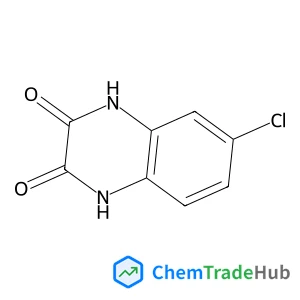
6-CHLORO-2,3-DIOXO-1,2,3,4-TETRAHYDROQUINOXALINE, 97
CAS Number:
169-14-2
Molecular Formula:
C8H5ClN2O2

2,2-dideuterio-2-(3,4,5,6-tetradeuterio-2-pyridyl)acetic acid;hydrochloride
CAS Number:
1329799-67-8
Molecular Formula:
C7H2ClD6NO2

4-Methyl-3-morpholinecarboxylic acid hydrochloride (1:1)
CAS Number:
1240518-90-4
Molecular Formula:
C6H12ClNO3
Recommended Suppliers






Disclaimer
This page provides academic journal information for reference and research purposes only. We are not affiliated with any journal publishers and do not handle publication submissions. For publication-related inquiries, please contact the respective journal publishers directly.
If you notice any inaccuracies in the information displayed, please contact us at support@chemtradehub.com. We will promptly review and address your concerns.