












![Sodium 3-[(E)-(4-anilinophenyl)diazenyl]benzenesulfonate structure](https://static.chemtradehub.com/structs/587/587-98-4-035f.webp "Sodium 3-[(E)-(4-anilinophenyl)diazenyl]benzenesulfonate structure")
Sodium 3-[(E)-(4-anilinophenyl)diazenyl]benzenesulfonate
CAS Number:
587-98-4
Molecular Formula:
C18H14N3NaO3S
Lucas V. Faria, Ana P. Lima, Fausto M. Araújo, Thalles P. Lisboa, Maria A. C. Matos, Rodrigo A. A. Munoz, Renato C. Matos
This paper demonstrates a potential use of the reduced graphene-oxide (rGO) modified electrode associated with FIA and BIA systems for rapid, simple and sensitive determination of tetracycline residues in milk samples as well as quality control of pharmaceutical formulations. Experiments involving cyclic voltammetry using the rGO-modified electrode evidenced the anticipation of potential and increase in analytical signal (7-fold for the first oxidation process) when compared to the unmodified electrode, which demonstrated the electrocatalytic effect of rGO responsible for the improved selectivity of the sensor. High- or low-fat milk samples were only diluted in a supporting electrolyte (BR buffer solution) while pharmaceutical tablets were powdered and dissolved in the same electrolyte, and no interferences from the sample matrix were verified in the amperometric determination of tetracycline. Both analytical methods showed high precision (RSD < 3%), low detection limit (1.17 μmol L−1 for FIA and 0.038 μmol L−1 for BIA), high sample throughput (103 h−1), proper accuracy evaluated using recovery values (84–117%) and by comparison with Ultra-Fast Liquid-Chromatography (UFLC) obtaining statistically similar results (95% confidence level). The BIA method presented superior performance regarding sample throughput and especially detection limit due to the high flow injection rate of the system, which is mandatory for the analysis of tetracycline residues in milk. The rGO-modified electrode was stable, sensitive and precise under high-flow conditions even in the presence of high-fat milk samples.
Vladimir A. Volkovich, Trevor R. Griffiths, Derek J. Fray, Robert C. Thied
DOI: 10.1039/B004464O
DOI: 10.1039/B002326O
Rainer Burkart, Ulrich Schindewolf
DOI: 10.1039/B002598O
DOI: 10.1039/B106672M
Giuliana Magnacca, Claudio Morterra
DOI: 10.1039/B004369I
Tadafumi Uchimaru, Masaaki Sugie
DOI: 10.1039/B104904F
DOI: 10.1039/A902976A
Jean-Pierre Simonin, Hendrawan Hendrawan
DOI: 10.1039/B104407A
1H-Indazole-6-carbonitrile finds applications in pharmaceuticals, where it serve...
Waste containing Dioctyl (2E)-2-butenedioate (CAS: 2997-85-5) should be collecte...
Sodium [(1,2-benzoxazol-3-ylmethyl)sulfonyl]azanide is primarily used in pharmac...
Dimethyl 4-(4,4,5,5-tetramethyl-1,3,2-dioxaborolan-2-yl)-2,6-pyridinedicarboxyla...
Waste containing 2-Fluoro-6-hydrazinopyridine (CAS: 80714-39-2) should be manage...
6-Formyl-2-pyridinecarboxylic acid is an organic compound with the molecular for...
Research trends for this compound indicate a focus on its potential applications...
9H-Tribenzo[b,d,f]azepine is typically synthesized via a multi-step process invo...
1-Cyclopropyl-7-ethoxy-6-fluoro-8-methoxy-4-oxo-1,4-dihydro-3-quinolinecarboxyli...
Waste containing Methyl 3-oxo-1,2,3,4-tetrahydro-6-quinoxalinecarboxylate (CAS: ...
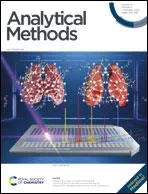
Analytical Methods welcomes early applications of new analytical and bioanalytical methods and technology demonstrating the potential for societal impact. We require that methods and technology reported in the journal are sufficiently innovative, robust, accurate, and compared to other available methods for the intended application. Developments with interdisciplinary approaches are particularly welcome. Systems should be proven with suitably complex and analytically challenging samples. We encourage developments within, but not limited to, the following technologies and applications: global health, point-of-care and molecular diagnostics biosensors and bioengineering drug development and pharmaceutical analysis applied microfluidics and nanotechnology omics studies, such as proteomics, metabolomics or glycomics environmental, agricultural and food science neuroscience biochemical and clinical analysis forensic analysis industrial process and method development
![Sodium (2Z)-7-{[(2R)-2-amino-2-carboxyethyl]sulfanyl}-2-({[(1S)-2,2-dimethylcyclopropyl]carbonyl}amino)-2-heptenoate structure](https://static.chemtradehub.com/structs/811/81129-83-1-441c.webp "Sodium (2Z)-7-{[(2R)-2-amino-2-carboxyethyl]sulfanyl}-2-({[(1S)-2,2-dimethylcyclopropyl]carbonyl}amino)-2-heptenoate structure")




