![4-[(1-Methyl-1H-pyrrol-2-yl)methylene]-1,3(2H,4H)-isoquinolinedione structure](https://static.chemtradehub.com/structs/110/1104546-89-5-a600.webp "4-[(1-Methyl-1H-pyrrol-2-yl)methylene]-1,3(2H,4H)-isoquinolinedione structure")
4-[(1-Methyl-1H-pyrrol-2-yl)methylene]-1,3(2H,4H)-isoquinolinedione
CAS Number:
1104546-89-5
Molecular Formula:
C15H12N2O2
Eryka Thamyris Damascena Nóbrega, Iagê Terra Guedes de Oliveira, Anderson Dias Viana, Luiz Henrique da Silva Gasparotto, Edgar Perin Moraes
Chemical Oxygen Demand (COD) is a quality parameter of superficial water and wastewater that provides information on chemically degradable fractions of organic (and inorganic) pollutants. Although firmly established, the conventional colorimetric method certified by Standard Methods for the Examination of Water and Wastewater of the American Society for Testing and Materials (ASTM) requires a lengthy time for diagnosis, indiscriminate use of toxic chemical reagents and a spectrophotometer, which may not be easily available, especially in developing countries. This report proposes the development of a paper-based sensor functionalized with silver nanoparticles (AgNPs) for measuring COD content in wastewater by Image Processing Analysis. The sensor was employed on samples of real effluents with COD varying from 66 to 1160 mg L−1. The color of the sensor changed from yellow to gray upon its exposure to the effluent, which is a consequence of sulfidation of AgNPs. Digital image processing was used to extract the channels from the RGB (Red-Green-Blue) color system, where the resulting dataset was evaluated with Principal Component Analysis, Multiple Linear Regression and Second Order Regression. The calibration curve presented good linearity (R = 0.96) and the COD content of wastewater was similar to that verified with the conventional method. No statistical difference was observed at a confidence level of 95%. This simple method may be envisaged as a promising alternative tool for the determination of COD in wastewater.
A-Ra Ko, Jy-Yeon Kim, Jae-Kyung Oh, Hyun-Su Kim, Young-Woo Lee, Sang-Beom Han, Kyung-Won Park
DOI: 10.1039/C0CP00394H
Jian Meng, Yanming Ma, Zhijian Wu
DOI: 10.1039/C004122J
Chang-bin Shao, Yi-hong Ding
DOI: 10.1039/C0CP00676A
Mariko Hoshino-Nagasaka, Tadashi Suzuki, Teijiro Ichimura, Shunji Kasahara, Masaaki Baba, Susumu Kawauchi
DOI: 10.1039/C004454G
L. Vereecken, J. Peeters
DOI: 10.1039/C0CP00387E
Jelena Buha, Markus Niederberger
DOI: 10.1039/C0CP01298J
Gustavo E. Ramírez-Caballero
DOI: 10.1039/C0CP00464B
Ya Yang, Junjie Qi, Wen Guo, Yousong Gu, Yunhua Huang, Yue Zhang
DOI: 10.1039/C0CP00420K
Rüdiger-A. Eichel
DOI: 10.1039/B918782K
Dong-Chan Lim, Chan-Cuk Hwang, Gerd Ganteför, Young Dok Kim
DOI: 10.1039/C0CP00467G
Ethyl 4-chlorothieno[2,3-b]pyridine-5-carboxylate (CAS: 59713-58-5) can be synth...
5-Methyl-1H-indole-3-carbaldehyde (CAS: 52562-50-2) is subject to various regula...
(1,3-Dimethyl-2,4-dioxo-1,2,3,4-tetrahydro-5-pyrimidinyl)boronic acid is a white...
Waste containing Sulfocostunolide A (CAS: 1016983-51-9) should be handled with c...
When handling Murraxocin (CAS: 88478-44-8), ensure proper personal protective eq...
Formvar (CAS: 63148-64-1) is an alkyd resin characterized by a high molecular we...
(S)-4-benzyl-2-((benzyloxy)methyl)morpholine is generally safe when handled with...
Methyl 1-(5-bromo-2-pyrimidinyl)cyclopropanecarboxylate (CAS: 1447607-69-3) is p...
2-Methyl-1-phenyl-1-propanamine hydrochloride (CAS: 24290-47-9) is generally con...
3-(4-Bromophenyl)-2-methylpropanoic acid is synthesized through a multi-step pro...
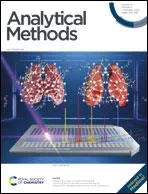
Analytical Methods welcomes early applications of new analytical and bioanalytical methods and technology demonstrating the potential for societal impact. We require that methods and technology reported in the journal are sufficiently innovative, robust, accurate, and compared to other available methods for the intended application. Developments with interdisciplinary approaches are particularly welcome. Systems should be proven with suitably complex and analytically challenging samples. We encourage developments within, but not limited to, the following technologies and applications: global health, point-of-care and molecular diagnostics biosensors and bioengineering drug development and pharmaceutical analysis applied microfluidics and nanotechnology omics studies, such as proteomics, metabolomics or glycomics environmental, agricultural and food science neuroscience biochemical and clinical analysis forensic analysis industrial process and method development
![9,9'-Spirobi[fluoren]-2-amine structure](https://static.chemtradehub.com/structs/118/118951-68-1-0d14.webp "9,9'-Spirobi[fluoren]-2-amine structure")