













Solvothermal and surfactant-free synthesis of crystalline Nb2O5, Ta2O5, HfO2, and Co-doped HfO2nanoparticles
Literature Information
Publication Date
2010-10-26
DOI
10.1039/C0CP01298J
Impact Factor
3.676
Authors
Jelena Buha, Markus Niederberger
View Original
Abstract
A simple route to niobium, hafnium and tantalum oxide nanocrystals using a nonaqueous sol–gel route based on the solvothermal reaction of the corresponding metal chlorides with benzyl alcohol is presented. This approach can easily be extended to the preparation of high quality Co-doped HfO2 nanoparticles of uniform size and shape and with a homogenous distribution of the magnetic ions. The structural characterization of all these nanomaterials as well as the magnetic properties of pure and doped hafnia, with special attention to the doping efficiency, are discussed. The obtained Co-doped hafnia exhibits paramagnetic properties with very weak antiferromagnetic interactions between Co ions moments.
Related Literature
A comparative AFM study of the interfacial nanostructure in imidazolium or pyrrolidinium ionic liquid electrolytes for zinc electrochemical systems
Srđan Begić, Hua Li, Rob Atkin, Anthony F. Hollenkamp, Patrick C. Howlett
2016-09-28
Paper
DOI: 10.1039/C6CP04299F
Bis(phenylsulfone) as a strong electron acceptor of thermally activated delayed fluorescent emitters
Ji Won Yang, Jeong Min Choi, Jun Yeob Lee
2016-10-31
Paper
DOI: 10.1039/C6CP06308J
Oxidative etching of MoS2/WS2 nanosheets to their QDs by facile UV irradiation
Xiaolong Lu, Rongguo Wang, Lifeng Hao, Fan Yang, Weicheng Jiao, Ping Peng, Feng Yuan, Wenbo Liu
2016-11-07
Paper
DOI: 10.1039/C6CP06748D
Adsorption of water and ethanol on noble and transition-metal substrates: a density functional investigation within van der Waals corrections
Rafael L. H. Freire, Adam Kiejna, Juarez L. F. Da Silva
2016-09-27
Paper
DOI: 10.1039/C6CP05620B
Charge compensation assisted enhancement of photoluminescence in combustion derived Li+ co-doped cubic ZrO2:Eu3+ nanophosphors
H. B. Ramalingam, R. Hari Krishna, B. M. Nagabhushana, R. Chandramohan, C. Shivakumara, J. Thirumalai, Tiju Thomas
2016-09-16
Paper
DOI: 10.1039/C6CP04633A
Interaction of triarylmethyl radicals with DNA termini revealed by orientation-selective W-band double electron–electron resonance spectroscopy
Gunnar Jeschke, Maxim Yulikov
2016-10-05
Paper
DOI: 10.1039/C6CP05904J
Probing the potential of halogen-free superhalogen anions as effective electrolytes of Li-ion batteries: a theoretical prospect from combined ab initio and DFT studies
Yin-Yin Sun, Jin-Feng Li, Fu-Qiang Zhou, Jian-Li Li, Bing Yin
2016-09-23
Paper
DOI: 10.1039/C6CP05871J
Growth patterns and structural motifs of cadmium clusters with up to 60 atoms: disordered or not?
Stephan Kohaut
2016-09-13
Paper
DOI: 10.1039/C6CP04948F
Giant spin–orbit effects on 1H and 13C NMR shifts for uranium(vi) complexes revisited: role of the exchange–correlation response kernel, bonding analyses, and new predictions
Anja H. Greif, Peter Hrobárik, Jochen Autschbach, Martin Kaupp
2016-10-18
Paper
DOI: 10.1039/C6CP06129J
Excited-state intramolecular proton transfer and conformational relaxation in 4′-N,N-dimethylamino-3-hydroxyflavone doped in acetonitrile crystals
Kazuki Furukawa, Norifumi Yamamoto, Kazuyuki Hino, Hiroshi Sekiya
2016-09-21
Paper
DOI: 10.1039/C6CP04322D
You might also like
Compound Q&A
How is Ethyl 4-chlorothieno[2,3-b]pyridine-5-carboxylate (CAS: 59713-58-5) typically synthesized?
Ethyl 4-chlorothieno[2,3-b]pyridine-5-carboxylate (CAS: 59713-58-5) can be synth...
59713-58-5Ethyl 4-chlorothieno...
Compound Q&A
What regulatory guidelines apply to 5-Methyl-1H-indole-3-carbaldehyde (CAS: 52562-50-2)?
5-Methyl-1H-indole-3-carbaldehyde (CAS: 52562-50-2) is subject to various regula...
52562-50-25-Methyl-1H-indole-3...
Compound Q&A
What are the physical and chemical properties of (1,3-Dimethyl-2,4-dioxo-1,2,3,4-tetrahydro-5-pyrimidinyl)boronic acid (CAS: 223418-73-3)?
(1,3-Dimethyl-2,4-dioxo-1,2,3,4-tetrahydro-5-pyrimidinyl)boronic acid is a white...
223418-73-3(1,3-Dimethyl-2,4-di...
Compound Q&A
How should waste containing Sulfocostunolide A (CAS: 1016983-51-9) be handled?
Waste containing Sulfocostunolide A (CAS: 1016983-51-9) should be handled with c...
1016983-51-9Sulfocostunolide A
Compound Q&A
What precautions should be taken when handling Murraxocin (CAS: 88478-44-8)?
When handling Murraxocin (CAS: 88478-44-8), ensure proper personal protective eq...
88478-44-8Murraxocin
Compound Q&A
What are the physical and chemical properties of Formvar (CAS: 63148-64-1)?
Formvar (CAS: 63148-64-1) is an alkyd resin characterized by a high molecular we...
63148-64-1Formvar(R)
Compound Q&A
Is (S)-4-benzyl-2-((benzyloxy)methyl)morpholine (CAS: 205242-66-6) safe?
(S)-4-benzyl-2-((benzyloxy)methyl)morpholine is generally safe when handled with...
205242-66-6(S)-4-benzyl-2-((ben...
Compound Q&A
What industries use Methyl 1-(5-bromo-2-pyrimidinyl)cyclopropanecarboxylate (CAS: 1447607-69-3)?
Methyl 1-(5-bromo-2-pyrimidinyl)cyclopropanecarboxylate (CAS: 1447607-69-3) is p...
1447607-69-3Methyl 1-(5-bromo-2-...
Compound Q&A
Is 2-Methyl-1-phenyl-1-propanamine hydrochloride (CAS: 24290-47-9) safe?
2-Methyl-1-phenyl-1-propanamine hydrochloride (CAS: 24290-47-9) is generally con...
24290-47-92-Methyl-1-phenyl-1-...
Compound Q&A
How is 3-(4-Bromophenyl)-2-methylpropanoic acid (CAS: 66735-01-1) typically synthesized?
3-(4-Bromophenyl)-2-methylpropanoic acid is synthesized through a multi-step pro...
66735-01-13-(4-Bromophenyl)-2-...
Source Journal
Physical Chemistry Chemical Physics

CiteScore:
5.5
Self-citation Rate:
10.3%
Articles per Year:
3036
Physical Chemistry Chemical Physics (PCCP) is an international journal co-owned by 19 physical chemistry and physics societies from around the world. This journal publishes original, cutting-edge research in physical chemistry, chemical physics and biophysical chemistry. To be suitable for publication in PCCP, articles must include significant innovation and/or insight into physical chemistry; this is the most important criterion that reviewers and Editors will judge against when evaluating submissions. The journal has a broad scope and welcomes contributions spanning experiment, theory, computation and data science. Topical coverage includes spectroscopy, dynamics, kinetics, statistical mechanics, thermodynamics, electrochemistry, catalysis, surface science, quantum mechanics, quantum computing and machine learning. Interdisciplinary research areas such as polymers and soft matter, materials, nanoscience, energy, surfaces/interfaces, and biophysical chemistry are welcomed if they demonstrate significant innovation and/or insight into physical chemistry. Joined experimental/theoretical studies are particularly appreciated when complementary and based on up-to-date approaches.
Recommended Compounds
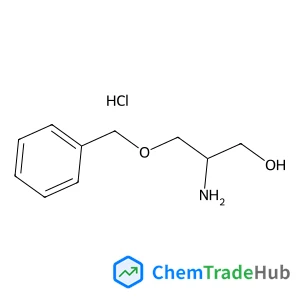
(R)-2-amino-3-(benzyloxy)propan-1-ol hydrochloride
CAS Number:
58577-95-0
Molecular Formula:
C10H16ClNO2
![4-[(1-Methyl-1H-pyrrol-2-yl)methylene]-1,3(2H,4H)-isoquinolinedione structure](https://static.chemtradehub.com/structs/110/1104546-89-5-a600.webp "4-[(1-Methyl-1H-pyrrol-2-yl)methylene]-1,3(2H,4H)-isoquinolinedione structure")
4-[(1-Methyl-1H-pyrrol-2-yl)methylene]-1,3(2H,4H)-isoquinolinedione
CAS Number:
1104546-89-5
Molecular Formula:
C15H12N2O2
Recommended Suppliers







Disclaimer
This page provides academic journal information for reference and research purposes only. We are not affiliated with any journal publishers and do not handle publication submissions. For publication-related inquiries, please contact the respective journal publishers directly.
If you notice any inaccuracies in the information displayed, please contact us at support@chemtradehub.com. We will promptly review and address your concerns.