













Is the planar hexacoordinate nitrogen molecule NB6− viable?
Literature Information
Publication Date
2010-09-15
DOI
10.1039/C0CP00676A
Impact Factor
3.676
Authors
Chang-bin Shao, Yi-hong Ding
View Original
Abstract
Molecules with hypercoordinate planar centers have continued to receive enthusiastic attention due to their violation of the traditional models of three-dimensional chemical bonding and maximum tetracoordination. These electronic exotic but structurally aesthetic species have been optimistically conceived as building blocks in cluster-assembly for bulky materials. Recently, the planar hexacoordinate nitrogen (phN) unit, NB6−, has been theoretically incorporated into a series of sandwich-like transition-metal compounds. However, the intrinsic stability of NB6− in both gas-phase and assembly has not been tackled, though it is the key factor for predicting the viability of any molecules. In this paper, at the CCSD(T)/6-311+G(2df)//B3LYP/6-311+G(d)+ZPVE level, we investigate for the first time the thermodynamic and kinetic stability of the phN unit, NB6−, in both free and assembled ([NB6]2Fe) forms. The calculated least barrier height of phN towards conversion is 9.2 and 4.4 kcal mol−1 in free and assembled forms, respectively. Most importantly, the phN structure is thermodynamically rather unstable, by 102.8 and 162.1 kcal mol−1 higher than the respective lower-lying conversion isomers. Therefore, in view of the combined thermodynamic and kinetic consideration, we propose that isolation of the phN structure of NB6− in either gas phase or assembly is unlikely. The present results manifest that for predicting any viable molecule with exotic structures, investigation of its “intrinsic stability” is highly necessary. The maintenance of the phN–NB6− is discussed at the 6-311+G(d)-B3LYP, MP2, CCSD and CCSD(T) optimization levels in comparison with the isoelectronic and milestone phC–CB62−.
Related Literature
Low temperature excitonic spectroscopy and dynamics as a probe of quality in hybrid perovskite thin films
Som Sarang, Hidetaka Ishihara, Yen-Chang Chen, Oliver Lin, Ajay Gopinathan, Vincent C. Tung, Sayantani Ghosh
2016-07-26
Paper
DOI: 10.1039/C6CP02971J
Exploring the mechanism of F282L mutation-caused constitutive activity of GPCR by a computational study
Nan Gao, Tao Liang, Yuan Yuan, Xiuchan Xiao, Yihuan Zhao, Yanzhi Guo, Menglong Li, Xuemei Pu
2016-09-16
Paper
DOI: 10.1039/C6CP03710K
Experimental, theoretical and computational investigation of the inelastic neutron scattering spectrum of a homonuclear diatomic molecule in a nearly spherical trap: H2@C60
Salvatore Mamone, Mónica Jiménez-Ruiz, Mark R. Johnson, Stéphane Rols, Anthony J. Horsewill
2016-10-06
Paper
DOI: 10.1039/C6CP06059E
Unravelling the fundamentals of thermal and chemical expansion of BaCeO3 from first principles phonon calculations
Andreas Løken, Reidar Haugsrud, Tor S. Bjørheim
2016-10-19
Paper
DOI: 10.1039/C6CP05710A
Interplay between surface and surface resonance states on height selective stability of fcc Dy(111) film at nanoscale
Xiaojie Liu, Cai-Zhuang Wang, Myron Hupalo, Kai-Ming Ho, Patricia A. Thiel, Michael C. Tringides
2016-11-02
Paper
DOI: 10.1039/C6CP05639C
Ultrafast ion migration in hybrid perovskite polycrystalline thin films under light and suppression in single crystals
Qi Wang, Qingfeng Dong, Yanjun Fang, Jinsong Huang
2016-10-13
Paper
DOI: 10.1039/C6CP06496E
An atomistic mechanism study of GaN step-flow growth in vicinal m-plane orientations
Zhun Liu, Ru-Zhi Wang, Peter Zapol
2016-10-12
Paper
DOI: 10.1039/C6CP04479D
Band structure engineering in a MoS2/PbI2 van der Waals heterostructure via an external electric field
Yaqiang Ma, Xu Zhao, Tianxing Wang, Wei Li, Shanshan Chang, Yi Li, Mingyu Zhao
2016-09-19
Paper
DOI: 10.1039/C6CP06046C
Hydrogen bonds vs. π-stacking interactions in the p-aminophenol⋯p-cresol dimer: an experimental and theoretical study
M. C. Capello, F. J. Hernández, C. Dedonder-Lardeux, C. Jouvet, G. A. Pino
2016-10-20
Paper
DOI: 10.1039/C6CP06352G
Adsorption of water and ethanol on noble and transition-metal substrates: a density functional investigation within van der Waals corrections
Rafael L. H. Freire, Adam Kiejna, Juarez L. F. Da Silva
2016-09-27
Paper
DOI: 10.1039/C6CP05620B
You might also like
Compound Q&A
How is Ethyl 4-chlorothieno[2,3-b]pyridine-5-carboxylate (CAS: 59713-58-5) typically synthesized?
Ethyl 4-chlorothieno[2,3-b]pyridine-5-carboxylate (CAS: 59713-58-5) can be synth...
59713-58-5Ethyl 4-chlorothieno...
Compound Q&A
What regulatory guidelines apply to 5-Methyl-1H-indole-3-carbaldehyde (CAS: 52562-50-2)?
5-Methyl-1H-indole-3-carbaldehyde (CAS: 52562-50-2) is subject to various regula...
52562-50-25-Methyl-1H-indole-3...
Compound Q&A
What are the physical and chemical properties of (1,3-Dimethyl-2,4-dioxo-1,2,3,4-tetrahydro-5-pyrimidinyl)boronic acid (CAS: 223418-73-3)?
(1,3-Dimethyl-2,4-dioxo-1,2,3,4-tetrahydro-5-pyrimidinyl)boronic acid is a white...
223418-73-3(1,3-Dimethyl-2,4-di...
Compound Q&A
How should waste containing Sulfocostunolide A (CAS: 1016983-51-9) be handled?
Waste containing Sulfocostunolide A (CAS: 1016983-51-9) should be handled with c...
1016983-51-9Sulfocostunolide A
Compound Q&A
What precautions should be taken when handling Murraxocin (CAS: 88478-44-8)?
When handling Murraxocin (CAS: 88478-44-8), ensure proper personal protective eq...
88478-44-8Murraxocin
Compound Q&A
What are the physical and chemical properties of Formvar (CAS: 63148-64-1)?
Formvar (CAS: 63148-64-1) is an alkyd resin characterized by a high molecular we...
63148-64-1Formvar(R)
Compound Q&A
Is (S)-4-benzyl-2-((benzyloxy)methyl)morpholine (CAS: 205242-66-6) safe?
(S)-4-benzyl-2-((benzyloxy)methyl)morpholine is generally safe when handled with...
205242-66-6(S)-4-benzyl-2-((ben...
Compound Q&A
What industries use Methyl 1-(5-bromo-2-pyrimidinyl)cyclopropanecarboxylate (CAS: 1447607-69-3)?
Methyl 1-(5-bromo-2-pyrimidinyl)cyclopropanecarboxylate (CAS: 1447607-69-3) is p...
1447607-69-3Methyl 1-(5-bromo-2-...
Compound Q&A
Is 2-Methyl-1-phenyl-1-propanamine hydrochloride (CAS: 24290-47-9) safe?
2-Methyl-1-phenyl-1-propanamine hydrochloride (CAS: 24290-47-9) is generally con...
24290-47-92-Methyl-1-phenyl-1-...
Compound Q&A
How is 3-(4-Bromophenyl)-2-methylpropanoic acid (CAS: 66735-01-1) typically synthesized?
3-(4-Bromophenyl)-2-methylpropanoic acid is synthesized through a multi-step pro...
66735-01-13-(4-Bromophenyl)-2-...
Source Journal
Physical Chemistry Chemical Physics

CiteScore:
5.5
Self-citation Rate:
10.3%
Articles per Year:
3036
Physical Chemistry Chemical Physics (PCCP) is an international journal co-owned by 19 physical chemistry and physics societies from around the world. This journal publishes original, cutting-edge research in physical chemistry, chemical physics and biophysical chemistry. To be suitable for publication in PCCP, articles must include significant innovation and/or insight into physical chemistry; this is the most important criterion that reviewers and Editors will judge against when evaluating submissions. The journal has a broad scope and welcomes contributions spanning experiment, theory, computation and data science. Topical coverage includes spectroscopy, dynamics, kinetics, statistical mechanics, thermodynamics, electrochemistry, catalysis, surface science, quantum mechanics, quantum computing and machine learning. Interdisciplinary research areas such as polymers and soft matter, materials, nanoscience, energy, surfaces/interfaces, and biophysical chemistry are welcomed if they demonstrate significant innovation and/or insight into physical chemistry. Joined experimental/theoretical studies are particularly appreciated when complementary and based on up-to-date approaches.
Recommended Compounds
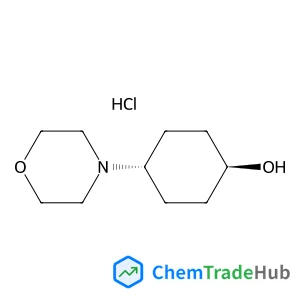
trans-4-(4-Morpholinyl)cyclohexanol hydrochloride (1:1)
CAS Number:
1588441-09-1
Molecular Formula:
C10H20ClNO2

Recommended Suppliers





Disclaimer
This page provides academic journal information for reference and research purposes only. We are not affiliated with any journal publishers and do not handle publication submissions. For publication-related inquiries, please contact the respective journal publishers directly.
If you notice any inaccuracies in the information displayed, please contact us at support@chemtradehub.com. We will promptly review and address your concerns.