












Coadsorption of the complementary base pair adenine–thymine at the mercury/electrolyte interface
Literature Information
Publication Date
2001-09-05
DOI
10.1039/B104007N
Impact Factor
3.676
Authors
S. Kirste, C. Donner
View Original
Abstract
The condensation behaviour of adenine was investigated with respect to a possible reorientation during the phase transition. It was found that, in contrast to thymine, randomly adsorbed adenine yields a negative dipole contribution with regard to the displaced water molecules. During the condensation reorientation takes place in such a way that this negative dipole contribution is reinforced. Coadsorption of the complementary DNA bases adenine and thymine leads to destabilisation of both the condensed and the randomly adsorbed layers. In place of the attractive lateral forces between adenine or thymine in a pure condensed monolayer, another kind of interaction occurs between adenine and thymine in a mixed adsorbate. Hence, the phase transition disappears when a critical ratio of adenine to thymine is reached.
Related Literature
Molecular spin conversion in solid deuterated methane
Piotr Stachowiak
2010-12-20
Paper
DOI: 10.1039/C0CP00943A
Basicity, complexation ability and interfacial behavior of BTBPs: a simulation study
G. Benay, R. Schurhammer, G. Wipff
2010-12-16
Paper
DOI: 10.1039/C0CP01975E
In situFTIR spectroelectrochemical study on the mechanism of ethylene glycol electrocatalytic oxidation at a Pd electrode
Lianqin Wang, Hui Meng, Pei Kang Shen, Claudio Bianchini, Francesco Vizza, Zidong Wei
2010-12-08
Paper
DOI: 10.1039/C0CP01913E
Design of optimally switchable molecules by genetic algorithms
Niss Ole Carstensen, Johannes M. Dieterich, Bernd Hartke
2010-12-15
Paper
DOI: 10.1039/C0CP01065K
Theoretical study of the source-drain current and gate leakage current to understand the graphene field-effect transistors
Cui Yu, Hongmei Liu, Wenbin Ni, Nengyue Gao, Jianwei Zhao, Haoli Zhang
2011-01-14
Paper
DOI: 10.1039/C0CP01026J
Two-mode dynamics in dispersed systems: the case of particle-stabilized foams studied by diffusing wave spectroscopy
Antonio Stocco, Jérôme Crassous, Anniina Salonen, Arnaud Saint-Jalmes, Dominique Langevin
2010-11-25
Paper
DOI: 10.1039/C0CP01152E
Molecular dynamics simulations on [FePAH]+ π-complexes of astrophysical interest: anharmonic infrared spectroscopy
2011-01-18
Paper
DOI: 10.1039/C0CP00990C
Catalytic activity of a ζ-class zinc and cadmium containing carbonic anhydrase. Compared work mechanisms
Orazio Amata, Tiziana Marino, Nino Russo, Marirosa Toscano
2011-01-07
Paper
DOI: 10.1039/C0CP01053G
The stabilization of charged states at phenazine-like units in polyaniline under p-doping: an in situATR-FTIR spectroelectrochemical study
Evgenia Dmitrieva, Lothar Dunsch
2011-01-05
Paper
DOI: 10.1039/C0CP01264E
You might also like
Compound Q&A
What are the main uses of 1H-Indazole-6-carbonitrile (CAS: 141290-59-7)?
1H-Indazole-6-carbonitrile finds applications in pharmaceuticals, where it serve...
141290-59-71H-Indazole-6-carbon...
Compound Q&A
How should waste containing Dioctyl (2E)-2-butenedioate (CAS: 2997-85-5) be handled?
Waste containing Dioctyl (2E)-2-butenedioate (CAS: 2997-85-5) should be collecte...
2997-85-5Dioctyl (2E)-2-buten...
Compound Q&A
What industries use Sodium [(1,2-benzoxazol-3-ylmethyl)sulfonyl]azanide (CAS: 68291-98-5)?
Sodium [(1,2-benzoxazol-3-ylmethyl)sulfonyl]azanide is primarily used in pharmac...
68291-98-5Sodium [(1,2-benzoxa...
Compound Q&A
Are there alternatives to Dimethyl 4-(4,4,5,5-tetramethyl-1,3,2-dioxaborolan-2-yl)-2,6-pyridinedicarboxylate (CAS: 741709-66-0) in synthesis?
Dimethyl 4-(4,4,5,5-tetramethyl-1,3,2-dioxaborolan-2-yl)-2,6-pyridinedicarboxyla...
741709-66-0Dimethyl 4-(4,4,5,5-...
Compound Q&A
How should waste containing 2-Fluoro-6-hydrazinopyridine (CAS: 80714-39-2) be handled?
Waste containing 2-Fluoro-6-hydrazinopyridine (CAS: 80714-39-2) should be manage...
80714-39-22-Fluoro-6-hydrazino...
Compound Q&A
What is 6-Formyl-2-pyridinecarboxylic acid (CAS: 499214-11-8)?
6-Formyl-2-pyridinecarboxylic acid is an organic compound with the molecular for...
499214-11-86-Formyl-2-pyridinec...
Compound Q&A
What is the market or research trend for 3-(3,4-dimethoxyphenyl)-2,5-dimethyl-N-(2-morpholin-4-ylethyl)pyrazolo[1,5-a]pyrimidin-7-amine (CAS: 900874-91-1)?
Research trends for this compound indicate a focus on its potential applications...
900874-91-13-(3,4-dimethoxyphen...
Compound Q&A
How is 9H-Tribenzo[b,d,f]azepine (CAS: 29875-73-8) typically synthesized?
9H-Tribenzo[b,d,f]azepine is typically synthesized via a multi-step process invo...
29875-73-89H-Tribenzo[b,d,f]az...
Compound Q&A
How is 1-Cyclopropyl-7-ethoxy-6-fluoro-8-methoxy-4-oxo-1,4-dihydro-3-quinolinecarboxylic acid (CAS: 1797982-51-4) typically synthesized?
1-Cyclopropyl-7-ethoxy-6-fluoro-8-methoxy-4-oxo-1,4-dihydro-3-quinolinecarboxyli...
1797982-51-41-Cyclopropyl-7-etho...
Compound Q&A
How should waste containing Methyl 3-oxo-1,2,3,4-tetrahydro-6-quinoxalinecarboxylate (CAS: 671820-52-3) be handled?
Waste containing Methyl 3-oxo-1,2,3,4-tetrahydro-6-quinoxalinecarboxylate (CAS: ...
671820-52-3Methyl 3-oxo-1,2,3,4...
Source Journal
Physical Chemistry Chemical Physics

CiteScore:
5.5
Self-citation Rate:
10.3%
Articles per Year:
3036
Physical Chemistry Chemical Physics (PCCP) is an international journal co-owned by 19 physical chemistry and physics societies from around the world. This journal publishes original, cutting-edge research in physical chemistry, chemical physics and biophysical chemistry. To be suitable for publication in PCCP, articles must include significant innovation and/or insight into physical chemistry; this is the most important criterion that reviewers and Editors will judge against when evaluating submissions. The journal has a broad scope and welcomes contributions spanning experiment, theory, computation and data science. Topical coverage includes spectroscopy, dynamics, kinetics, statistical mechanics, thermodynamics, electrochemistry, catalysis, surface science, quantum mechanics, quantum computing and machine learning. Interdisciplinary research areas such as polymers and soft matter, materials, nanoscience, energy, surfaces/interfaces, and biophysical chemistry are welcomed if they demonstrate significant innovation and/or insight into physical chemistry. Joined experimental/theoretical studies are particularly appreciated when complementary and based on up-to-date approaches.
Recommended Compounds

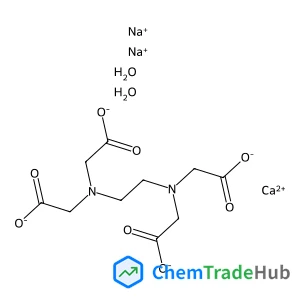
EthylenediaminetetraaceticacidcalciumDisodiumsalthydrate
CAS Number:
23411-34-9
Molecular Formula:
C10H16CaN2Na2O10
Recommended Suppliers




Disclaimer
This page provides academic journal information for reference and research purposes only. We are not affiliated with any journal publishers and do not handle publication submissions. For publication-related inquiries, please contact the respective journal publishers directly.
If you notice any inaccuracies in the information displayed, please contact us at support@chemtradehub.com. We will promptly review and address your concerns.