













Comprehensive screening of multiclass illegal adulterants in herbal supplements and Spice-type drugs using specific MS/MS fragmentations by UHPLC-Q/TOF-MS
Literature Information
Publication Date
2019-09-16
DOI
10.1039/C9AY01517E
Impact Factor
2.896
Authors
Jisu Hur, Wonwoong Lee, Beom Hee Kim, Hyun Ji Kim, Do Hee Lee, Ji Hyun Lee, Yong Moon Lee, Han Bin Oh, Jongki Hong
View Original
Abstract
In this study, a comprehensive screening method for 98 multi-class illegal adulterants (19 NSAIDS, 31 weight loss drugs, 35 psychotropic substances, and 13 cannabinoids) in dietary supplements and Spice drugs was suggested by UHPLC-Q/TOF-MS. After effective application of pH controlled liquid–liquid extraction from herbal supplements and Spice-type drugs, a broad range of 98 adulterants was successfully separated within 15 min on 1.7 μm fused-core C18 particles in a 100 × 2.1 mm column with gradient elution (mobile phase A: 0.1% formic acid in water; B: 0.1% formic acid in acetonitrile) and sensitively detected at sub-ng g−1 levels by ESI in positive ion mode. From the MS/MS spectra of illegal adulterants, certain common ions were observed to reflect their structural characteristics: m/z 117 for phenethylamines, m/z 155 and 144 for synthetic cannabinoids, m/z 165 and 199 for opioid analogues and m/z 125 and 158 for sibutramine analogues. Specific neutral molecule loss fragments were also observed: H2O, NH3, or CO respectively for hydroxyl, amine, or carbonyl group containing adulterants. Phenylamide, C7H4O3S, or C2H3NO molecule loss fragmentations were observed for heterocyclic compounds. Based on these specific fragmentations, extracted common ion chromatograms (ECICs) and neutral loss scans (NLSs) were effectively applied for rapid screening of illegal adulterants in herbal supplements and Spice-type drugs. The developed method can serve as a promising screening tool for confirmation and determination of illegal adulterants in various types of supplements, thus ensuring public safety.
Related Literature
pH and glutathione dual-triggered supramolecular assemblies as synergistic and controlled drug release carriers
Yang Kang, Xin Ju, Lu Wang, Li-Sheng Ding, Gui-Ting Liu, Sheng Zhang, Bang-Jing Li
2017-11-08
Paper
DOI: 10.1039/C7PY01644A
Advances in polydiacetylene development for the design of side chain groups in smart material applications – a mini review
Jingpei Huo, Qianjun Deng, Ting Fan, Guozhang He, Xiaohong Hu, Xiaxiao Hong, Hong Chen, Shihe Luo, Zhaoyang Wang, Dongchu Chen
2017-10-25
Minireview
DOI: 10.1039/C7PY01396E
EQCM studies of polypyrrole films. Part 2. Exposure to aqueous sodium tosylate solutions under thermodynamically non-permselective conditions
Stanley Bruckenstein, Krystyna Brzezinska, A. Robert Hillman
2000-03-02
Paper
DOI: 10.1039/A908719B
Highly efficient polymerization via sulfur(vi)-fluoride exchange (SuFEx): novel polysulfates bearing a pyrazoline–naphthylamide conjugated moiety and their electrical memory performance
Xiong Xiao, Feng Zhou, Jun Jiang, Haifeng Chen, Lihua Wang, Dongyun Chen, Qingfeng Xu, Jianmei Lu
2018-01-29
Paper
DOI: 10.1039/C7PY02042B
Ethylene/vinyl acetate-based macrocycles via organometallic-mediated radical polymerization and CuAAC ‘click’ reaction
Jérémy Demarteau, Julien De Winter, Christophe Detrembleur, Antoine Debuigne
2017-12-11
Communication
DOI: 10.1039/C7PY01891F
Quantum scattering and quasi-classical trajectory calculations for the H2+OH⇌H2O+H reaction on a new potential surface
Julian Echave
2000-02-07
Paper
DOI: 10.1039/A908080E
You might also like
Compound Q&A
How is Ethyl 4-chlorothieno[2,3-b]pyridine-5-carboxylate (CAS: 59713-58-5) typically synthesized?
Ethyl 4-chlorothieno[2,3-b]pyridine-5-carboxylate (CAS: 59713-58-5) can be synth...
59713-58-5Ethyl 4-chlorothieno...
Compound Q&A
What regulatory guidelines apply to 5-Methyl-1H-indole-3-carbaldehyde (CAS: 52562-50-2)?
5-Methyl-1H-indole-3-carbaldehyde (CAS: 52562-50-2) is subject to various regula...
52562-50-25-Methyl-1H-indole-3...
Compound Q&A
What are the physical and chemical properties of (1,3-Dimethyl-2,4-dioxo-1,2,3,4-tetrahydro-5-pyrimidinyl)boronic acid (CAS: 223418-73-3)?
(1,3-Dimethyl-2,4-dioxo-1,2,3,4-tetrahydro-5-pyrimidinyl)boronic acid is a white...
223418-73-3(1,3-Dimethyl-2,4-di...
Compound Q&A
How should waste containing Sulfocostunolide A (CAS: 1016983-51-9) be handled?
Waste containing Sulfocostunolide A (CAS: 1016983-51-9) should be handled with c...
1016983-51-9Sulfocostunolide A
Compound Q&A
What precautions should be taken when handling Murraxocin (CAS: 88478-44-8)?
When handling Murraxocin (CAS: 88478-44-8), ensure proper personal protective eq...
88478-44-8Murraxocin
Compound Q&A
What are the physical and chemical properties of Formvar (CAS: 63148-64-1)?
Formvar (CAS: 63148-64-1) is an alkyd resin characterized by a high molecular we...
63148-64-1Formvar(R)
Compound Q&A
Is (S)-4-benzyl-2-((benzyloxy)methyl)morpholine (CAS: 205242-66-6) safe?
(S)-4-benzyl-2-((benzyloxy)methyl)morpholine is generally safe when handled with...
205242-66-6(S)-4-benzyl-2-((ben...
Compound Q&A
What industries use Methyl 1-(5-bromo-2-pyrimidinyl)cyclopropanecarboxylate (CAS: 1447607-69-3)?
Methyl 1-(5-bromo-2-pyrimidinyl)cyclopropanecarboxylate (CAS: 1447607-69-3) is p...
1447607-69-3Methyl 1-(5-bromo-2-...
Compound Q&A
Is 2-Methyl-1-phenyl-1-propanamine hydrochloride (CAS: 24290-47-9) safe?
2-Methyl-1-phenyl-1-propanamine hydrochloride (CAS: 24290-47-9) is generally con...
24290-47-92-Methyl-1-phenyl-1-...
Compound Q&A
How is 3-(4-Bromophenyl)-2-methylpropanoic acid (CAS: 66735-01-1) typically synthesized?
3-(4-Bromophenyl)-2-methylpropanoic acid is synthesized through a multi-step pro...
66735-01-13-(4-Bromophenyl)-2-...
Source Journal
Analytical Methods

CiteScore:
5.1
Self-citation Rate:
3.7%
Articles per Year:
655
Analytical Methods welcomes early applications of new analytical and bioanalytical methods and technology demonstrating the potential for societal impact. We require that methods and technology reported in the journal are sufficiently innovative, robust, accurate, and compared to other available methods for the intended application. Developments with interdisciplinary approaches are particularly welcome. Systems should be proven with suitably complex and analytically challenging samples. We encourage developments within, but not limited to, the following technologies and applications: global health, point-of-care and molecular diagnostics biosensors and bioengineering drug development and pharmaceutical analysis applied microfluidics and nanotechnology omics studies, such as proteomics, metabolomics or glycomics environmental, agricultural and food science neuroscience biochemical and clinical analysis forensic analysis industrial process and method development
Recommended Compounds
![Imidazo[1,5-a]pyrazine structure](https://static.chemtradehub.com/structs/274/274-49-7-d749.webp "Imidazo[1,5-a]pyrazine structure")
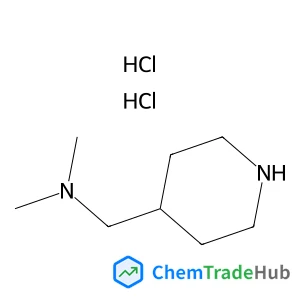
N,N-dimethyl(piperidin-4-yl)methanamine hydrochloride
CAS Number:
172281-72-0
Molecular Formula:
C8H20Cl2N2
Recommended Suppliers




Disclaimer
This page provides academic journal information for reference and research purposes only. We are not affiliated with any journal publishers and do not handle publication submissions. For publication-related inquiries, please contact the respective journal publishers directly.
If you notice any inaccuracies in the information displayed, please contact us at support@chemtradehub.com. We will promptly review and address your concerns.