













A matrix of perovskite micro-seeds and polypyrrole nanotubes tethered laccase/graphite biosensor for sensitive quantification of 2,4-dichlorophenol in wastewater
Literature Information
Publication Date
2019-08-19
DOI
10.1039/C9AY01468C
Impact Factor
2.896
Authors
Shivamurthy Ravindra Yashas, Shadakshari Sandeep, Ballagere Puttaraju Shivakumar, Ningappa Kumar Swamy
View Original
Abstract
The present study demonstrates the fabrication of a laccase (lac) biosensor to detect and quantify 2,4-dichlorophenol (2,4-DCP) using a lac immobilized polypyrrole nanotube (PPyNT) and strontium copper oxide (SrCuO2) micro-seed composite modified graphite electrode. The SrCuO2 was synthesized using the co-precipitation method and PPyNT was grown using a methyl orange template. Scanning electron microscopy (SEM), field emission scanning electron microscopy (FESEM), energy dispersive X-ray spectroscopy (EDX) and X-ray diffraction spectroscopy (XRD) techniques were used in the characterization of SrCuO2 and PPyNT. Furthermore, PPyNT and SrCuO2 were deposited onto the graphite electrode (Gr) and used as a platform for immobilization of the lac enzyme. SEM micrographs of the Gr/PPyNT/SrCuO2/lac electrode authenticated the deposition of nanomaterials and the enzyme, whereas the electrochemical impedance spectroscopy (EIS) results demonstrated the conducting nature of SrCuO2 and the successful enzyme immobilization. Compared to the unmodified electrode, Gr/PPyNT/SrCuO2/lac displayed a higher electrocatalytic behavior towards 2,4-DCP. The performance of the sensor was calibrated and evaluated using cyclic voltammetry (CV) and differential pulse voltammetry (DPV). The sensor exhibited a wide linear range (1–50 μM), a low detection limit (LOD) (0.18 μM) and high sensitivity (4.715 μA μM−1 cm−2). In addition, the proposed sensor exhibited good repeatability, reproducibility and stability. The real sample analysis results indicated an acceptable recovery up to 94%, which suggested that the sensor could be used to monitor 2,4-DCP.
Related Literature
High temperature reaction of Sn(3P0) atoms with O2 based on Sn- and O-concentration measurements
Kazuo Takahashi, Andreas Giesen, Paul Roth
2001-09-04
Paper
DOI: 10.1039/B103341G
Theoretical study of the photodissociation dynamics of ClOOCl
Alessandro Toniolo, Giovanni Granucci, Silvia Inglese, Maurizio Persico
2001-09-12
Paper
DOI: 10.1039/B104044H
Evaporation after ionization in molecular clusters: application to 1-naphthol–(NH3)n
C. Dedonder-Lardeux, D. Grosswasser, C. Jouvet, S. Martrenchard, A. Teahu
2001-09-18
Paper
DOI: 10.1039/B104836H
Cooperative effect of carbamoylmethylene phosphine oxide on the extraction of lanthanides(III) to water-in-oil microemulsion from concentrated nitric acid medium
Hirochika Naganawa, Hideya Suzuki, Shoichi Tachimori
2000-06-27
Paper
DOI: 10.1039/B001710H
Calculation and measurement of the second light-scattering virial coefficient of (CH3)2O
Vincent W. Couling, Richard V. Nhlebela
2001-09-24
Paper
DOI: 10.1039/B106931B
Highly conducting states in metal–ammonia solutions
Rainer Burkart, Ulrich Schindewolf
2000-06-14
Paper
DOI: 10.1039/B002598O
Electronic absorption spectral study of the oxidation of uranium dioxide in chloride melts
Vladimir A. Volkovich, Trevor R. Griffiths, Derek J. Fray, Robert C. Thied
2000-08-02
Paper
DOI: 10.1039/B004464O
Nearside-farside analysis of differential cross sections: The reaction I + HI → IH + I
C. Noli, J. N. L. Connor, N. Rougeau, C. Kubach
2001-08-31
Paper
DOI: 10.1039/B104099P
You might also like
Compound Q&A
What are the main uses of 1H-Indazole-6-carbonitrile (CAS: 141290-59-7)?
1H-Indazole-6-carbonitrile finds applications in pharmaceuticals, where it serve...
141290-59-71H-Indazole-6-carbon...
Compound Q&A
How should waste containing Dioctyl (2E)-2-butenedioate (CAS: 2997-85-5) be handled?
Waste containing Dioctyl (2E)-2-butenedioate (CAS: 2997-85-5) should be collecte...
2997-85-5Dioctyl (2E)-2-buten...
Compound Q&A
What industries use Sodium [(1,2-benzoxazol-3-ylmethyl)sulfonyl]azanide (CAS: 68291-98-5)?
Sodium [(1,2-benzoxazol-3-ylmethyl)sulfonyl]azanide is primarily used in pharmac...
68291-98-5Sodium [(1,2-benzoxa...
Compound Q&A
Are there alternatives to Dimethyl 4-(4,4,5,5-tetramethyl-1,3,2-dioxaborolan-2-yl)-2,6-pyridinedicarboxylate (CAS: 741709-66-0) in synthesis?
Dimethyl 4-(4,4,5,5-tetramethyl-1,3,2-dioxaborolan-2-yl)-2,6-pyridinedicarboxyla...
741709-66-0Dimethyl 4-(4,4,5,5-...
Compound Q&A
How should waste containing 2-Fluoro-6-hydrazinopyridine (CAS: 80714-39-2) be handled?
Waste containing 2-Fluoro-6-hydrazinopyridine (CAS: 80714-39-2) should be manage...
80714-39-22-Fluoro-6-hydrazino...
Compound Q&A
What is 6-Formyl-2-pyridinecarboxylic acid (CAS: 499214-11-8)?
6-Formyl-2-pyridinecarboxylic acid is an organic compound with the molecular for...
499214-11-86-Formyl-2-pyridinec...
Compound Q&A
What is the market or research trend for 3-(3,4-dimethoxyphenyl)-2,5-dimethyl-N-(2-morpholin-4-ylethyl)pyrazolo[1,5-a]pyrimidin-7-amine (CAS: 900874-91-1)?
Research trends for this compound indicate a focus on its potential applications...
900874-91-13-(3,4-dimethoxyphen...
Compound Q&A
How is 9H-Tribenzo[b,d,f]azepine (CAS: 29875-73-8) typically synthesized?
9H-Tribenzo[b,d,f]azepine is typically synthesized via a multi-step process invo...
29875-73-89H-Tribenzo[b,d,f]az...
Compound Q&A
How is 1-Cyclopropyl-7-ethoxy-6-fluoro-8-methoxy-4-oxo-1,4-dihydro-3-quinolinecarboxylic acid (CAS: 1797982-51-4) typically synthesized?
1-Cyclopropyl-7-ethoxy-6-fluoro-8-methoxy-4-oxo-1,4-dihydro-3-quinolinecarboxyli...
1797982-51-41-Cyclopropyl-7-etho...
Compound Q&A
How should waste containing Methyl 3-oxo-1,2,3,4-tetrahydro-6-quinoxalinecarboxylate (CAS: 671820-52-3) be handled?
Waste containing Methyl 3-oxo-1,2,3,4-tetrahydro-6-quinoxalinecarboxylate (CAS: ...
671820-52-3Methyl 3-oxo-1,2,3,4...
Source Journal
Analytical Methods

CiteScore:
5.1
Self-citation Rate:
3.7%
Articles per Year:
655
Analytical Methods welcomes early applications of new analytical and bioanalytical methods and technology demonstrating the potential for societal impact. We require that methods and technology reported in the journal are sufficiently innovative, robust, accurate, and compared to other available methods for the intended application. Developments with interdisciplinary approaches are particularly welcome. Systems should be proven with suitably complex and analytically challenging samples. We encourage developments within, but not limited to, the following technologies and applications: global health, point-of-care and molecular diagnostics biosensors and bioengineering drug development and pharmaceutical analysis applied microfluidics and nanotechnology omics studies, such as proteomics, metabolomics or glycomics environmental, agricultural and food science neuroscience biochemical and clinical analysis forensic analysis industrial process and method development
Recommended Compounds
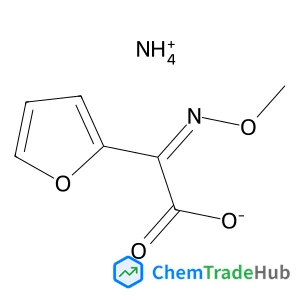
Ammonium (Z)-2-(furan-2-yl)-2-(methoxyimino)acetate
CAS Number:
97148-39-5
Molecular Formula:
C7H10N2O4

Trichloro(3,3,4,4,5,5,6,6,7,7,8,8,8-tridecafluorooctyl)silane
CAS Number:
78560-45-9
Molecular Formula:
C8H4Cl3F13Si


Recommended Suppliers






Disclaimer
This page provides academic journal information for reference and research purposes only. We are not affiliated with any journal publishers and do not handle publication submissions. For publication-related inquiries, please contact the respective journal publishers directly.
If you notice any inaccuracies in the information displayed, please contact us at support@chemtradehub.com. We will promptly review and address your concerns.