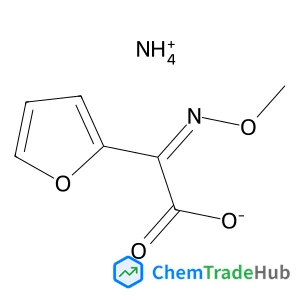
Ammonium (Z)-2-(furan-2-yl)-2-(methoxyimino)acetate
CAS Number:
97148-39-5
Molecular Formula:
C7H10N2O4
Vincent W. Couling, Richard V. Nhlebela
Measurements are reported of the depolarization ratio of (CH3)2O at vapour pressures up to 0.5 MPa, and the first and second light-scattering virial coefficients are extracted. The molecular-tensor theory of the second light-scattering virial coefficient Bρ for nonlinear molecules is extended to include for the first time those contributions in the scattered intensity arising from field gradient effects and induced quadrupole moments in the molecular interactions. This new theory for Bρ yields a calculated value for (CH3)2O which agrees with the experimental value to within 7%.
DOI: 10.1039/CS9760500377
DOI: 10.1039/CS9871600467
Christer B. Aakeröy, Tharanga K. Wijethunga, John Desper
DOI: 10.1039/C3CE41887A
Jiaze Xie, Jan-Niklas Boyn, Alexander S. Filatov, Andrew J. McNeece, David A. Mazziotti, John S. Anderson
DOI: 10.1039/C9SC04381K
Zahed Shami, Naser Sharifi-Sanjani
DOI: 10.1039/C3CE41513A
Ying Shang, Na Li, Tingting Liu, Bo-Han Li, Kunqian Yu, Yi Zang, James T. Brewster, II, Maria L. Odyniec, Maria Weber, Steven D. Bull, Jia Li, Tony D. James, Xiao-Peng He, He Tian
DOI: 10.1039/C9SC03961A
1H-Indazole-6-carbonitrile finds applications in pharmaceuticals, where it serve...
Waste containing Dioctyl (2E)-2-butenedioate (CAS: 2997-85-5) should be collecte...
Sodium [(1,2-benzoxazol-3-ylmethyl)sulfonyl]azanide is primarily used in pharmac...
Dimethyl 4-(4,4,5,5-tetramethyl-1,3,2-dioxaborolan-2-yl)-2,6-pyridinedicarboxyla...
Waste containing 2-Fluoro-6-hydrazinopyridine (CAS: 80714-39-2) should be manage...
6-Formyl-2-pyridinecarboxylic acid is an organic compound with the molecular for...
Research trends for this compound indicate a focus on its potential applications...
9H-Tribenzo[b,d,f]azepine is typically synthesized via a multi-step process invo...
1-Cyclopropyl-7-ethoxy-6-fluoro-8-methoxy-4-oxo-1,4-dihydro-3-quinolinecarboxyli...
Waste containing Methyl 3-oxo-1,2,3,4-tetrahydro-6-quinoxalinecarboxylate (CAS: ...

Physical Chemistry Chemical Physics (PCCP) is an international journal co-owned by 19 physical chemistry and physics societies from around the world. This journal publishes original, cutting-edge research in physical chemistry, chemical physics and biophysical chemistry. To be suitable for publication in PCCP, articles must include significant innovation and/or insight into physical chemistry; this is the most important criterion that reviewers and Editors will judge against when evaluating submissions. The journal has a broad scope and welcomes contributions spanning experiment, theory, computation and data science. Topical coverage includes spectroscopy, dynamics, kinetics, statistical mechanics, thermodynamics, electrochemistry, catalysis, surface science, quantum mechanics, quantum computing and machine learning. Interdisciplinary research areas such as polymers and soft matter, materials, nanoscience, energy, surfaces/interfaces, and biophysical chemistry are welcomed if they demonstrate significant innovation and/or insight into physical chemistry. Joined experimental/theoretical studies are particularly appreciated when complementary and based on up-to-date approaches.


![(1S)-1,5-Anhydro-1-[3-(1-benzothiophen-2-ylmethyl)-4-fluorophenyl]-D-glucitol structure](https://static.chemtradehub.com/structs/761/761423-87-4-dbeb.webp "(1S)-1,5-Anhydro-1-[3-(1-benzothiophen-2-ylmethyl)-4-fluorophenyl]-D-glucitol structure")