












Cooperative effect of carbamoylmethylene phosphine oxide on the extraction of lanthanides(III) to water-in-oil microemulsion from concentrated nitric acid medium
Literature Information
Publication Date
2000-06-27
DOI
10.1039/B001710H
Impact Factor
3.676
Authors
Hirochika Naganawa, Hideya Suzuki, Shoichi Tachimori
View Original
Abstract
The extraction of metals to a water-in-oil microemulsion by using the combination of an anionic surfactant and an electrically neutral organic ligand, which causes a very strong cooperative effect, has been introduced as a novel technique for effective metal extraction and separation from a highly acidic medium. Aerosol OT (AOT) was used as an anionic surfactant to form a microemulsion in hexane, and a carbamoylmethylene phosphine oxide (CMPO), which has two aliphatic chains, was employed as a typical neutral organic ligand. The microemulsion system containing only AOT (0.002 M) showed poor extractability and selectivity for lanthanides(III) in their extraction from 0.5 M aqueous nitric acid solution; furthermore, the microemulsion itself was not very stable. However, by adding only a small amount of the CMPO (0.003 M), the AOT-based microemulsion system was greatly stabilized and exhibited extremely enhanced extractability, which has not been seen in the other microemulsion systems studied before. Also, the separation of the lanthanide series was also improved considerably, compared with simple solvent extraction using only the CMPO. The experimental results show clearly that metal ions complexed with the CMPO have much stronger affinities for the AOT microemulsion than uncomplexed ones. The organometallic complexes, which are amphiphilic, can be retained (solubilized) very strongly in the AOT microemulsion by electrostatic and hydrophobic interactions. The hydrophobic interaction, in particular, should be the most important driving force in microemulsion extraction; the electrostatic interaction is common to microemulsion systems containing and not containing the CMPO, since the ligand does not neutralize the charge of metal ions. The success of the experiment seems to be brought about by the use of an electrically neutral organic ligand, CMPO, whose metal complex is always cationic; a cationic species has the great advantage of a strong electrostatic interaction in such an anionic surfactant-based microemulsion. Furthermore, it also seems to be very important that the CMPO itself is not surface-active, and thus does not play the role of a cosurfactant to form mixed reversed microemulsions; a surface-active ligand, acting as a cosurfactant in such mixed microemulsions, has its chelating activity more or less spoiled.
Related Literature
The role of hydrogen bonding in water–metal interactions
Adrien Poissier, Sriram Ganeshan, M. V. Fernández-Serra
2010-12-22
Paper
DOI: 10.1039/C0CP00994F
Temperature dependence of the surfactant film bending elasticity in a bicontinuous sugar surfactant based microemulsion: a quasielastic scattering study
Stefan Wellert, Matthias Karg, Olaf Holderer, André Richardt, Thomas Hellweg
2010-12-10
Paper
DOI: 10.1039/C0CP02044C
Dispersion of linear and nonlinear optical susceptibilities and the hyperpolarizability of 3-methyl-4-phenyl-5-(2-pyridyl)-1,2,4-triazole
S. Auluck, I. V. Kityk
2010-12-17
Paper
DOI: 10.1039/C0CP01601B
Photodegradation of organic pollutants catalyzed by iron species under visible light irradiation
Chunyan Sun, Chuncheng Chen, Wanhong Ma, Jincai Zhao
2010-11-17
Perspective
DOI: 10.1039/C0CP01203C
Accounting for electronic polarization in non-polarizable force fields
Igor Leontyev, Alexei Stuchebrukhov
2011-01-07
Perspective
DOI: 10.1039/C0CP01971B
Photoionization-induced large-amplitude pendular motion in phenol+–Kr
Mitsuhiko Miyazaki, Akihiro Takeda, Shun-ichi Ishiuchi, Makoto Sakai, Otto Dopfer, Masaaki Fujii
2010-12-10
Paper
DOI: 10.1039/C0CP01961E
The ab initio calculation of molecular electric, magnetic and geometric properties
Radovan Bast, Ulf Ekström, Bin Gao, Trygve Helgaker, Kenneth Ruud, Andreas J. Thorvaldsen
2010-12-22
Perspective
DOI: 10.1039/C0CP01647K
Phosphorylated mesoporous carbon as a solid acid catalyst
Richard T. Mayes, Pasquale F. Fulvio, Zhen Ma
2010-12-16
Communication
DOI: 10.1039/C0CP01861A
You might also like
Compound Q&A
What are the main uses of 1H-Indazole-6-carbonitrile (CAS: 141290-59-7)?
1H-Indazole-6-carbonitrile finds applications in pharmaceuticals, where it serve...
141290-59-71H-Indazole-6-carbon...
Compound Q&A
How should waste containing Dioctyl (2E)-2-butenedioate (CAS: 2997-85-5) be handled?
Waste containing Dioctyl (2E)-2-butenedioate (CAS: 2997-85-5) should be collecte...
2997-85-5Dioctyl (2E)-2-buten...
Compound Q&A
What industries use Sodium [(1,2-benzoxazol-3-ylmethyl)sulfonyl]azanide (CAS: 68291-98-5)?
Sodium [(1,2-benzoxazol-3-ylmethyl)sulfonyl]azanide is primarily used in pharmac...
68291-98-5Sodium [(1,2-benzoxa...
Compound Q&A
Are there alternatives to Dimethyl 4-(4,4,5,5-tetramethyl-1,3,2-dioxaborolan-2-yl)-2,6-pyridinedicarboxylate (CAS: 741709-66-0) in synthesis?
Dimethyl 4-(4,4,5,5-tetramethyl-1,3,2-dioxaborolan-2-yl)-2,6-pyridinedicarboxyla...
741709-66-0Dimethyl 4-(4,4,5,5-...
Compound Q&A
How should waste containing 2-Fluoro-6-hydrazinopyridine (CAS: 80714-39-2) be handled?
Waste containing 2-Fluoro-6-hydrazinopyridine (CAS: 80714-39-2) should be manage...
80714-39-22-Fluoro-6-hydrazino...
Compound Q&A
What is 6-Formyl-2-pyridinecarboxylic acid (CAS: 499214-11-8)?
6-Formyl-2-pyridinecarboxylic acid is an organic compound with the molecular for...
499214-11-86-Formyl-2-pyridinec...
Compound Q&A
What is the market or research trend for 3-(3,4-dimethoxyphenyl)-2,5-dimethyl-N-(2-morpholin-4-ylethyl)pyrazolo[1,5-a]pyrimidin-7-amine (CAS: 900874-91-1)?
Research trends for this compound indicate a focus on its potential applications...
900874-91-13-(3,4-dimethoxyphen...
Compound Q&A
How is 9H-Tribenzo[b,d,f]azepine (CAS: 29875-73-8) typically synthesized?
9H-Tribenzo[b,d,f]azepine is typically synthesized via a multi-step process invo...
29875-73-89H-Tribenzo[b,d,f]az...
Compound Q&A
How is 1-Cyclopropyl-7-ethoxy-6-fluoro-8-methoxy-4-oxo-1,4-dihydro-3-quinolinecarboxylic acid (CAS: 1797982-51-4) typically synthesized?
1-Cyclopropyl-7-ethoxy-6-fluoro-8-methoxy-4-oxo-1,4-dihydro-3-quinolinecarboxyli...
1797982-51-41-Cyclopropyl-7-etho...
Compound Q&A
How should waste containing Methyl 3-oxo-1,2,3,4-tetrahydro-6-quinoxalinecarboxylate (CAS: 671820-52-3) be handled?
Waste containing Methyl 3-oxo-1,2,3,4-tetrahydro-6-quinoxalinecarboxylate (CAS: ...
671820-52-3Methyl 3-oxo-1,2,3,4...
Source Journal
Physical Chemistry Chemical Physics

CiteScore:
5.5
Self-citation Rate:
10.3%
Articles per Year:
3036
Physical Chemistry Chemical Physics (PCCP) is an international journal co-owned by 19 physical chemistry and physics societies from around the world. This journal publishes original, cutting-edge research in physical chemistry, chemical physics and biophysical chemistry. To be suitable for publication in PCCP, articles must include significant innovation and/or insight into physical chemistry; this is the most important criterion that reviewers and Editors will judge against when evaluating submissions. The journal has a broad scope and welcomes contributions spanning experiment, theory, computation and data science. Topical coverage includes spectroscopy, dynamics, kinetics, statistical mechanics, thermodynamics, electrochemistry, catalysis, surface science, quantum mechanics, quantum computing and machine learning. Interdisciplinary research areas such as polymers and soft matter, materials, nanoscience, energy, surfaces/interfaces, and biophysical chemistry are welcomed if they demonstrate significant innovation and/or insight into physical chemistry. Joined experimental/theoretical studies are particularly appreciated when complementary and based on up-to-date approaches.
Recommended Compounds
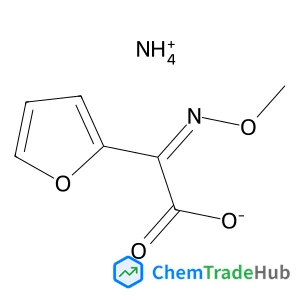
Ammonium (Z)-2-(furan-2-yl)-2-(methoxyimino)acetate
CAS Number:
97148-39-5
Molecular Formula:
C7H10N2O4
Recommended Suppliers




Disclaimer
This page provides academic journal information for reference and research purposes only. We are not affiliated with any journal publishers and do not handle publication submissions. For publication-related inquiries, please contact the respective journal publishers directly.
If you notice any inaccuracies in the information displayed, please contact us at support@chemtradehub.com. We will promptly review and address your concerns.