












Library based identification and characterisation of polymers with nano-FTIR and IR-sSNOM imaging
Literature Information
Publication Date
2019-09-25
DOI
10.1039/C9AY01193E
Impact Factor
2.896
Authors
Michaela Meyns, Sebastian Primpke, Gunnar Gerdts
View Original
Abstract
AFM is a technique widely applied in the nanoscale characterisation of polymers and their surface properties. With nano-FTIR and IR-sSNOM imaging an optical dimension is added to this technique that allows for straightforward high resolution characterisation and spectroscopy of polymers. As the volume sampled by these near-field techniques depends mostly on the radius of the cantilever tip, typically 10 nm, it is orders of magnitude smaller than in conventional techniques. Nevertheless, comparability of nano-FTIR near-field spectra and data from macroscopic methods has been shown. Some relevant polymers such as polystyrene however, prove to be more difficult to detect than others. Furthermore, the small sampled volume suggests lower signal quality of nano-FTIR data and proof of its suitability for a reliable library search identification is lacking. To evaluate the techniques especially towards automatic and higher throughput identification of nanoscale polymers, for example in blends or environmental samples, we examined domain distributions in a PS-LDPE film and spectral responses of foils of the most relevant commercial polymers. We demonstrate the successful library search identification of all samples with nano-FTIR data measured in less than seven minutes per spectrum with a free IR spectra database in combination with established commercial OPUS 7.5 software and the recently released freeware siMPle. We discuss aspects affecting the accuracy of the identification for different polymers and show that the small spectral range of 1700–1300 cm−1 already leads to similar success in differentiating between polymer types with near-field data as with conventional far-field FTIR spectroscopy. Even a polymer sample weathered in the environment can be identified without prior cleaning, proving wide fields of applications for characterisation and identification of diverse polymer samples. Finally, we propose measurement and analysis strategies for known and unknown samples with this novel technique.
Related Literature
Highly efficient polymerization via sulfur(vi)-fluoride exchange (SuFEx): novel polysulfates bearing a pyrazoline–naphthylamide conjugated moiety and their electrical memory performance
Xiong Xiao, Feng Zhou, Jun Jiang, Haifeng Chen, Lihua Wang, Dongyun Chen, Qingfeng Xu, Jianmei Lu
2018-01-29
Paper
DOI: 10.1039/C7PY02042B
Oxadiazabicyclooctenone as a versatile monomer for the construction of pH sensitive functional polymers via ROMP
Asadulla Mallick, Yuan Xu, Yichao Lin, Jingxi He, Mary B. Chan-Park
2017-12-18
Paper
DOI: 10.1039/C7PY01413A
The anionic ring-opening polymerization of N-(methanesulfonyl)azetidine
Louis Reisman, Elizabeth A. Rowe, Qiaoli Liang, Paul A. Rupar
2018-02-26
Paper
DOI: 10.1039/C8PY00074C
Kinetic aspects of formation and processing of polycaprolactone polyurethanes in situ from a blocked isocyanate
Casey Check, Balazs Imre, Hubert Gojzewski, Richard Chartoff, G. Julius Vancso
2018-03-07
Paper
DOI: 10.1039/C7PY02006F
Selective recognition of biologically important anions using a diblock polyfluorene–polythiophene conjugated polyelectrolyte
Niamh Willis-Fox, Andrea Gutacker, Michelle P. Browne, Amir R. Khan, Michael E. G. Lyons, Ullrich Scherf
2017-11-08
Paper
DOI: 10.1039/C7PY01478C
Prediction of the carrier-mediated cation flux through polymer inclusion membranes via fundamental thermodynamic quantities: complexation study of bis(dodecyloxy)calix[4]arene-crown-6 with alkali metal cations
Dusten M. Macdonald, John D. Lamb, Bruce A. Moyer
2000-03-20
Paper
DOI: 10.1039/A908840G
Supracolloidal chains of patchy micelles in water
T.-L. Nghiem, T. I. Löbling, A. H. Gröschel
2017-12-08
Paper
DOI: 10.1039/C7PY01832K
Homogeneous freezing nucleation rates and crystallization dynamics of single levitated sulfuric acid solution droplets
Hermann Vortisch, Benedikt Krämer, Inez Weidinger, Ludger Wöste, Thomas Leisner, Martin Schwell, Helmut Baumgärtel, Eckart Rühl
2000-03-10
Paper
DOI: 10.1039/A908225E
You might also like
Compound Q&A
How is Ethyl 4-chlorothieno[2,3-b]pyridine-5-carboxylate (CAS: 59713-58-5) typically synthesized?
Ethyl 4-chlorothieno[2,3-b]pyridine-5-carboxylate (CAS: 59713-58-5) can be synth...
59713-58-5Ethyl 4-chlorothieno...
Compound Q&A
What regulatory guidelines apply to 5-Methyl-1H-indole-3-carbaldehyde (CAS: 52562-50-2)?
5-Methyl-1H-indole-3-carbaldehyde (CAS: 52562-50-2) is subject to various regula...
52562-50-25-Methyl-1H-indole-3...
Compound Q&A
What are the physical and chemical properties of (1,3-Dimethyl-2,4-dioxo-1,2,3,4-tetrahydro-5-pyrimidinyl)boronic acid (CAS: 223418-73-3)?
(1,3-Dimethyl-2,4-dioxo-1,2,3,4-tetrahydro-5-pyrimidinyl)boronic acid is a white...
223418-73-3(1,3-Dimethyl-2,4-di...
Compound Q&A
How should waste containing Sulfocostunolide A (CAS: 1016983-51-9) be handled?
Waste containing Sulfocostunolide A (CAS: 1016983-51-9) should be handled with c...
1016983-51-9Sulfocostunolide A
Compound Q&A
What precautions should be taken when handling Murraxocin (CAS: 88478-44-8)?
When handling Murraxocin (CAS: 88478-44-8), ensure proper personal protective eq...
88478-44-8Murraxocin
Compound Q&A
What are the physical and chemical properties of Formvar (CAS: 63148-64-1)?
Formvar (CAS: 63148-64-1) is an alkyd resin characterized by a high molecular we...
63148-64-1Formvar(R)
Compound Q&A
Is (S)-4-benzyl-2-((benzyloxy)methyl)morpholine (CAS: 205242-66-6) safe?
(S)-4-benzyl-2-((benzyloxy)methyl)morpholine is generally safe when handled with...
205242-66-6(S)-4-benzyl-2-((ben...
Compound Q&A
What industries use Methyl 1-(5-bromo-2-pyrimidinyl)cyclopropanecarboxylate (CAS: 1447607-69-3)?
Methyl 1-(5-bromo-2-pyrimidinyl)cyclopropanecarboxylate (CAS: 1447607-69-3) is p...
1447607-69-3Methyl 1-(5-bromo-2-...
Compound Q&A
Is 2-Methyl-1-phenyl-1-propanamine hydrochloride (CAS: 24290-47-9) safe?
2-Methyl-1-phenyl-1-propanamine hydrochloride (CAS: 24290-47-9) is generally con...
24290-47-92-Methyl-1-phenyl-1-...
Compound Q&A
How is 3-(4-Bromophenyl)-2-methylpropanoic acid (CAS: 66735-01-1) typically synthesized?
3-(4-Bromophenyl)-2-methylpropanoic acid is synthesized through a multi-step pro...
66735-01-13-(4-Bromophenyl)-2-...
Source Journal
Analytical Methods

CiteScore:
5.1
Self-citation Rate:
3.7%
Articles per Year:
655
Analytical Methods welcomes early applications of new analytical and bioanalytical methods and technology demonstrating the potential for societal impact. We require that methods and technology reported in the journal are sufficiently innovative, robust, accurate, and compared to other available methods for the intended application. Developments with interdisciplinary approaches are particularly welcome. Systems should be proven with suitably complex and analytically challenging samples. We encourage developments within, but not limited to, the following technologies and applications: global health, point-of-care and molecular diagnostics biosensors and bioengineering drug development and pharmaceutical analysis applied microfluidics and nanotechnology omics studies, such as proteomics, metabolomics or glycomics environmental, agricultural and food science neuroscience biochemical and clinical analysis forensic analysis industrial process and method development
Recommended Compounds
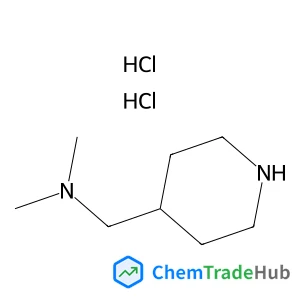
N,N-dimethyl(piperidin-4-yl)methanamine hydrochloride
CAS Number:
172281-72-0
Molecular Formula:
C8H20Cl2N2
![9,9'-Spirobi[fluoren]-2-amine structure](https://static.chemtradehub.com/structs/118/118951-68-1-0d14.webp "9,9'-Spirobi[fluoren]-2-amine structure")
![2-(Methylsulfonyl)-2,4,5,6-tetrahydropyrrolo[3,4-c]pyrazole structure](https://static.chemtradehub.com/structs/122/1226781-80-1-09d5.webp "2-(Methylsulfonyl)-2,4,5,6-tetrahydropyrrolo[3,4-c]pyrazole structure")
2-(Methylsulfonyl)-2,4,5,6-tetrahydropyrrolo[3,4-c]pyrazole
CAS Number:
1226781-80-1
Molecular Formula:
C6H9N3O2S
Recommended Suppliers





Disclaimer
This page provides academic journal information for reference and research purposes only. We are not affiliated with any journal publishers and do not handle publication submissions. For publication-related inquiries, please contact the respective journal publishers directly.
If you notice any inaccuracies in the information displayed, please contact us at support@chemtradehub.com. We will promptly review and address your concerns.