


Microfluidic co-culture of liver tumor spheroids with stellate cells for the investigation of drug resistance and intercellular interactions
Literature Information
Publication Date
2019-06-03
DOI
10.1039/C9AN00612E
Impact Factor
4.616
Authors
Yuqing Chen, Wei Sun, Lu Kang, Yuerong Wang, Min Zhang, Hongyang Zhang, Ping Hu
View Original
Abstract
Hepatic stellate cells (HSCs), a major component of the tumor microenvironment in liver cancer, play important roles in cancer progression as well as drug resistance. Here, we presented a microchannel plate-based co-culture model that integrated Hepa1–6 tumor spheroids with JS-1 stellate cells in three-dimensional (3D) concave microwells to mimic the in vivo tumor microenvironment by recapitulating epithelial–mesenchymal transition and chemoresistance. The expression of epithelial–mesenchymal transition (EMT)-related markers and factors was analyzed using immunofluorescent staining and the changes in viability following exposure to different concentrations of paclitaxel were measured. Cell spheroids formed 3D tumor spheroids within 3 days. Culture conditions were optimized for Hepa1–6 cells and JS-1 cells, and their appropriate interactions were confirmed by reciprocal activation. JS-1 under co-culture showed a change in cellular morphology and an increased expression of α-SMA. The expression of EMT-related markers, such as vimentin and TGF-β1, was higher in the co-cultured Hepa1–6 spheroids compared to that in mono-cultured spheroids. Following paclitaxel exposure, JS-1 cells showed significant changes in survival under both mono- and co-culture conditions, while Hepa1–6 presented negligible changes. The proposed microfluidic platform makes it possible to observe the positioned three-dimensional cell spheroids, which would be extensively used not only for well-organized spheroid creation, but also for better quantitative and qualitative understanding of the cell–cell interaction effect.
Recommended Journals

Russian Chemical Reviews

Proceedings of the National Academy of Sciences of the United States of America

Journal of Physics and Chemistry of Solids

Helvetica Chimica Acta

Science

Pure and Applied Chemistry

Israel Journal of Chemistry

Fibre Chemistry

Organic Preparations and Procedures International

Kinetics and Catalysis
Related Literature
Freezing of supercooled n-decane nanodroplets: from surface driven to frustrated crystallization
Viraj P. Modak, Andrew J. Amaya
2017-10-31
Paper
DOI: 10.1039/C7CP05431A
Manipulation of fullerene superstructures by complexing with polycyclic aromatic compounds
Qin Tang, Shufang Zhang, Xinbang Liu, Masato Sumita, Shinsuke Ishihara, Qingmin Ji, Lok Kumar Shrestha
2017-10-11
Paper
DOI: 10.1039/C7CP04553K
A dry molten globule-like intermediate during the base-induced unfolding of a multidomain protein
Nirbhik Acharya, Prajna Mishra, Santosh Kumar Jha
2017-10-27
Paper
DOI: 10.1039/C7CP06614G
Adsorption and dissociation of O2 on MoO2(11) surfaces: a DFT study
Quan Zhang, Minhua Zhang
2017-10-17
Paper
DOI: 10.1039/C7CP06456J
Thermodynamic assessment of the oxygen reduction activity in aqueous solutions
2017-10-18
Paper
DOI: 10.1039/C7CP05448C
Scaling relations for the interactions between curved graphene sheets in water
Sonal Kumar, Prasad Rama, Ajay Singh Panwar
2017-10-17
Paper
DOI: 10.1039/C7CP05005D
Ultrafast excited-state dynamics of 2,4-dimethylpyrrole
Zhichao Chen, Zhigang He, Kaijun Yuan
2017-10-23
Paper
DOI: 10.1039/C7CP06292C
Interplay between the folding mechanism and binding modes in folding coupled to binding processes
2017-10-18
Communication
DOI: 10.1039/C7CP04748G
Two-dimensional second-order nonlinear optical spectra: landscape of second-order nonlinear optics
Jiu Chen, Ming Qian Wang, Xin Zhou, Ling Yang, Wei-Qi Li, Wei Quan Tian
2017-10-12
Paper
DOI: 10.1039/C7CP05910H
You might also like
Compound Q&A
What industries use (1R,3S)-1,3-Cyclopentanediol (CAS: 16326-97-9)?
(1R,3S)-1,3-Cyclopentanediol finds applications in various industries. In the ph...
16326-97-9(1R,3S)-1,3-Cyclopen...
Compound Q&A
What precautions should be taken when handling N'-[4-(Dimethylamino)phenyl]-N,N-dimethyl-1,4-benzenediamine (CAS: 637-31-0)?
When handling N'-[4-(Dimethylamino)phenyl]-N,N-dimethyl-1,4-benzenediamine, it i...
637-31-0N'-[4-(Dimethylamino...
Compound Q&A
Are there alternatives to 5-(2,4-Difluorophenyl)-2-methoxypyrimidine (CAS: 1352318-16-1) in synthesis?
There are several alternatives to 5-(2,4-Difluorophenyl)-2-methoxypyrimidine in ...
1352318-16-15-(2,4-Difluoropheny...
Compound Q&A
What regulatory guidelines apply to 1-(3-Methoxyphenoxy)propan-2-ol (CAS: 382141-68-6)?
1-(3-Methoxyphenoxy)propan-2-ol (CAS: 382141-68-6) must comply with the Globally...
382141-68-61-(3-Methoxyphenoxy)...
Compound Q&A
Is Tetrodotoxin Citrate (CAS: 18660-81-6) safe?
Tetrodotoxin Citrate is extremely dangerous and should be handled with extreme c...
18660-81-6Tetrodotoxin Citrate
Compound Q&A
What are the main uses of 2-Methyl-2-propanyl [(1R,3S)-3-hydroxycyclopentyl]carbamate (CAS: 225641-84-9)?
2-Methyl-2-propanyl [(1R,3S)-3-hydroxycyclopentyl]carbamate (CAS: 225641-84-9) i...
225641-84-92-Methyl-2-propanyl ...
Compound Q&A
How should waste containing 4-(2-Hydroxyhexafluoroisopropyl)Benzoic Acid (CAS: 16261-80-6) be handled?
Waste containing 4-(2-Hydroxyhexafluoroisopropyl)Benzoic Acid (CAS: 16261-80-6) ...
16261-80-64-(2-Hydroxyhexafluo...
Compound Q&A
How is 2-Methyl-2-proanyl {(2S)-1-[(benzyloxy)amino]-3-hydroxy-3-methyl-1-oxo-2-butanyl}carbamate (CAS: 102507-19-7) typically synthesized?
2-Methyl-2-proanyl {(2S)-1-[(benzyloxy)amino]-3-hydroxy-3-methyl-1-oxo-2-butanyl...
102507-19-72-Methyl-2-propanyl ...
Compound Q&A
What is Benzeneethanamine, α-ethyl-, hydrochloride (1:1) (CAS: 20735-15-3)?
Benzeneethanamine, α-ethyl-, hydrochloride (1:1) is an organic compound with the...
20735-15-3Benzeneethanamine, α...
Compound Q&A
Are there alternatives to 3-{(E)-[4-(Dimethylamino)phenyl]diazenyl}benzoic acid (CAS: 20691-84-3) in synthesis?
In the synthesis of compounds similar to 3-{(E)-[4-(Dimethylamino)phenyl]diazeny...
20691-84-33-{(E)-[4-(Dimethyla...
Source Journal
Analyst

CiteScore:
7.8
Self-citation Rate:
5.6%
Articles per Year:
653
Analyst publishes analytical and bioanalytical research that reports premier fundamental discoveries and inventions, and the applications of those discoveries, unconfined by traditional discipline barriers.
Recommended Compounds
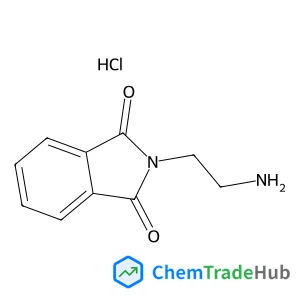
2-(2-Aminoethyl)-1H-isoindole-1,3(2H)-dione hydrochloride (1:1)
CAS Number:
30250-67-0
Molecular Formula:
C10H11ClN2O2
![N-[(5,6-Dichloro-1H-benzimidazol-2-yl)methyl]-9-(1-methyl-1H-pyrazol-4-yl)-2-(4-morpholinyl)-9H-purin-6-amine structure](https://static.chemtradehub.com/structs/238/2387704-62-1-25f4.webp "N-[(5,6-Dichloro-1H-benzimidazol-2-yl)methyl]-9-(1-methyl-1H-pyrazol-4-yl)-2-(4-morpholinyl)-9H-purin-6-amine structure")
N-[(5,6-Dichloro-1H-benzimidazol-2-yl)methyl]-9-(1-methyl-1H-pyrazol-4-yl)-2-(4-morpholinyl)-9H-purin-6-amine
CAS Number:
2387704-62-1
Molecular Formula:
C21H20Cl2N10O
Recommended Suppliers





Disclaimer
This page provides academic journal information for reference and research purposes only. We are not affiliated with any journal publishers and do not handle publication submissions. For publication-related inquiries, please contact the respective journal publishers directly.
If you notice any inaccuracies in the information displayed, please contact us at support@chemtradehub.com. We will promptly review and address your concerns.