












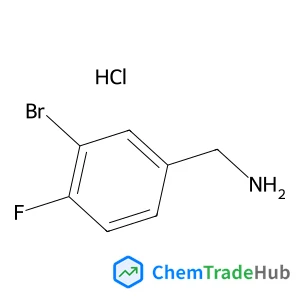
1-(3-Bromo-4-fluorophenyl)methanamine hydrochloride (1:1)
CAS Number:
202865-68-7
Molecular Formula:
C7H8BrClFN
Xin Li, Fangyu Shen, Kebing Wang, Shuang Lin, Lei Zhou, Si Chen, Jin Wang, Nan Huang
Nitric oxide (NO), which is continuously released from the normal healthy endodermis cell layer of the vascular system, plays a crucial role in the stability and health maintenance of blood vessels. It is one of the most important gaseous signaling molecules and regulates cardiovascular homeostasis, inhibits blood clotting and intimal hyperplasia, and prevents atherosclerosis. Insufficient NO production is often observed in atherosclerosis lesions. In this work, a NO-generating bioactive coating built by a polydopamine film (PDA) and a copper ion was fabricated. The coating (Cu/PDA) had glutathione peroxidase (GPx)-like activity and was able to catalyze NO release from S-nitrosothiols (RSNOs) due to the catalytic activity of the copper ion. It was also capable of catalyzing RSNO decomposition and NO production. The copper ion was embedded in the PDA coating to ensure the effectiveness of long-term NO-catalytic activity. The surface exhibited a favorable suppression of vascular smooth muscle cell (VSMC) proliferation and also efficiently reduced thrombosis formation. Additionally, the NO catalytic surface had a positive influence on endothelial cell (EC) growth behavior. The in vivo study verified that the modified surface promoted healthy endothelium formation and suppressed intimal hyperplasia, which is conducive to re-endothelialization and for reducing restenosis of vascular stents. This work provides a potential strategy for the development of novel cardiovascular implants.
Wei-Hsun Hu, Kai-Wei Huang, Shiao-Wei Kuo
DOI: 10.1039/C2PY20090B
Maria Beny Pinto Zakia, José Godoy Filho, João Sinezio de Carvalho Campos
DOI: 10.1039/C2PY00003B
Yukiya Kitayama, Hirotaka Moribe, Kazuya Kishida
DOI: 10.1039/C2PY20105D
Shadi Houshyar, Daniel J. Keddie, Graeme Moad, Roger J. Mulder, Simon Saubern, John Tsanaktsidis
DOI: 10.1039/C2PY00529H
Jiawen Zhou, Nathalie K. Guimard, Andrew J. Inglis, Mansoor Namazian, Ching Y. Lin, Michelle L. Coote, Emmanouil Spyrou, Stefan Hilf, Friedrich Georg Schmidt, Christopher Barner-Kowollik
DOI: 10.1039/C1PY00356A
Fuji Sakai, Guosong Chen, Ming Jiang
DOI: 10.1039/C2PY00614F
Samir Beghdadi, Daniele Addis, Hatem Ben Romdhane, Julien Bernard, Eric Drockenmuller
DOI: 10.1039/C1PY00446H
Jingjing Zhang, Ying Niu, Caili Huang, Liping Xiao, Zhongtao Chen, Keke Yang, Yuzhong Wang
DOI: 10.1039/C2PY20028G
Nicky Chan, Michael F. Cunningham, Robin A. Hutchinson
DOI: 10.1039/C2PY20065A
When considering alternatives to 1-(4-Chlorophenyl)-N-hydroxymethanimine (CAS: 3...
This compound should be stored in a cool, dry place away from direct sunlight. I...
3-(4-Bromophenyl)-5-(2-fluorophenyl)-1,2,4-oxadiazole is synthesized through a m...
5-Chloro-2-(4-chlorophenyl)-4-methyl-6-[3-(1-piperidinyl)propoxy]pyrimidine (CAS...
2-Chloro-4-(difluoromethoxy)pyridine is used in the pharmaceutical industry for ...
3-Chloro-6-methylpyridazine (CAS: 1121-79-5) is classified under the Globally Ha...
Several alternatives can be used in the synthesis of Methyl 4,5-dimethyl-2-nitro...
Alternatives to (2E,2'E)-3,3'-(1,4-Phenylene)bisacrylaldehyde include other acry...
3-Amino-5-chloropyridin-2-ol hydrochloride is an organic compound with the CAS n...
When handling 6,7-Difluoro-2,3-dihydro-4H-chromen-4-one, it is essential to wear...
Journal of Materials Chemistry A, B & C cover high quality studies across all fields of materials chemistry. The journals focus on those theoretical or experimental studies that report new understanding, applications, properties and synthesis of materials. The journals have a strong history of publishing quality reports of interest to interdisciplinary communities and providing an efficient and rigorous service through peer review and publication. The journals are led by an international team of Editors-in-Chief and Associate Editors who are all active researchers in their fields. Journal of Materials Chemistry A, B & C are separated by the intended application of the material studied. Broadly, applications in energy and sustainability are of interest to Journal of Materials Chemistry A, applications in biology and medicine are of interest to Journal of Materials Chemistry B, and applications in optical, magnetic and electronic devices are of interest to Journal of Materials Chemistry C. More than one Journal of Materials Chemistry journal may be suitable for certain fields and researchers are encouraged to submit their paper to the journal that they feel best fits for their particular article. Example topic areas within the scope of Journal of Materials Chemistry B are listed below. This list is neither exhaustive nor exclusive. Antifouling coatings Biocompatible materials Bioelectronics Bioimaging Biomimetics Biomineralisation Bionics Biosensors Diagnostics Drug delivery Gene delivery Immunobiology Nanomedicine Regenerative medicine & Tissue engineering Scaffolds Soft robotics Stem cells Therapeutic devices image block All articles published in Journal of Materials Chemistry B from 2019 onwards will be indexed in MEDLINE®. Articles that primarily focus on providing insight into the underlying science and performance of biomaterials within a biological environment are more suited to our companion journal, Biomaterials Science.
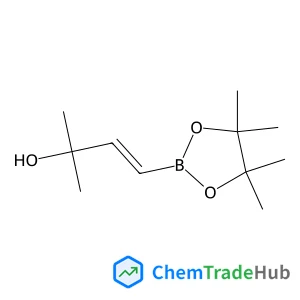
![(2S)-2-{[(9H-Fluoren-9-ylmethoxy)carbonyl]amino}-4-(methylselanyl)butanoic acid structure](https://static.chemtradehub.com/structs/121/1217852-49-7-f252.webp "(2S)-2-{[(9H-Fluoren-9-ylmethoxy)carbonyl]amino}-4-(methylselanyl)butanoic acid structure")





