












Construction of mesoporous Cu-doped Co9S8 rectangular nanotube arrays for high energy density all-solid-state asymmetric supercapacitors
Literature Information
Publication Date
2019-02-04
DOI
10.1039/C8TA10998B
Impact Factor
12.732
Authors
Wen Lu, Ze Yuan, Chunyang Xu, Jiqiang Ning, Yijun Zhong, Ziyang Zhang, Yong Hu
View Original
Abstract
Heteroatom doping has been regarded as an effective route to tune the electronic structure of electrode materials to achieve enhanced electrical conductivity as well as more electroactive sites and boost the devices' capacitive performance and cycling stability. Herein, novel high-performance all-solid-state asymmetric supercapacitors (ASCs) based on mesoporous Cu-doped Co9S8 rectangular nanotube arrays (Cu-Co9S8 NTAs) are successfully fabricated. Using Cu–Co(CO3)0.5(OH) nanowire arrays as the precursor and 1,3,5-benzenetricarboxylic acid (H3BTC) as the ligand, intermediate CuCo–MOF nanorod arrays are first obtained and then converted into Cu-Co9S8 rectangular NTAs via a facile sulfidation reaction. Interestingly, the intermediate CuCo–MOF nanorods play a determinant role in forming the hollow nanostructures of the final products. Due to the arrays of the unique hollow nanostructures and novel electronic properties induced by Cu doping, a battery-type electrode based on the Cu-Co9S8 NTAs exhibits a high specific capacity of 366 mA h g−1 (2636 F g−1) at 2 A g−1 and excellent cycling stability (94.0% capacity retention after 5000 cycles). Furthermore, all-solid-state ASCs assembled using the Cu-Co9S8 NTAs as the positive electrode and active carbon as the negative electrode demonstrate a high energy density of 71.93 W h kg−1 at a power density of 750 W kg−1 and outstanding cycling stability (96.2% retention after 5000 cycles). The ASC device exhibits enhanced energy density compared with reported state-of-the-art supercapacitors as well as excellent flexibility under different bending conditions.
Related Literature
Influence of the interface in quantum corrections on the low-temperature resistance of La2/3Sr1/3MnO3 trilayer masking thin films
Yuan Jin, Xiao-Peng Cui, Wei-Hua Han, Shi-Xun Cao, Yu-Ze Gao, Jin-Cang Zhang
2015-04-09
Paper
DOI: 10.1039/C5CP00842E
Functional carbon nanotubes for high-quality charge transfer and moisture regulation through membranes: structural and functional insights
Annarosa Gugliuzza, Valentino Pingitore, Domenico Miriello
2015-04-13
Paper
DOI: 10.1039/C5CP00750J
Bringing light into the dark triplet space of molecular systems
Jing Ge, Zhigang Geng, Shenlong Jiang, Kaili Fan, Zhenkun Guo, Jiahua Hu, Zongwei Chen
2015-04-20
Paper
DOI: 10.1039/C5CP00323G
Investigation of thermal evolution of copper nanoclusters encapsulated in carbon nanotubes: a molecular dynamics study
Hamed Akbarzadeh, Mohsen Abbaspour, Sirous Salemi, Mousareza Abroodi
2015-04-16
Paper
DOI: 10.1039/C5CP01294E
A molecular dynamics study of guest–host hydrogen bonding in alcohol clathrate hydrates
Masaki Hiratsuka, Ryo Ohmura, Amadeu K. Sum, Saman Alavi, Kenji Yasuoka
2015-03-25
Paper
DOI: 10.1039/C4CP05732E
(Hollow Au–Ag nanoparticles)–TiO2 composites for improved photocatalytic activity prepared from block copolymer-stabilized bimetallic nanoparticles
Na Li, Xiaoyu Zhang, Shulong Yuan, Xiaokai Zhang, Yuzhen Yuan, Xue Li
2015-04-01
Paper
DOI: 10.1039/C4CP06093H
Tunable electronic properties in the van der Waals heterostructure of germanene/germanane
Run-wu Zhang, Chang-wen Zhang, Wei-xiao Ji, Feng Li, Miao-juan Ren, Ping Li, Min Yuan, Pei-ji Wang
2015-03-31
Paper
DOI: 10.1039/C5CP00875A
The electronic states of a double carbon vacancy defect in pyrene: a model study for graphene
Francisco B. C. Machado
2015-04-13
Paper
DOI: 10.1039/C4CP05751A
Collision-induced dissociation products of the protonated dipeptide carnosine: structural elucidation, fragmentation pathways and potential energy surface analysis
Eslam M. Moustafa, Ida Ritacco, Emilia Sicilia
2015-04-09
Paper
DOI: 10.1039/C5CP00958H
Composition-dependent buckling behaviour of hybrid boron nitride–carbon nanotubes
Jin Zhang, S. A. Meguid
2015-04-17
Paper
DOI: 10.1039/C5CP00914F
You might also like
Compound Q&A
What are the main uses of (5-Sulfamoyl-3-pyridinyl)boronic acid (CAS: 951233-61-7)?
(5-Sulfamoyl-3-pyridinyl)boronic acid is primarily used in chemical synthesis, p...
951233-61-7(5-Sulfamoyl-3-pyrid...
Compound Q&A
How is Benzyl 2-methyl-2-(methylsulfonyl)-4-pentenoate (CAS: 1942858-50-5) typically synthesized?
Benzyl 2-methyl-2-(methylsulfonyl)-4-pentenoate is typically synthesized via est...
1942858-50-5Benzyl 2-methyl-2-(m...
Compound Q&A
What precautions should be taken when handling 8-Fluoroquinolin-6-ol (CAS: 209353-22-0)?
When handling 8-Fluoroquinolin-6-ol (CAS: 209353-22-0), it is important to use p...
209353-22-08-Fluoroquinolin-6-o...
Compound Q&A
What are the physical and chemical properties of 1,3-Dibromo-5-(2-methyl-2-propanyl)benzene (CAS: 129316-09-2)?
1,3-Dibromo-5-(2-methyl-2-propanyl)benzene (CAS: 129316-09-2) is a crystalline c...
129316-09-21,3-Dibromo-5-(2-met...
Compound Q&A
What industries use Ethyl 7-chloro-4-oxo-1-(1,3-thiazol-2-yl)-1,4-dihydro-1,8-naphthyridine-3-carboxylate (CAS: 174726-87-5)?
Ethyl 7-chloro-4-oxo-1-(1,3-thiazol-2-yl)-1,4-dihydro-1,8-naphthyridine-3-carbox...
174726-87-5Ethyl 7-chloro-4-oxo...
Compound Q&A
What precautions should be taken when handling Delta-7-Avenasterol (CAS: 23290-26-8)?
When handling Delta-7-Avenasterol (CAS: 23290-26-8), it is important to wear app...
23290-26-8Delta-7-Avenasterol
Compound Q&A
What precautions should be taken when handling N-({(5R)-3-[3-Fluoro-4-(4-morpholinyl)phenyl]-2-oxo-1,3-oxazolidin-5-yl}methyl)acetamide (CAS: 872992-20-6)?
Proper handling involves the use of personal protective equipment such as gloves...
872992-20-6N-({(5R)-3-[3-Fluoro...
Compound Q&A
What precautions should be taken when handling 2-Methyl-2-proanyl 4-[(2-aminophenyl)amino]-1-piperidinecarboxylate (CAS: 79099-00-6)?
When handling 2-Methyl-2-proanyl 4-[(2-aminophenyl)amino]-1-piperidinecarboxylat...
79099-00-62-Methyl-2-propanyl ...
Compound Q&A
What is N-Methyl-4-chlorobenzylamine hydrochloride (CAS: 65542-24-7)?
N-Methyl-4-chlorobenzylamine hydrochloride (CAS: 65542-24-7) is a organic compou...
65542-24-7N-Methyl-4-chloroben...
Compound Q&A
Is [2-(Dodecyloxy)ethoxy]acetic acid (CAS: 27306-90-7) safe?
[2-(Dodecyloxy)ethoxy]acetic acid (CAS: 27306-90-7) is generally considered safe...
27306-90-7[2-(Dodecyloxy)ethox...
Source Journal
Journal of Materials Chemistry A

CiteScore:
19.5
Self-citation Rate:
4.7%
Articles per Year:
2211
Journal of Materials Chemistry A, B & C cover high quality studies across all fields of materials chemistry. The journals focus on those theoretical or experimental studies that report new understanding, applications, properties and synthesis of materials. The journals have a strong history of publishing quality reports of interest to interdisciplinary communities and providing an efficient and rigorous service through peer review and publication. The journals are led by an international team of Editors-in-Chief and Associate Editors who are all active researchers in their fields. Journal of Materials Chemistry A, B & C are separated by the intended application of the material studied. Broadly, applications in energy and sustainability are of interest to Journal of Materials Chemistry A, applications in biology and medicine are of interest to Journal of Materials Chemistry B, and applications in optical, magnetic and electronic devices are of interest to Journal of Materials Chemistry C. More than one Journal of Materials Chemistry journal may be suitable for certain fields and researchers are encouraged to submit their paper to the journal that they feel best fits for their particular article. Example topic areas within the scope of Journal of Materials Chemistry A are listed below. This list is neither exhaustive nor exclusive. Artificial photosynthesis Batteries Carbon dioxide conversion Catalysis Fuel cells Gas capture/separation/storage Green/sustainable materials Hydrogen generation Hydrogen storage Photocatalysis Photovoltaics Self-cleaning materials Self-healing materials Sensors Supercapacitors Thermoelectrics Water splitting Water treatment
Recommended Compounds

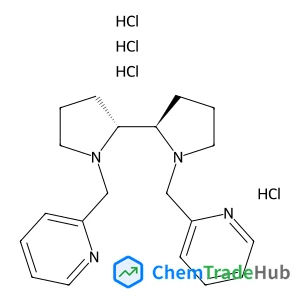
(2R,2'R)-1,1'-Bis(2-pyridinylmethyl)-2,2'-bipyrrolidine tetrahydrochloride
CAS Number:
1228077-88-0
Molecular Formula:
C20H30Cl4N4
Recommended Suppliers







Disclaimer
This page provides academic journal information for reference and research purposes only. We are not affiliated with any journal publishers and do not handle publication submissions. For publication-related inquiries, please contact the respective journal publishers directly.
If you notice any inaccuracies in the information displayed, please contact us at support@chemtradehub.com. We will promptly review and address your concerns.