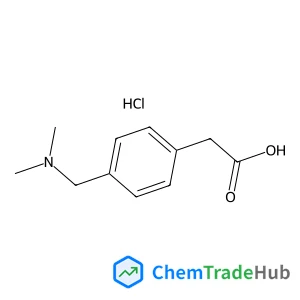
4-(Dimethylaminomethyl)phenylacetic acid hydrochloride
CAS Number:
99985-52-1
Molecular Formula:
C11H16ClNO2
Run-wu Zhang, Chang-wen Zhang, Wei-xiao Ji, Feng Li, Miao-juan Ren, Ping Li, Min Yuan, Pei-ji Wang
It is challenging to epitaxially grow germanene on conventional semiconductor substrates. Based on first-principles calculations, we investigate the structural and electronic properties of germanene/germanane heterostructures (HTSs). The results indicate that the Dirac cone with nearly linear band dispersion of germanene is maintained in the band gap of the substrate. Remarkably, the band gaps opened in these HTSs can be effectively modulated by the external electric field and strain, and they also feature very low effective masses and high carrier mobilities. These results provide a route to design high-performance FETs operating at room temperature in nanodevices.

Biopolymers

Journal of the American Chemical Society

Advances in Colloid and Interface Science

Canadian Metallurgical Quarterly

Journal of the Chinese Chemical Society

Anti-Corrosion Methods and Materials

Accounts of Chemical Research

Australian Journal of Chemistry

Chemistry of Natural Compounds

Doklady Chemistry
Maurilio Galletta, Sebastiano Campagna, Manuel Quesada, Gilles Ulrich, Raymond Ziessel
DOI: 10.1039/B507196H
Edel M. Minogue, Tammy P. Taylor, Anthony K. Burrell, George J. Havrilla, Benjamin P. Warner, Michael T. Janicke
DOI: 10.1039/B506044C
Nicholas S. P. Watney, Zoltán A. Gál, Matthew D. S. Webster, Simon J. Clarke
DOI: 10.1039/B505208D
Yvonne Chiang, A. Jerry Kresge, Ikenna Onyido, John P. Richard, Peter Wan, Musheng Xu
DOI: 10.1039/B506706E
Yanfei Shen, Yuanjian Zhang, Qixian Zhang, Tianyan You, Ari Ivaska
DOI: 10.1039/B507688A
Weigang Ju, Mingming Gu, Xiangmin Meng, Wensheng Shi, Xiaohong Zhang, Shuittong Lee
DOI: 10.1039/B506459G
Dolos Foguet-Albiol, Khalil A. Abboud, George Christou
DOI: 10.1039/B507748F
Nicolai Dieltiens, Diederica D. Claeys, Bart Allaert, Francis Verpoort, Christian V. Stevens
DOI: 10.1039/B508663A
Seigo Ito, Paul Liska, Pascal Comte, Raphaël Charvet, Peter Péchy, Udo Bach, Lukas Schmidt-Mende, Shaik Mohammed Zakeeruddin, Andreas Kay, Mohammad K. Nazeeruddin, Michael Grätzel
DOI: 10.1039/B505718C
Shaofeng Yang, Roel Prins
DOI: 10.1039/B507940C
Waste containing N-Methoxy-N-methyl-1,3-thiazole-5-carboxamide (CAS: 898825-89-3...
N-(4-Biphenylyl)dibenzo[b,d]furan-4-amine should be stored in a tightly sealed c...
The market for 3-Acetamido-5-amino-2,4,6-triiodobenzoic acid (CAS: 1713-07-1) is...
Benzyl 2-O-acetyl-3,4,6-tri-O-benzyl-beta-D-galactopyranoside (CAS: 61820-03-9) ...
2-Ethylpiperazine dihydrochloride (CAS: 438050-52-3) is regulated under the Glob...
1,1'-[1,3-Phenylenebis(methylene)]bis(3-methyl-1H-pyrrole-2,5-dione) (CAS: 11946...
Several alternatives can be used in the synthesis of 5-Fluoro-2-(1-pyrrolidinyl)...
Proper personal protective equipment (PPE) must be worn when handling this compo...
When handling 6-Bromoimidazo[1,2-a]pyridin-8-amine, it is important to wear appr...
Alternatives to (2S,4R)-4-(4-Nitrobenzyl)pyrrolidine-2-carboxylic acid hydrochlo...

Physical Chemistry Chemical Physics (PCCP) is an international journal co-owned by 19 physical chemistry and physics societies from around the world. This journal publishes original, cutting-edge research in physical chemistry, chemical physics and biophysical chemistry. To be suitable for publication in PCCP, articles must include significant innovation and/or insight into physical chemistry; this is the most important criterion that reviewers and Editors will judge against when evaluating submissions. The journal has a broad scope and welcomes contributions spanning experiment, theory, computation and data science. Topical coverage includes spectroscopy, dynamics, kinetics, statistical mechanics, thermodynamics, electrochemistry, catalysis, surface science, quantum mechanics, quantum computing and machine learning. Interdisciplinary research areas such as polymers and soft matter, materials, nanoscience, energy, surfaces/interfaces, and biophysical chemistry are welcomed if they demonstrate significant innovation and/or insight into physical chemistry. Joined experimental/theoretical studies are particularly appreciated when complementary and based on up-to-date approaches.