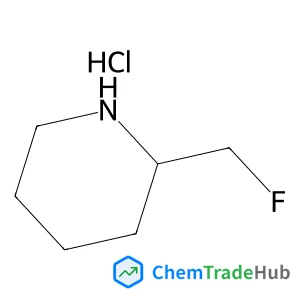
(2S)-2-(Fluoromethyl)piperidine hydrochloride (1:1)
CAS Number:
886216-73-5
Molecular Formula:
C6H13ClFN
Hamed Akbarzadeh, Mohsen Abbaspour, Sirous Salemi, Mousareza Abroodi
We have studied the heating and cooling processes of CuN nanoclusters encapsulated in CNTs with different diameters and chiralities in the range of 100–1700 K. We have investigated all of the possible effects: the effects of the nanocluster size, CNT diameter, and CNT chirality on the thermodynamic, structural, and dynamic properties during the melting process. Our thermodynamic results showed that the melting temperatures of the confined nanoparticles tend to increase with the nanoparticle size. Our energy results also showed that the melting temperature of the nanocluster decreases upon decreasing the CNT diameter, which is due to the greater nanocluster–CNT wall interactions in the smaller nanotube which make the cluster to expand more easily on the interface. The results also showed that the encapsulation of the nanocluster in the zigzag CNT has lower energy values than the armchair one, which is due to the greater interaction of the nanocluster and the zigzag CNT wall. We have also recognized a hysteresis in the course of the cooling process, which can be due to the fact that the nanoclusters and the nanotube make a coherent interface structure with more stability. Using the radial distribution function, it has been shown that the structural change with temperature is irreversible. Our dynamical results indicated that the bigger nanocluster has slower dynamics than the smaller cluster. It is also shown that the nanocluster on the smaller and zigzag CNTs has slower dynamics than the bigger and armchair tubes.
Charng-Sheng Tsai, Ting-Bin Yu, Chao-Tsen Chen
DOI: 10.1039/B507237A
Katsuhiro Maeda, Yasuaki Matsushita, Muneyoshi Ezaka
DOI: 10.1039/B507863F
Nicholas S. P. Watney, Zoltán A. Gál, Matthew D. S. Webster, Simon J. Clarke
DOI: 10.1039/B505208D
Bo Tang, Jinye Niu, Chengguang Yu, Linhai Zhuo, Jiechao Ge
DOI: 10.1039/B502978C
Peter Nockemann, Eva Beurer, Kris Driesen, Rik Van Deun, Kristof Van Hecke, Luc Van Meervelt, Koen Binnemans
DOI: 10.1039/B506915G
Naoto Hashimoto, Keiko Ninomiya, Takamasa Endo, Masahiko Sisido
DOI: 10.1039/B508194G
Takashi Jin, Fumihiko Fujii, Hiroshi Sakata, Mamoru Tamura, Masataka Kinjo
DOI: 10.1039/B506608E
Dolos Foguet-Albiol, Khalil A. Abboud, George Christou
DOI: 10.1039/B507748F
John H. Thurston, Dale C. Swenson, Louis Messerle
DOI: 10.1039/B504864H
Liang Li, Huifeng Qian, Jicun Ren
DOI: 10.1039/B505791D
Waste containing N-Methoxy-N-methyl-1,3-thiazole-5-carboxamide (CAS: 898825-89-3...
N-(4-Biphenylyl)dibenzo[b,d]furan-4-amine should be stored in a tightly sealed c...
The market for 3-Acetamido-5-amino-2,4,6-triiodobenzoic acid (CAS: 1713-07-1) is...
Benzyl 2-O-acetyl-3,4,6-tri-O-benzyl-beta-D-galactopyranoside (CAS: 61820-03-9) ...
2-Ethylpiperazine dihydrochloride (CAS: 438050-52-3) is regulated under the Glob...
1,1'-[1,3-Phenylenebis(methylene)]bis(3-methyl-1H-pyrrole-2,5-dione) (CAS: 11946...
Several alternatives can be used in the synthesis of 5-Fluoro-2-(1-pyrrolidinyl)...
Proper personal protective equipment (PPE) must be worn when handling this compo...
When handling 6-Bromoimidazo[1,2-a]pyridin-8-amine, it is important to wear appr...
Alternatives to (2S,4R)-4-(4-Nitrobenzyl)pyrrolidine-2-carboxylic acid hydrochlo...

Physical Chemistry Chemical Physics (PCCP) is an international journal co-owned by 19 physical chemistry and physics societies from around the world. This journal publishes original, cutting-edge research in physical chemistry, chemical physics and biophysical chemistry. To be suitable for publication in PCCP, articles must include significant innovation and/or insight into physical chemistry; this is the most important criterion that reviewers and Editors will judge against when evaluating submissions. The journal has a broad scope and welcomes contributions spanning experiment, theory, computation and data science. Topical coverage includes spectroscopy, dynamics, kinetics, statistical mechanics, thermodynamics, electrochemistry, catalysis, surface science, quantum mechanics, quantum computing and machine learning. Interdisciplinary research areas such as polymers and soft matter, materials, nanoscience, energy, surfaces/interfaces, and biophysical chemistry are welcomed if they demonstrate significant innovation and/or insight into physical chemistry. Joined experimental/theoretical studies are particularly appreciated when complementary and based on up-to-date approaches.