













3D-printed zeolite monoliths with hierarchical porosity for selective methanol to light olefin reaction
Literature Information
Publication Date
2018-07-18
DOI
10.1039/C8RE00095F
Impact Factor
4.239
Authors
Xin Li, Fateme Rezaei, Ali A. Rownaghi
View Original
Abstract
Herein, we report the rapid synthesis of customized zeolite monoliths with various compositions and hierarchical porosity (macro–meso–micro) using a 3D printing technique. Moreover, several 3D-printed monoliths were synthesized from HZSM-5 and HZSM-5/silica, and SAPO-34 crystals were grown on the as-synthesized 3D-printed ZSM-5 monoliths via a secondary growth method. The 3D-printed zeolite monoliths exhibited hierarchical porosity with pore sizes ranging from 1.5 nm to 1 μm. Characterization results suggested that transformation of zeolite paste into the monolith structure enhanced the mesopore volume and moderated the acidity of the structures. Further incorporation of amorphous silica into the HZSM-5 monoliths reduced the acid site density. The obtained monoliths were evaluated in the methanol to olefin (MTO) reaction and found to exhibit higher stability than their powder counterparts. The selectivity to light olefins was significantly increased as a result of modification in the acidity and porosity of the monolith catalysts, which in turn mitigated the hydrogen transfer, hence suppressing the formation of paraffins and aromatics. The SAPO-34 coating tended to increase the ethylene selectivity due to its intrinsic framework structure. The analysis of spent zeolite monoliths by TGA-DTA indicated that the amount of polyaromatic species formed during the reaction was much lower than that on the powder analogues, due to their diluted acid site density and decreased Brønsted acid sites, as proven by NH3-TPD profiles and py-FTIR spectra. Furthermore, 29Si MAS NMR results confirmed slight dealumination of 3D-printed monoliths after the MTO reaction.
Related Literature
Sequence-defined oligomer as a modular platform for selective sub-picomolar detection and removal of Hg2+
Anna Jose, Pandurangan Nanjan, Mintu Porel
2021-08-13
Paper
DOI: 10.1039/D1PY00642H
Iron nanoparticles: Synthesis and applications in surface enhanced Raman scattering and electrocatalysis
Lin Guo, Qunjian Huang, Xiao-yuan Li, Shihe Yang
2001-04-03
Paper
DOI: 10.1039/B009951L
C60Fullerene-based materials as singlet oxygen O2(1Δg) photosensitizers: a time-resolved near-IR luminescence and optoacoustic study
Cristina Martí, Santi Nonell, Xiaojun Zhang, Christopher S. Foote, Rafael González Moreno, José L. Bourdelande, Josep Font
2001-03-26
Paper
DOI: 10.1039/B009484F
Conformational landscapes of aromatic amino acids in the gas phase: Infrared and ultraviolet ion dip spectroscopy of tryptophan
L. C. Snoek, R. T. Kroemer, M. R. Hockridge, J. P. Simons
2001-04-11
Paper
DOI: 10.1039/B101296G
Gas-phase reactions of rhenium-oxo species ReOn+, n = 0, 2–6, 8, with O2, N2O, CO, H2O, H2, CH4 and C2H4
Martin K. Beyer, Christian B. Berg, Vladimir E. Bondybey
2001-04-06
Paper
DOI: 10.1039/B100538N
Supramolecular polymerization of BODIPY dyes extended with rationally designed pyrazole-based motifs
Youzhi Zhang, Na Zhou, Xiaolin Zhu, Xiaoming He
2021-09-08
Paper
DOI: 10.1039/D1PY00963J
Progress, challenges and future directions of heterocycles as building blocks in iterative methodologies towards sequence-defined oligomers and polymers
Stephen A. Hill, Robert Steinfort, Laura Hartmann
2021-07-14
Review Article
DOI: 10.1039/D1PY00425E
Vacuum ultraviolet photochemistry of methane, silane and germane
Phillip A. Cook, Michael N. R. Ashfold, Yun-Jung Jee, Kyung-Hoon Jung, Stephen Harich, Xueming Yang
2001-04-30
Paper
DOI: 10.1039/B100248L
The NIR-sensitized cationic photopolymerization of oxetanes in combination with epoxide and acrylate monomers
Yulian Pang, Hongjun Jiao, Yingquan Zou, Bernd Strehmel
2021-08-31
Paper
DOI: 10.1039/D1PY00999K
You might also like
Compound Q&A
What regulatory guidelines apply to 6-Bromo-2-methylimidazo[1,2-a]pyrimidine (CAS: 1111638-05-1)?
6-Bromo-2-methylimidazo[1,2-a]pyrimidine (CAS: 1111638-05-1) falls under various...
1111638-05-16-Bromo-2-methylimid...
Compound Q&A
Are there alternatives to 1-Pyrrolidineethanol, β-methyl-α-phenyl-, (αS,βR) (CAS: 123620-80-4) in synthesis?
While there are no direct alternatives, similar compounds like 1-Pyrrolidineetha...
123620-80-41-Pyrrolidineethanol...
Compound Q&A
Is 4-Methyl-2,6-bis(2-methyl-2-propanyl)phenyl methylcarbamate (CAS: 1918-11-2) safe?
4-Methyl-2,6-bis(2-methyl-2-propanyl)phenyl methylcarbamate (CAS: 1918-11-2) is ...
1918-11-24-Methyl-2,6-bis(2-m...
Compound Q&A
How should 2-(3-Bromo-4-fluorophenyl)-1,3-dioxolane (CAS: 77771-04-1) be stored?
2-(3-Bromo-4-fluorophenyl)-1,3-dioxolane (CAS: 77771-04-1) should be stored in a...
77771-04-12-(3-Bromo-4-fluorop...
Compound Q&A
What are the physical and chemical properties of 4,5,6,7-Tetrahydro-1H-indazole hydrochloride (CAS: 18161-11-0)?
4,5,6,7-Tetrahydro-1H-indazole hydrochloride is a white crystalline solid with a...
18161-11-04,5,6,7-Tetrahydro-1...
Compound Q&A
What is (2R)-1-Methoxy-3-phenyl-2-propanamine (CAS: 59919-07-2)?
(2R)-1-Methoxy-3-phenyl-2-propanamine is a chiral organic compound with the CAS ...
59919-07-2(2R)-1-Methoxy-3-phe...
Compound Q&A
What industries use Ethyl 1-(1-phenylethyl)-1H-imidazole-5-carboxylate (CAS: 56649-47-9)?
Ethyl 1-(1-phenylethyl)-1H-imidazole-5-carboxylate is used in various industries...
56649-47-9Ethyl 1-(1-phenyleth...
Compound Q&A
What regulatory guidelines apply to 4-[(1E,3S)-1-(4-Hydroxyphenyl)-1,4-pentadien-3-yl]phenol (CAS: 17676-24-3)?
4-[(1E,3S)-1-(4-Hydroxyphenyl)-1,4-pentadien-3-yl]phenol (CAS: 17676-24-3) falls...
17676-24-34-[(1E,3S)-1-(4-Hydr...
Compound Q&A
What industries use (S)-3-Amino-5-phenylpentanoic acid hydrochloride (CAS: 331846-97-0)?
(S)-3-Amino-5-phenylpentanoic acid hydrochloride is primarily used in the pharma...
331846-97-0(S)-3-Amino-5-phenyl...
Compound Q&A
How is 7-methoxy-1-benzothiophene-2-carboxylic acid (CAS: 88791-07-5) typically synthesized?
7-Methoxy-1-benzothiophene-2-carboxylic acid is typically synthesized by reactin...
88791-07-57-methoxy-1-benzothi...
Source Journal
Reaction Chemistry & Engineering

CiteScore:
0
Self-citation Rate:
8.8%
Articles per Year:
284
Reaction Chemistry & Engineering is an interdisciplinary journal reporting cutting-edge research focused on enhancing the understanding and efficiency of reactions. Reaction engineering leverages the interface where fundamental molecular chemistry meets chemical engineering and technology. Challenges in chemistry can be overcome by the application of new technologies, while engineers may find improved solutions for process development from the latest developments in reaction chemistry. Reaction Chemistry & Engineering is a unique forum for researchers whose interests span the broad areas of chemical engineering and chemical sciences to come together in solving problems of importance to wider society. All papers should be written to be approachable by readers across the engineering and chemical sciences. Papers that consider multiple scales, from the laboratory up to and including plant scale, are particularly encouraged.
Recommended Compounds
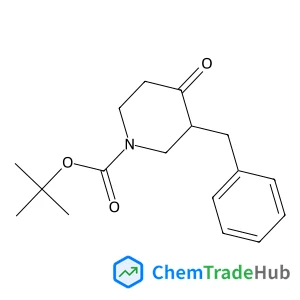
2-Methyl-2-propanyl 3-benzyl-4-oxo-1-piperidinecarboxylate
CAS Number:
193274-82-7
Molecular Formula:
C17H23NO3
![4-Penten-1-yl 2-[(2-furylmethyl)(1H-imidazol-1-ylcarbonyl)amino]butanoate structure](https://static.chemtradehub.com/structs/101/101903-30-4-ac34.webp "4-Penten-1-yl 2-[(2-furylmethyl)(1H-imidazol-1-ylcarbonyl)amino]butanoate structure")
4-Penten-1-yl 2-[(2-furylmethyl)(1H-imidazol-1-ylcarbonyl)amino]butanoate
CAS Number:
101903-30-4
Molecular Formula:
C18H23N3O4
Recommended Suppliers



Disclaimer
This page provides academic journal information for reference and research purposes only. We are not affiliated with any journal publishers and do not handle publication submissions. For publication-related inquiries, please contact the respective journal publishers directly.
If you notice any inaccuracies in the information displayed, please contact us at support@chemtradehub.com. We will promptly review and address your concerns.