












Spirocyclic cladosporicin A and cladosporiumins I and J from a Hydractinia-associated Cladosporium sphaerospermum SW67
Literature Information
Publication Date
2018-11-27
DOI
10.1039/C8QO01104D
Impact Factor
5.281
Authors
Maja Rischer, Seoung Rak Lee, Hee Jeong Eom, Hyun Bong Park, John Vollmers, Anne-Kristin Kaster, Yern-Hyerk Shin, Dong-Chan Oh, Ki Hyun Kim, Christine Beemelmanns
View Original
Abstract
Here, we report the isolation and characterization of three new spirocyclic natural products named cladosporicin A (1), cladosporiumins I (2) and J (3) from the fungus Cladosporium sphaerospermum SW67. Cladosporicin A contains an unprecedented 2,7-diazaspiro[4.5]decane-1,4-dione skeleton conjugated with one 2,4-pyrrolidinedione moiety (tetramic acid). Cladosporiumins I and J are stereoisomers and are built of a tetramic acid core structure with a quaternary (C-3) center carrying a trans-hexylenic alcohol side chain and a six-membered lactone ring. The absolute structures of compounds 1–3 were elucidated by a combination of 1D and 2D NMR spectroscopy, modified Mosher's analysis, quantum chemical ECD calculations and computational NMR chemical shift calculations. Comparative genome sequence analysis led us to assign the putative new PKS-NRPS hybrid gene cluster (cls). Finally, we assessed bioactivities of compounds 1–3 in a series of pharmacological tests and found weak cytotoxicity against four human breast cancer cell lines (IC50 ∼ 70–90 μM).
Related Literature
Preparation of bimodal micro–mesoporous TiO2 with tailored crystalline properties
David P. Serrano, Guillermo Calleja, Raúl Sanz, Patricia Pizarro
2004-03-17
Communication
DOI: 10.1039/B315493A
A simple route to micropatterned polymer surfaces
Yong Wang, Zhimin Liu, Buxing Han, Haixiang Gao, Jianling Zhang, Xun Kuang
2004-02-24
Communication
DOI: 10.1039/B314970F
Reduction of Pt usage in fuel cell electrocatalysts with carbon nanotube electrodes
Taketoshi Matsumoto, Toshiki Komatsu, Kazuya Arai, Takahisa Yamazaki, Masashi Kijima, Harukazu Shimizu, Yosuke Takasawa, Junji Nakamura
2004-02-26
Communication
DOI: 10.1039/B400607K
Synthesis of poly(glycolide) in supercritical carbon dioxide in the presence of a hydrocarbon stabiliser
Daniel Bratton, Malcolm Brown, Steven M. Howdle
2004-02-24
Communication
DOI: 10.1039/B313358C
Ti–Mo heterobimetallic thiacalix[4]arene complex containing an unusual α-agostic μ2-η5:η2-cyclopentadienyl ligand
Shin Takemoto, Shinpei Tanaka, Yasushi Mizobe, Masanobu Hidai
2004-02-26
Communication
DOI: 10.1039/B316972C
Unusually rapid heterogeneous electron transfer through a saturated bridge 18 bonds in length
Jingquan Liu, J. Justin Gooding, Michael N. Paddon-Row
2004-11-25
Communication
DOI: 10.1039/B413612H
A new [2 + 2] photodimerization of 5-chloro- and 5-methyl-2-pyridone in their inclusion complexes with 1,1′-biphenyl-2,2′-dicarboxylic acid as a model for DNA damage by photodimerization of its thymine component
Shinya Hirano, Shinji Toyota, Fumio Toda
2004-12-13
Communication
DOI: 10.1039/B414134B
An organic–inorganic hybrid perovskite containing copper paddle-wheel clusters linking perovskite layers : [Cu(O2C–(CH2)3–NH3)2]PbBr4
Nicolas Mercier, Amédée Riou
2004-02-26
Communication
DOI: 10.1039/B316847F
Formation of a palladium(ii) complex of 2-(2-pyridinylmethyleneamino)-2′-hydroxy-1,1′-binaphthyl with novel Cσ-coordination and its theoretical investigation
Lijin Xu, Qian Shi, Xingshu Li, Xian Jia, Xin Huang, Ruihu Wang, Zhongyuan Zhou, Zhenyang Lin, Albert S. C. Chan
2003-06-06
Communication
DOI: 10.1039/B303477A
Convenient syntheses of “heavy fluorous” cyclopentadienes and cyclopentadienyl complexes with three to five ponytails
Long V. Dinh, J. A. Gladysz
2004-03-17
Communication
DOI: 10.1039/B401540A
You might also like
Compound Q&A
What precautions should be taken when handling 4-Methyl-6-(trifluoromethyl)quinoline (CAS: 40716-16-3)?
When handling 4-Methyl-6-(trifluoromethyl)quinoline (CAS: 40716-16-3), safety go...
40716-16-34-Methyl-6-(trifluor...
Compound Q&A
What is 4-(3,5-Difluorophenyl)aniline (CAS: 405058-00-6)?
4-(3,5-Difluorophenyl)aniline is an aromatic organic compound with the CAS numbe...
405058-00-64-(3,5-Difluoropheny...
Compound Q&A
How is 5-{[4-(Trifluoromethyl)phenyl]sulfanyl}-1,2,3-thiadiazole-4-carboxylic acid (CAS: 338982-07-3) typically synthesized?
5-{[4-(Trifluoromethyl)phenyl]sulfanyl}-1,2,3-thiadiazole-4-carboxylic acid can ...
338982-07-35-{[4-(Trifluorometh...
Compound Q&A
What is the market or research trend for 4-Benzylaniline hydrochloride (CAS: 6317-57-3)?
The market for 4-Benzylaniline hydrochloride (CAS: 6317-57-3) is steadily growin...
6317-57-34-Benzylaniline hydr...
Compound Q&A
Is [3-(Diethylsulfamoyl)phenyl]boronic acid (CAS: 871329-58-7) safe?
[3-(Diethylsulfamoyl)phenyl]boronic acid is generally considered safe when handl...
871329-58-7[3-(Diethylsulfamoyl...
Compound Q&A
What are the main uses of 3-Bromo-2,5-dimethoxyaniline (CAS: 115929-62-9)?
3-Bromo-2,5-dimethoxyaniline is mainly used in the pharmaceutical and chemical i...
115929-62-93-Bromo-2,5-dimethox...
Compound Q&A
What regulatory guidelines apply to N-Methyl-1-(5-methyl-1H-indol-3-yl)methanamine (CAS: 915922-67-7)?
N-Methyl-1-(5-methyl-1H-indol-3-yl)methanamine (CAS: 915922-67-7) is subject to ...
915922-67-7N-Methyl-1-(5-methyl...
Compound Q&A
What industries use Carbamic acid, N-[(5S)-5,6-diamino-6-oxohexyl]-, 1,1-dimethylethyl ester (CAS: 24828-96-4)?
This compound is primarily used in the pharmaceutical industry for the synthesis...
24828-96-4Carbamic acid, N-[(5...
Compound Q&A
How should 2-Methyl-2-propanyl [(1S,3R)-3-aminocyclohexyl]carbamate (CAS: 1298101-47-9) be stored?
2-Methyl-2-propanyl [(1S,3R)-3-aminocyclohexyl]carbamate (CAS: 1298101-47-9) sho...
1298101-47-92-Methyl-2-propanyl ...
Compound Q&A
What industries use Ethyl 2-bromo-4,4,4-trifluorobutanoate (CAS: 367-33-9)?
Ethyl 2-bromo-4,4,4-trifluorobutanoate (CAS: 367-33-9) is utilized in the pharma...
367-33-9Ethyl 2-bromo-4,4,4-...
Source Journal
Organic Chemistry Frontiers

CiteScore:
7.8
Self-citation Rate:
8.7%
Articles per Year:
724
Organic Chemistry Frontiers publishes high-quality research from across organic chemistry. Emphases are placed on studies that make significant contributions to the field of organic chemistry by reporting either new or significantly improved protocols or methodologies. Topics include, but are not limited to the following: Organic synthesis Development of synthetic methodologies Catalysis Natural products Functional organic materials Supramolecular and macromolecular chemistry Physical and computational organic chemistry
Recommended Compounds
![[3-(2,6-Dichlorophenyl)-5-isopropyl-1,2-oxazol-4-yl]methanol structure](https://static.chemtradehub.com/structs/278/278597-30-1-5c79.webp "[3-(2,6-Dichlorophenyl)-5-isopropyl-1,2-oxazol-4-yl]methanol structure")
[3-(2,6-Dichlorophenyl)-5-isopropyl-1,2-oxazol-4-yl]methanol
CAS Number:
278597-30-1
Molecular Formula:
C13H13Cl2NO2
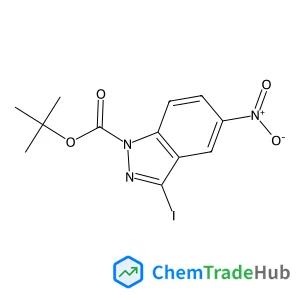
Tert-butyl 3-iodo-5-nitro-1H-indazole-1-carboxylate
CAS Number:
459133-69-8
Molecular Formula:
C12H12IN3O4
Recommended Suppliers






Disclaimer
This page provides academic journal information for reference and research purposes only. We are not affiliated with any journal publishers and do not handle publication submissions. For publication-related inquiries, please contact the respective journal publishers directly.
If you notice any inaccuracies in the information displayed, please contact us at support@chemtradehub.com. We will promptly review and address your concerns.