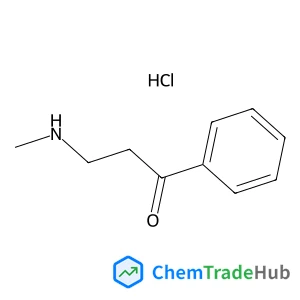
3-(Methylamino)-1-phenyl-1-propanone hydrochloride (1:1)
CAS Number:
2538-50-3
Molecular Formula:
C10H14ClNO
Yu Dai, Xin Chen, Xiaojin Zhang
Stimuli-responsive polymeric micelles have served as an emerging and interesting platform for poorly soluble drug delivery towards cancer therapy in response to exogenous stimuli (variations in temperature, light, electric field, magnetic field, or ultrasound intensity) and endogenous stimuli (changes in pH, enzyme concentration, or redox gradients). Click chemistry, an attractive synthetic methodology for conjugation, has emerged in nearly all fields of current chemistry including the construction of stimuli-responsive polymeric micelles. Here we summarize a number of pioneering studies in the area of stimuli-responsive polymeric micelles via click chemistry and divide them into six major sections in view of stimulus types (temperature, light, ultrasound, pH, enzymes, and redox). The design, synthesis, and biomedical applications of stimuli-responsive polymeric micelles via click chemistry are highlighted. Recent achievements and further perspectives in this area are briefly discussed as well.

Herald of the Russian Academy of Sciences

Journal of the Indian Institute of Science

Bioorganic & Medicinal Chemistry Letters

Colloid Journal

Heteroatom Chemistry

Journal of Chemical Sciences

Medicinal Chemistry Research

Topics in Catalysis

Main Group Chemistry

Critical Reviews in Solid State and Materials Sciences
Purna P. Maharjan, Qiliang Chen, Lianjie Zhang, Olusegun Adebanjo, Nirmal Adhikari, Swaminathan Venkatesan, Prajwal Adhikary, Bjorn Vaagensmith, Qiquan Qiao
DOI: 10.1039/C3CP51070K
Yi Lin Yang, Yu-Chieh Ho, Yuri A. Dyakov, Wen-Hsin Hsu, Yi-Lun Sun, Wan-Chen Tsai, Wei-Ping Hu
DOI: 10.1039/C3CP44674C
M. Sadeghi
DOI: 10.1039/C3CP44563A
Sunghyun Uhm
DOI: 10.1039/C3CP50885D
Roel Menting, Jian-Yong Liu, Ying-Si Huang, Dennis K. P. Ng, Beate Röder
DOI: 10.1039/C3CP50576F
Ryusuke Futamura, Miguel Jorge, José R. B. Gomes
DOI: 10.1039/C3CP50193K
Magali Duvail, Jean-François Dufrêche, Lise Arleth, Thomas Zemb
DOI: 10.1039/C3CP43981J
Pierre Terech, Minhao Yan, Manuel Maréchal, Guy Royal, Jose Galvez, Sabareesh K. P. Velu
DOI: 10.1039/C3CP50671A
Kees-Jan Weststrate, Ludo Juurlink
DOI: 10.1039/C3CP44503H
Diana Yepes, Oscar Donoso-Tauda, Patricia Pérez, Pablo Jaque
DOI: 10.1039/C3CP44197K
When handling 4-(2-Furylmethyl)thiomorpholine 1,1-dioxide (CAS: 79206-94-3), it ...
When handling 4-Chloro-N-[2-(4-morpholinyl)ethyl]benzamide (CAS: 71320-77-9), it...
Waste containing this compound (CAS: 62921-74-8) should be handled according to ...
Waste containing (S)-Methyl 2-amino-3-cyclohexylpropanoate should be collected i...
This compound can be synthesized using a multi-step process involving the conjug...
There are several alternatives to (2E)-3-(3,4-Dichlorophenyl)acrylic acid in syn...
Ethyl 6-(2-nitrophenyl)imidazo[2,1-b][1,3]thiazole-3-carboxylate (CAS: 925437-84...
Waste containing 2-(1,3-Thiazol-2-yl)ethanamine (CAS: 18453-07-1) should be coll...
Methyl 5-iodo-2-methylbenzoate can be synthesized through the iodination of meth...
5-Chloro[1,2,4]triazolo[1,5-a]pyridine is commonly synthesized via the condensat...

Polymer Chemistry welcomes submissions in all areas of polymer science that have a strong focus on macromolecular chemistry. Manuscripts may cover a broad range of fields, yet no direct application focus is required.
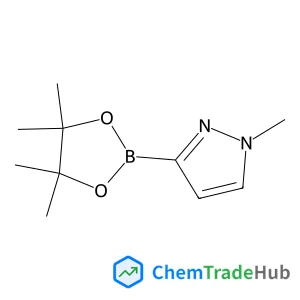

![1-Naphthalenesulfonic acid, 2-[(2-hydroxy-1-naphthalenyl)azo]-, bariumsalt (2:1) structure](https://static.chemtradehub.com/structs/110/1103-38-4-0b33.webp "1-Naphthalenesulfonic acid, 2-[(2-hydroxy-1-naphthalenyl)azo]-, bariumsalt (2:1) structure")