












Smart self-assembled microgel films as encapsulating carriers for UV-absorbing molecules
Literature Information
Publication Date
2018-02-16
DOI
10.1039/C8PY00146D
Impact Factor
5.582
Authors
Abdel Khoukh, Pablo Taboada, Kamel Chougrani, Valérie Alard
View Original
Abstract
This article reports the ability of oligo(ethylene glycol)-based stimuli-responsive microgels to spontaneously form self-assembled microgel films under different conditions such as the presence or absence of water soluble polymers (WSP, formed during the microgel synthesis) and the type and/or amount of salt in the microgel dispersion. The unusually high encapsulation of four different cosmetically active molecules has been achieved via hydrophobic interactions and hydrogen-bonding interactions between the –OH groups of active molecules and ether functions of self-assembled microgel films. The loaded-films present absorption higher than 50% of the UVA–UVB wavelengths and can be used for skin protection against sun. The nature of the interactions was determined by NOESY-NMR spectroscopy in the gel state. Moreover, confocal microscopy was used to show that the water solubility of the active molecule plays a crucial role in obtaining a more homogeneous distribution in films after loading.
Related Literature
A diatropic ring current in a fluorofullerene trannulene
Patrick W Fowler, Alessandro Soncini, John P B Sandall
2003-10-22
Communication
DOI: 10.1039/B307514C
Designed layer assembly: a three-dimensional framework with 74% extra-framework volume by connection of infinite two-dimensional sheets
T. J. Prior, D. Bradshaw, S. J. Teat, M. J. Rosseinsky
2003-01-28
Communication
DOI: 10.1039/B211124C
A new model of crystal packing
Elna Pidcock, W. D. Sam Motherwell
2003-11-03
Communication
DOI: 10.1039/B310873B
A 2,3-butanedione protected chiral glycine equivalent—a new building block for the stereoselective synthesis of enantiopure N-protected α-amino acids
Darren J. Dixon, Christopher I. Harding, Steven V. Ley, D. Matthew G. Tilbrook
2003-01-20
Communication
DOI: 10.1039/B210673F
The colourful fluorescence from readily-synthesised 3,4-diaryl-substituted maleimide fluorophores
Hsiu-Chih Yeh, Wei-Ching Wu, Chin-Ti Chen
2002-12-20
Communication
DOI: 10.1039/B211537A
The effect of ion energy upon plasma polymerization deposition rate for acrylic acid
David Barton, Robert D. Short, Stuart Fraser, James W. Bradley
2003-01-14
Communication
DOI: 10.1039/B210781C
Photomodulated molecular recognition of the guanidinium cation
Christopher A. Hunter, Mahmut Togrul, Salvador Tomas
2003-11-07
Communication
DOI: 10.1039/B311060E
Extending solid-phase methods in inorganic synthesis: the first dinuclear platinum complex synthesised via the solid phase
Steven van Zutphen, Marc S. Robillard, Gijs A. van der Marel, Herman S. Overkleeft, Hans den Dulk, Jaap Brouwer, Jan Reedijk
2003-02-07
Communication
DOI: 10.1039/B212388F
Molecular tectonics: infinite cationic double stranded helical coordination networks
Abdelaziz Jouaiti, Mir Wais Hosseini, Nathalie Kyritsakas
2003-01-23
Communication
DOI: 10.1039/B211226B
You might also like
Compound Q&A
What precautions should be taken when handling lithium chloride hydrate (1:1:1) (CAS: 16712-20-2)?
When handling lithium chloride hydrate (1:1:1) (CAS: 16712-20-2), it is importan...
16712-20-2Lithium chloride hyd...
Compound Q&A
Is 4-(4H-1,2,4-Triazol-4-yl)piperidine (CAS: 690261-92-8) safe?
4-(4H-1,2,4-Triazol-4-yl)piperidine is generally considered safe for use in phar...
690261-92-84-(4H-1,2,4-Triazol-...
Compound Q&A
How should waste containing 1,3-Thiazole-2-carboxamide (CAS: 16733-85-0) be handled?
Waste containing 1,3-Thiazole-2-carboxamide (CAS: 16733-85-0) should be collecte...
16733-85-01,3-Thiazole-2-carbo...
Compound Q&A
What regulatory guidelines apply to 5-(Difluoromethyl)-2-fluorobenzonitrile (CAS: 934175-58-3)?
5-(Difluoromethyl)-2-fluorobenzonitrile (CAS: 934175-58-3) is subject to regulat...
934175-58-35-(Difluoromethyl)-2...
Compound Q&A
How is Methyl 3-acetamido-2-thiophenecarboxylate (CAS: 22288-79-5) typically synthesized?
Methyl 3-acetamido-2-thiophenecarboxylate can be synthesized by the reaction of ...
22288-79-5Methyl 3-acetamido-2...
Compound Q&A
What is 4-Isoquinolinecarbonitrile (CAS: 34846-65-6)?
4-Isoquinolinecarbonitrile is a chemical compound with the CAS number 34846-65-6...
34846-65-64-Isoquinolinecarbon...
Compound Q&A
How should Methyl 1H-1,2,3-triazole-4-carboxylate (CAS: 877309-59-6) be stored?
Store Methyl 1H-1,2,3-triazole-4-carboxylate (CAS: 877309-59-6) in a cool, dry p...
877309-59-6Methyl 1H-1,2,3-tria...
Compound Q&A
What regulatory guidelines apply to 6-Bromo[1,3]thiazolo[5,4-b]pyridin-2-amine (CAS: 1160791-13-8)?
6-Bromo[1,3]thiazolo[5,4-b]pyridin-2-amine (CAS: 1160791-13-8) is subject to the...
1160791-13-86-Bromo[1,3]thiazolo...
Compound Q&A
Is (2S,3S)-2-Ammonio-3-(3,4-dihydroxyphenyl)-3-hydroxypropanoate (CAS: 23651-95-8) safe?
(2S,3S)-2-Ammonio-3-(3,4-dihydroxyphenyl)-3-hydroxypropanoate (CAS: 23651-95-8) ...
23651-95-8(2S,3S)-2-Ammonio-3-...
Compound Q&A
What are the physical and chemical properties of 7-bromo-3-methyl-3,4-dihydroquinazolin-4-one (CAS: 1293987-84-4)?
7-Bromo-3-methyl-3,4-dihydroquinazolin-4-one is a solid with a crystalline form....
1293987-84-47-bromo-3-methyl-3,4...
Source Journal
Polymer Chemistry

CiteScore:
8.6
Self-citation Rate:
7.3%
Articles per Year:
457
Polymer Chemistry welcomes submissions in all areas of polymer science that have a strong focus on macromolecular chemistry. Manuscripts may cover a broad range of fields, yet no direct application focus is required.
Recommended Compounds
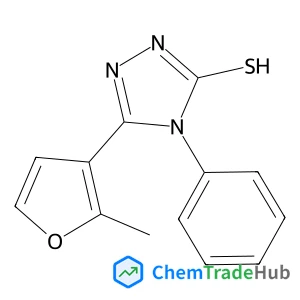
5-(2-Methyl-3-furyl)-4-phenyl-2,4-dihydro-3H-1,2,4-triazole-3-thione
CAS Number:
346464-59-3
Molecular Formula:
C13H11N3OS
![8-Bromo-6-fluoro[1,2,4]triazolo[1,5-a]pyridin-2-amine structure](https://static.chemtradehub.com/structs/125/1257705-51-3-9f4a.webp "8-Bromo-6-fluoro[1,2,4]triazolo[1,5-a]pyridin-2-amine structure")
8-Bromo-6-fluoro[1,2,4]triazolo[1,5-a]pyridin-2-amine
CAS Number:
1257705-51-3
Molecular Formula:
C6H4BrFN4
Recommended Suppliers





Disclaimer
This page provides academic journal information for reference and research purposes only. We are not affiliated with any journal publishers and do not handle publication submissions. For publication-related inquiries, please contact the respective journal publishers directly.
If you notice any inaccuracies in the information displayed, please contact us at support@chemtradehub.com. We will promptly review and address your concerns.