


Iodine-promoted radical alkyl sulfuration of imidazopyridines with dialkyl azo compounds and elemental sulfur
Literature Information
Publication Date
2019-02-01
DOI
10.1039/C8OB03191F
Impact Factor
3.876
Authors
Yong-Chao Gao, Zhuo-Bin Huang, Li Xu, Zhao-Dong Li, Zhi-Sheng Lai
View Original
Abstract
Dialkyl azo compounds were found to be effective alkyl radical sources for direct alkyl sulfuration with imidazopyridines using elemental sulfur under metal-free conditions. Iodine, an inexpensive and mild reagent, could promote alkyl sulfuration. A variety of quaternary cyanoalkyl radicals were successfully coupled with elemental sulfur. A subsequent C–H sulfuration of imidazopyridines afforded a diverse array of imidazopyridine derivatives bearing cyanoalkylthio groups. The cyano group could be modified and further underwent condensation with 2-aminothiazole to afford an interesting heterocyclic amide. Control experiments showed that iodine could greatly suppress the self-coupling of cyanoalkyl radicals, thus making the sulfuration proceed smoothly.
Recommended Journals

Bioorganic & Medicinal Chemistry

Biocatalysis and Biotransformation

Cellulose

Atomization and Sprays

Polycyclic Aromatic Compounds

Herald of the Russian Academy of Sciences

Medicinal Chemistry Research

Acta Metallurgica Sinica-English Letters

Chinese Journal of Chemistry

Critical Reviews in Solid State and Materials Sciences
Related Literature
A new route to fullerene substituted phenylalanine derivatives
Jianzhong Yang, Andrew R. Barron
2004-10-25
Communication
DOI: 10.1039/B411118D
Self-assembled arrays of zinc oxide nanoparticles from monolayer films of diblock copolymer micelles
Seong Il Yoo, Byeong-Hyeok Sohn, Wang-Cheol Zin, Sung-Jin An, Gyu-Chul Yi
2004-11-05
Communication
DOI: 10.1039/B409934F
A new type of bromide anion conducting solid
Nobuhito Imanaka, Yasuhiro Kato
2003-05-02
Communication
DOI: 10.1039/B300691C
Cyclopropyl fatty acids implicate a radical but not a cation as an intermediate in P450BM3-catalysed hydroxylations
Max J. Cryle, Julia M. U. Stuthe, Paul R. Ortiz de Montellano, James J. De Voss
2004-01-27
Communication
DOI: 10.1039/B315911F
Concerning the relative importance of enantiomorphic site vs. chain end control in the stereoselective polymerization of lactides: reactions of (R,R-salen)- and (S,S-salen)–aluminium alkoxides LAlOCH2R complexes (R = CH3 and S-CHMeCl)
Malcolm H. Chisholm, Nathan J. Patmore, Zhiping Zhou
2004-11-25
Communication
DOI: 10.1039/B413266A
Electrical property and water repellency of a networked monolayer film prepared from Au nanoparticles
Hiroshi Shiigi, Yojiro Yamamoto, Hidetaka Yakabe, Shiho Tokonami, Tsutomu Nagaoka
2003-04-02
Communication
DOI: 10.1039/B212226J
Palladium catalysed cyclisation–carbonylation of enynes to give cyclic γ,δ-unsaturated acids
Varinder K. Aggarwal, Mike Butters, Paul W. Davies
2003-04-02
Communication
DOI: 10.1039/B300719G
Al(OPri)3-catalysed halogen exchange processes of relevance to atom transfer radical polymerization: the effect depends on the metal electronic structure
François Stoffelbach, Rinaldo Poli
2004-10-13
Communication
DOI: 10.1039/B409992C
Attachment of glycosaminoglycan oligosaccharides to thiol-derivatised gold surfaces
Susannah J. Patey, Jeremy E. Turnbull
2004-10-11
Communication
DOI: 10.1039/B411726C
Ni(iii) vs. Ni(ii)-thiyl radical: charge-delocalisation in a binuclear Ni(iii)Ni(ii)-dithiolate complex
Neil D. J. Branscombe, Andrew J. Atkins, Armando Marin-Becerra, Eric J. L. McInnes, Frank E. Mabbs, Jonathan McMaster, Martin Schröder
2003-04-02
Communication
DOI: 10.1039/B300245D
You might also like
Compound Q&A
What industries use (1R,3S)-1,3-Cyclopentanediol (CAS: 16326-97-9)?
(1R,3S)-1,3-Cyclopentanediol finds applications in various industries. In the ph...
16326-97-9(1R,3S)-1,3-Cyclopen...
Compound Q&A
What precautions should be taken when handling N'-[4-(Dimethylamino)phenyl]-N,N-dimethyl-1,4-benzenediamine (CAS: 637-31-0)?
When handling N'-[4-(Dimethylamino)phenyl]-N,N-dimethyl-1,4-benzenediamine, it i...
637-31-0N'-[4-(Dimethylamino...
Compound Q&A
Are there alternatives to 5-(2,4-Difluorophenyl)-2-methoxypyrimidine (CAS: 1352318-16-1) in synthesis?
There are several alternatives to 5-(2,4-Difluorophenyl)-2-methoxypyrimidine in ...
1352318-16-15-(2,4-Difluoropheny...
Compound Q&A
What regulatory guidelines apply to 1-(3-Methoxyphenoxy)propan-2-ol (CAS: 382141-68-6)?
1-(3-Methoxyphenoxy)propan-2-ol (CAS: 382141-68-6) must comply with the Globally...
382141-68-61-(3-Methoxyphenoxy)...
Compound Q&A
Is Tetrodotoxin Citrate (CAS: 18660-81-6) safe?
Tetrodotoxin Citrate is extremely dangerous and should be handled with extreme c...
18660-81-6Tetrodotoxin Citrate
Compound Q&A
What are the main uses of 2-Methyl-2-propanyl [(1R,3S)-3-hydroxycyclopentyl]carbamate (CAS: 225641-84-9)?
2-Methyl-2-propanyl [(1R,3S)-3-hydroxycyclopentyl]carbamate (CAS: 225641-84-9) i...
225641-84-92-Methyl-2-propanyl ...
Compound Q&A
How should waste containing 4-(2-Hydroxyhexafluoroisopropyl)Benzoic Acid (CAS: 16261-80-6) be handled?
Waste containing 4-(2-Hydroxyhexafluoroisopropyl)Benzoic Acid (CAS: 16261-80-6) ...
16261-80-64-(2-Hydroxyhexafluo...
Compound Q&A
How is 2-Methyl-2-proanyl {(2S)-1-[(benzyloxy)amino]-3-hydroxy-3-methyl-1-oxo-2-butanyl}carbamate (CAS: 102507-19-7) typically synthesized?
2-Methyl-2-proanyl {(2S)-1-[(benzyloxy)amino]-3-hydroxy-3-methyl-1-oxo-2-butanyl...
102507-19-72-Methyl-2-propanyl ...
Compound Q&A
What is Benzeneethanamine, α-ethyl-, hydrochloride (1:1) (CAS: 20735-15-3)?
Benzeneethanamine, α-ethyl-, hydrochloride (1:1) is an organic compound with the...
20735-15-3Benzeneethanamine, α...
Compound Q&A
Are there alternatives to 3-{(E)-[4-(Dimethylamino)phenyl]diazenyl}benzoic acid (CAS: 20691-84-3) in synthesis?
In the synthesis of compounds similar to 3-{(E)-[4-(Dimethylamino)phenyl]diazeny...
20691-84-33-{(E)-[4-(Dimethyla...
Source Journal
Organic & Biomolecular Chemistry

CiteScore:
3.4
Self-citation Rate:
10.3%
Articles per Year:
1041
Organic & Biomolecular Chemistry (OBC) publishes original and high impact research and reviews in organic chemistry. We welcome research that shows new or significantly improved protocols or methodologies in total synthesis, synthetic methodology or physical and theoretical organic chemistry as well as research that shows a significant advance in the organic chemistry or molecular design aspects of chemical biology, catalysis, supramolecular and macromolecular chemistry, theoretical chemistry, mechanism-oriented physical organic chemistry, medicinal chemistry or natural products. Articles published in the journal should report new work which makes a highly-significant impact in the field. Routine and incremental work is generally not suitable for publication in the journal. More details about key areas of our scope are below. In all cases authors should include in their article clear rationale for why their research has been carried out.
Recommended Compounds
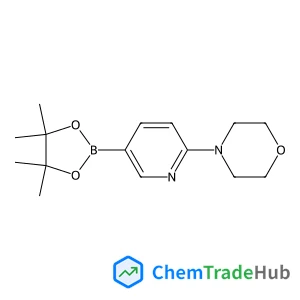
4-(5-(4,4,5,5-tetramethyl-1,3,2-dioxaborolan-2-yl)pyridin-2-yl)morpholine
CAS Number:
485799-04-0
Molecular Formula:
C15H23BN2O3
Recommended Suppliers






Disclaimer
This page provides academic journal information for reference and research purposes only. We are not affiliated with any journal publishers and do not handle publication submissions. For publication-related inquiries, please contact the respective journal publishers directly.
If you notice any inaccuracies in the information displayed, please contact us at support@chemtradehub.com. We will promptly review and address your concerns.