












Substituted polyfluoroaryl interactions with an arginine side chain in galectin-3 are governed by steric-, desolvation and electronic conjugation effects
Literature Information
Publication Date
2019-01-03
DOI
10.1039/C8OB02888E
Impact Factor
3.876
Authors
Rohit Kumar, Kristoffer Peterson, Majda Misini Ignjatović, Hakon Leffler, Ulf Ryde, Ulf J. Nilsson, Derek T. Logan
View Original
Abstract
In the β-D-galactopyranoside-binding protein galectin-3, synthetic inhibitors substituted at the 3-position of a thiodigalactoside core cause the formation of an aglycone binding pocket through the displacement of an arginine residue (Arg144) from its position in the apoprotein. To examine in detail the role of different molecular interactions in this pocket, we have synthesized a series of nine 3-(4-(2,3,5,6-tetrafluorophenyl)-1,2,3-triazol-1-yl)-thiogalactosides with different para substituents and measured their affinities to galectin-3 using a fluorescence polarization assay. High-resolution crystal structures (<1.3 Å) have been determined for five of the ligands in complex with the C-terminal domain of galectin-3. The binding affinities are rationalised with the help of the three-dimensional structures and quantum-mechanical calculations. Three effects seem to be involved: Firstly, the binding pocket is too small for the largest ligands with ethyl and methyl. Secondly, for the other ligands, the affinity seems to be determined mainly by desolvation effects, disfavouring the polar substituents, but this is partly counteracted by the cation–π interaction with Arg144, which stacks on top of the substituted tetrafluorophenyl group in all complexes. The results provide detailed insight into interactions of fluorinated phenyl moieties with arginine-containing protein binding sites and the complex interplay of different energetic components in defining the binding affinity.
Related Literature
The electronic structure of Ag1−xSn1+xSe2 (x = 0.0, 0.1, 0.2, 0.25 and 1.0)
Takanori Wakita, Eugenio Paris, Kaya Kobayashi, Kensei Terashima, Teppei Ueno, Federica Bondino, Luca Olivi, Jun Akimitsu, Yuji Muraoka, Takayoshi Yokoya, Naurang L. Saini
2017-09-22
Paper
DOI: 10.1039/C7CP05369J
A lipophilic ionic liquid based on formamidinium cations and TFSI: the electric response and the effect of CO2 on the conductivity mechanism
Federico Bertasi, Guinevere A. Giffin, Keti Vezzù, Yaser Abu-Lebdeh, Michel Armand
2017-09-05
Paper
DOI: 10.1039/C7CP02304A
A study on an unusual SN2 mechanism in the methylation of benzyne through nickel-complexation
Makoto Hatakeyama, Koji Ogata, Yuto Sumida, Tomoe Sumida
2017-09-28
Paper
DOI: 10.1039/C7CP04739H
Strain-induced ferroelectricity and lattice coupling in BaSnO3 and SrSnO3
Yajun Zhang, Takahiro Shimada, Takayuki Kitamura
2017-09-07
Paper
DOI: 10.1039/C7CP03952B
Small gold clusters catalyzing the conversion of glycerol to epichlorohydrin
Anthony M. Pembere, Mengzhou Yang, Zhixun Luo
2017-09-04
Communication
DOI: 10.1039/C7CP05324J
Self-assembled bundled TiO2 nanowire arrays encapsulated with indium tin oxide for broadband absorption in plasmonic photocatalysis
Xingce Fan, Zhengwei Luo, Xiangyu Hou, Xiaozhi Yang, Teng Qiu, Paul K. Chu
2017-09-14
Paper
DOI: 10.1039/C7CP04196A
Using a chitosan nanolayer as an efficient pH buffer to protect pH-sensitive supramolecular assemblies
D. V. Andreeva, A. Kollath, D. V. Sviridov, B. J. Cafferty, H. Möhwald
2017-07-04
Paper
DOI: 10.1039/C7CP02618H
Effects of TiCl4 treatment on the structural and electrochemical properties of a porous TiO2 layer in CH3NH3PbI3 perovskite solar cells
Hasyiya Karimah Adli, Takashi Harada, Shuji Nakanishi, Shigeru Ikeda
2017-09-18
Paper
DOI: 10.1039/C7CP04132B
Langmuir–Blodgett films of perylene bisimide derivatives and fluorescent recognition of diamines
Congdi Shang, Li Wang, Yanqin An, Ping Chen, Xingmao Chang, Yanyu Qi, Rui Kang, Yu Fang
2017-08-14
Paper
DOI: 10.1039/C7CP04235C
You might also like
Compound Q&A
What is 3-Fluoro-2-methylbenzylamine (CAS: 771573-36-5)?
3-Fluoro-2-methylbenzylamine is an organic compound with the CAS number 771573-3...
771573-36-53-Fluoro-2-methylben...
Compound Q&A
Is Tert-butyl 2-(oxetan-3-ylidene)acetate (CAS: 1207175-03-8) safe?
Tert-butyl 2-(oxetan-3-ylidene)acetate is considered safe for its intended uses ...
1207175-03-8Tert-butyl 2-(oxetan...
Compound Q&A
What precautions should be taken when handling 4-Acetyl-2-fluorobenzonitrile (CAS: 214760-18-6)?
Proper personal protective equipment (PPE) such as gloves, goggles, and a lab co...
214760-18-64-Acetyl-2-fluoroben...
Compound Q&A
How is 2-Ethyl-4-methyl-1,3-thiazole (CAS: 15679-12-6) typically synthesized?
2-Ethyl-4-methyl-1,3-thiazole is commonly synthesized via the reaction of thiour...
15679-12-62-Ethyl-4-methyl-1,3...
Compound Q&A
How should 5',5''-([2,2'-Bithiophene]-5,5'-diyl)bis(([1,1':3',1''-terphenyl]-4,4''-dicarboxylic acid)) (CAS: 1227780-71-3) be stored?
This compound should be stored in a cool, dry place away from direct sunlight an...
1227780-71-35',5''''-([2,2'-Bith...
Compound Q&A
What regulatory guidelines apply to L-Lysine Acetate Salt (CAS: 52315-92-1)?
L-Lysine Acetate Salt (CAS: 52315-92-1) is subject to various regulatory guideli...
52315-92-1L-LYSINE ACETATE SAL...
Compound Q&A
Is 6-Fluoro-3-hydroxy-2-pyrazinecarboxamide (CAS: 259793-96-9) safe?
6-Fluoro-3-hydroxy-2-pyrazinecarboxamide (CAS: 259793-96-9) is generally conside...
259793-96-96-Fluoro-3-hydroxy-2...
Compound Q&A
What are the physical and chemical properties of 1,1'-Sulfonylbis(1H-imidazole) (CAS: 7189-69-7)?
1,1'-Sulfonylbis(1H-imidazole) is a crystalline solid with a molecular weight of...
7189-69-71,1'-Sulfonylbis(1H-...
Compound Q&A
What industries use 4-methyl-7-nitro-1H-indole-3-carbonitrile (CAS: 289483-82-5)?
4-Methyl-7-nitro-1H-indole-3-carbonitrile (CAS: 289483-82-5) is primarily used i...
289483-82-54-methyl-7-nitro-1H-...
Compound Q&A
How should waste containing 5-Bromo-3-indolyl-beta-galactoside (CAS: 97753-82-7) be handled?
Waste containing 5-Bromo-3-indolyl-beta-galactoside (CAS: 97753-82-7) should be ...
97753-82-75-Bromo-3-indolyl-be...
Source Journal
Organic & Biomolecular Chemistry

CiteScore:
3.4
Self-citation Rate:
10.3%
Articles per Year:
1041
Organic & Biomolecular Chemistry (OBC) publishes original and high impact research and reviews in organic chemistry. We welcome research that shows new or significantly improved protocols or methodologies in total synthesis, synthetic methodology or physical and theoretical organic chemistry as well as research that shows a significant advance in the organic chemistry or molecular design aspects of chemical biology, catalysis, supramolecular and macromolecular chemistry, theoretical chemistry, mechanism-oriented physical organic chemistry, medicinal chemistry or natural products. Articles published in the journal should report new work which makes a highly-significant impact in the field. Routine and incremental work is generally not suitable for publication in the journal. More details about key areas of our scope are below. In all cases authors should include in their article clear rationale for why their research has been carried out.
Recommended Compounds
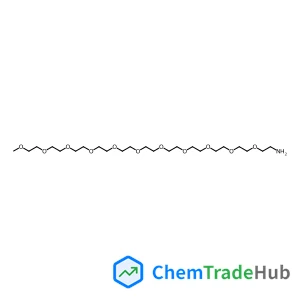
2,5,8,11,14,17,20,23,26,29,32-Undecaoxatetratriacontan-34-amine
CAS Number:
854601-60-8
Molecular Formula:
C23H49NO11
![1,1'-[(E)-1,2-Ethenediyl]bis(4-bromobenzene) structure](https://static.chemtradehub.com/structs/188/18869-30-2-c907.webp "1,1'-[(E)-1,2-Ethenediyl]bis(4-bromobenzene) structure")
Recommended Suppliers





Disclaimer
This page provides academic journal information for reference and research purposes only. We are not affiliated with any journal publishers and do not handle publication submissions. For publication-related inquiries, please contact the respective journal publishers directly.
If you notice any inaccuracies in the information displayed, please contact us at support@chemtradehub.com. We will promptly review and address your concerns.