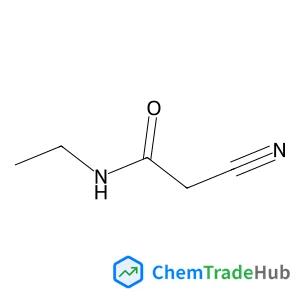
![(1S,4aR,5R,7S,7aS)-1-(beta-D-Glucopyranosyloxy)-5-hydroxy-7-methyl-1,4a,5,6,7,7a-hexahydrocyclopenta[c]pyran-7-yl alpha-D-galactopyranoside structure](https://static.chemtradehub.com/structs/817/81720-07-2-4ffd.webp "(1S,4aR,5R,7S,7aS)-1-(beta-D-Glucopyranosyloxy)-5-hydroxy-7-methyl-1,4a,5,6,7,7a-hexahydrocyclopenta[c]pyran-7-yl alpha-D-galactopyranoside structure")
(1S,4aR,5R,7S,7aS)-1-(beta-D-Glucopyranosyloxy)-5-hydroxy-7-methyl-1,4a,5,6,7,7a-hexahydrocyclopenta[c]pyran-7-yl alpha-D-galactopyranoside
CAS Number:
81720-07-2
Molecular Formula:
C21H34O14
D. V. Andreeva, A. Kollath, D. V. Sviridov, B. J. Cafferty, H. Möhwald
It is attractive to control the properties of macro objects and films by employing simple nanolayer composites, as in the case of nanoarchitectured Layer-by-Layer (LbL) coating. In this paper, we use chitosan as a surface-based pH buffer to protect adsorbed supramolecular fibres from pH-mediated disassembly. Protons are generated on a titania surface under illumination at 405 nm leading to an appreciable pH change on the surface. We find that supramolecular polymers that are highly sensitive to pH change will not disassemble after irradiation if a nanolayer of chitosan is present. We propose that chitosan can be used as an efficient pH-responsive protective layer for pH sensitive soft materials.

Russian Chemical Bulletin

Russian Journal of General Chemistry

Drug Discovery Today

Journal of Natural Medicines

Journal of Saudi Chemical Society

Current Opinion in Colloid & Interface Science

Journal of Peptide Science

Saudi Pharmaceutical Journal

Acta Materialia

Current Opinion in Solid State & Materials Science
Kenji Aramaki, Chikahiro Iwata, Jitendra Mata, Tetsuya Maehara, Daisuke Aburano, Yuichi Sakanishi, Kyuhei Kitao
DOI: 10.1039/C7CP02585H
Mireia Via-Nadal
DOI: 10.1039/C7CP03349D
John C. Mullaney, Chris Medcraft, David P. Tew, Luke Lewis-Borrell, Bernard T. Golding, Nicholas R. Walker, Anthony C. Legon
DOI: 10.1039/C7CP04315E
Yajun Zhang, Takahiro Shimada, Takayuki Kitamura
DOI: 10.1039/C7CP03952B
Haoyue Guo, Yiman Zhang
DOI: 10.1039/C7CP04590E
Roberto Hiroki Miwa, Wanderlã L. Scopel, Everson S. Souza, José Eduardo Padilha, Adalberto Fazzio
DOI: 10.1039/C7CP03761A
Yun-Ru Huang, Melissa Lamson, Krzysztof Matyjaszewski
DOI: 10.1039/C7CP02841E
Laurence S. Romsted, Yongliang Zhang, Xiang Gao, Qing Gu, Changyao Liu
DOI: 10.1039/C7CP03413J
Midhun Mohan, T. Suzuki, Saju Pillai, K. G. K. Warrier, U. S. Hareesh, J. D. Gale
DOI: 10.1039/C7CP03866F
Markus Doerr, Martha C. Daza
DOI: 10.1039/C7CP03930A
3-Fluoro-2-methylbenzylamine is an organic compound with the CAS number 771573-3...
Tert-butyl 2-(oxetan-3-ylidene)acetate is considered safe for its intended uses ...
Proper personal protective equipment (PPE) such as gloves, goggles, and a lab co...
2-Ethyl-4-methyl-1,3-thiazole is commonly synthesized via the reaction of thiour...
This compound should be stored in a cool, dry place away from direct sunlight an...
L-Lysine Acetate Salt (CAS: 52315-92-1) is subject to various regulatory guideli...
6-Fluoro-3-hydroxy-2-pyrazinecarboxamide (CAS: 259793-96-9) is generally conside...
1,1'-Sulfonylbis(1H-imidazole) is a crystalline solid with a molecular weight of...
4-Methyl-7-nitro-1H-indole-3-carbonitrile (CAS: 289483-82-5) is primarily used i...
Waste containing 5-Bromo-3-indolyl-beta-galactoside (CAS: 97753-82-7) should be ...

Physical Chemistry Chemical Physics (PCCP) is an international journal co-owned by 19 physical chemistry and physics societies from around the world. This journal publishes original, cutting-edge research in physical chemistry, chemical physics and biophysical chemistry. To be suitable for publication in PCCP, articles must include significant innovation and/or insight into physical chemistry; this is the most important criterion that reviewers and Editors will judge against when evaluating submissions. The journal has a broad scope and welcomes contributions spanning experiment, theory, computation and data science. Topical coverage includes spectroscopy, dynamics, kinetics, statistical mechanics, thermodynamics, electrochemistry, catalysis, surface science, quantum mechanics, quantum computing and machine learning. Interdisciplinary research areas such as polymers and soft matter, materials, nanoscience, energy, surfaces/interfaces, and biophysical chemistry are welcomed if they demonstrate significant innovation and/or insight into physical chemistry. Joined experimental/theoretical studies are particularly appreciated when complementary and based on up-to-date approaches.
![(3R)-3-(3-Fluorophenyl)-3-({[(2-methyl-2-propanyl)oxy]carbonyl}amino)propanoic acid structure](https://static.chemtradehub.com/structs/500/500789-04-8-20dd.webp "(3R)-3-(3-Fluorophenyl)-3-({[(2-methyl-2-propanyl)oxy]carbonyl}amino)propanoic acid structure")